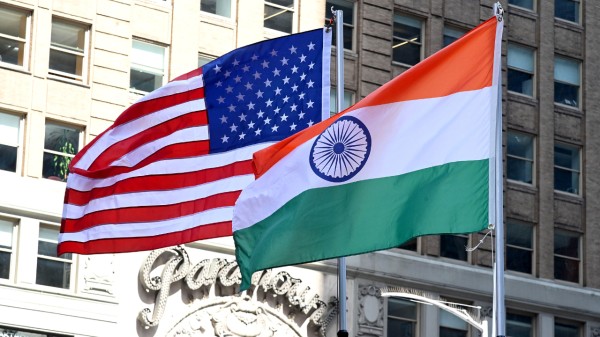
New Delhi: Amid the US President Donald Trump’s tariff storm, India is all set to ink a 'Free Trade Agreement' with the European Union which is being touted as the ‘Mother of all deals’. India and the EU are fast moving towards preparing a new path of trade. How important this deal is for India and what will the European Union achieve from it, let's try to understand in this article. European Commission President Ursula von der Leyen announced on Tuesday that the European Union and India are on the cusp of signing a historic trade deal.
India-EU FTA: 'Mother of All Deals'
India and the European Union are all set to finalize a trade deal that has taken nearly two decades to finalise. The scale of the proposed Free Trade Agreement is clear from Commerce Minister Piyush Goyal's statement about the FTA. He called it the 'Mother of All Deals'. Formal signing of the trade deal is expected around 26-27 January, when senior EU leaders visit India. This trade deal is likely to be announced at the 16th India-EU Summit in New Delhi.
This agreement, now officially called the India-EU Free Trade Agreement, has replaced the previously used broad-based trade and investment agreement label, which had been in use since negotiations began in 2007.
Dynamics of India-EU trade
If this agreement is reached, the India-EU FTA will be India's ninth trade agreement in the last four years, which will join the growing list of agreements reached with Mauritius, UAE, Australia, New Zealand, Oman, the EFTA bloc, the UK and partners under the Indo-Pacific Economic Framework.
India-EU Free Trade Agreement: New Delhi’s gains
Once finalised, this agreement will become India's largest free trade agreement, both in terms of economic scale and regulatory coverage. It will provide preferential access to all 27 EU member countries through a single framework, because the EU acts as a custom union. According to an analysis by the Global Trade Research Initiative (GTRI), for India, the proposed agreement opens the door to one of the world's richest and most trusted economic blocs, the European Union, with an estimated GDP of 18—22 trillion euros and whose market extends to consumers with income of more than 450 million.
GTRI points out one important thing. It is not that the India-EU Free Trade Agreement is not going to be completed because the old differences have ended, but the changing geo-political situation has forced both sides to adopt a more practical approach. Considering the trade war started by US President Donald Trump, this agreement holds special significance for its time. Whereas the EU is now facing 10 percent new tariffs from the US, which may increase to 25 percent. India is already facing a 50 percent tariff on its exports to the US.
Preferential EU Market Access & Tariff Reduction
FTA for India provides access to the European Union, one of the richest and most stable markets in the world, with a GDP of around 18—22 trillion euros and a consumer income of 450 million.
In FY2025, India exported goods worth about 76 billion dollars to the EU, while it imported 61 billion dollars, which led to a trade surplus. But withdrawing EU GSP benefits in 2023 has reduced competitiveness for many Indian products.
Indian goods already have a relatively low average tariff in the EU — about 3.8% on exports worth $75.9 billion in FY2025 — but key labour-intensive sectors like textiles and clothing still attract around 10 per cent duty. Removing these tariffs will clearly benefit exports.
The FTA would help Indian companies to withstand the shock of higher US tariffs as it would have access to new markets and reduced tariffs on key exports such as clothing, pharmaceuticals, steel, petroleum products and machinery.
In IT sector, liberalisation of services will help India as it has a skilled workforce and would be able to increase services exports to Europe and reduce its heavy dependence on the US market.