Sign In
By signing in or creating an account, you agree with Associated Broadcasting Company's Terms & Conditions and Privacy Policy.
By signing in or creating an account, you agree with Associated Broadcasting Company's Terms & Conditions and Privacy Policy.
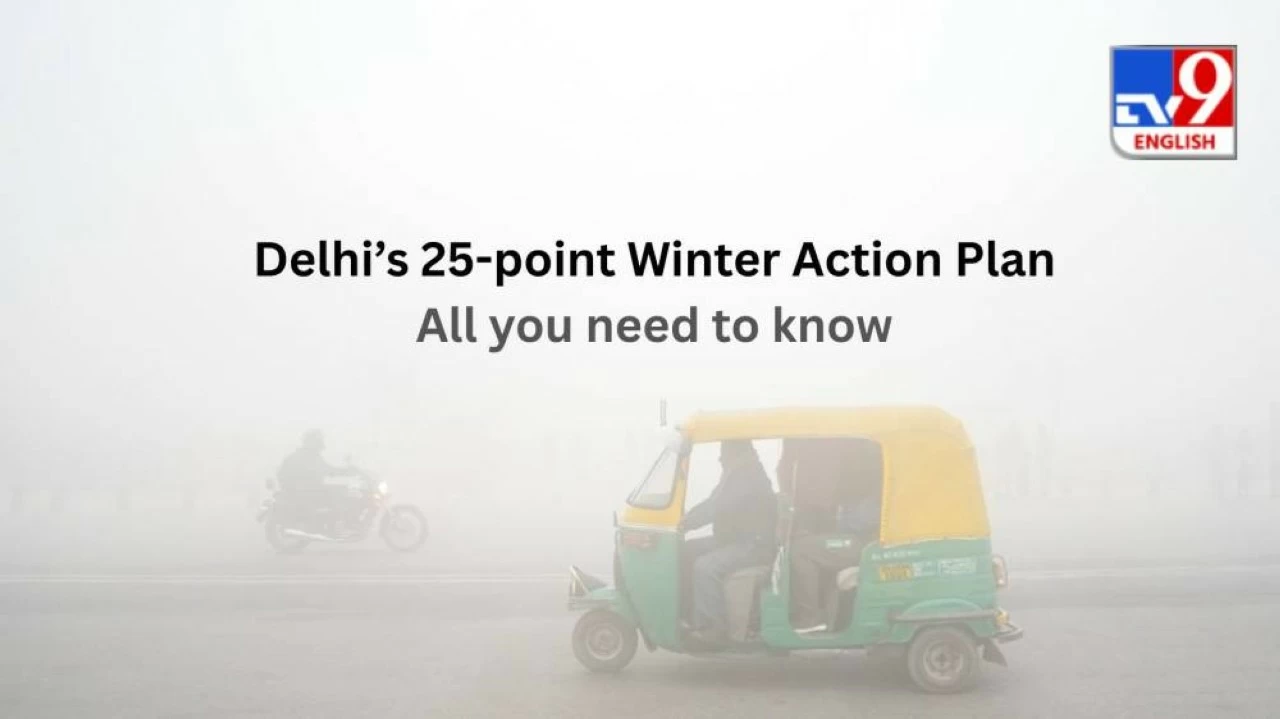


New Delhi: The Delhi government has finalised a 25-point ‘Winter Action Plan’ to combat the surging air pollution in the capital. The air pollution in Delhi surges in winters between October and February. Sharing the news on Thursday, Environment Minister Manjinder Singh Sirsa said that plan, which is based on the Air Pollution Mitigation Plan 2025, targets key areas like dust control, vehicle emissions, waste management, industrial regulations, and public involvement.
Some of the major actions in the plan include deploying 86 road sweepers, 362 anti-smog guns, and 300 water sprinklers to reduce dust; creating 578 enforcement teams to monitor vehicle emissions; setting up six new air quality monitoring stations by March 2026; and launching a cloud-seeding pilot project to help clear the air of smog.
Sirsa emphasized that the plan will be carried out "rigorously" with support from various city agencies, government departments, and the Delhi Police. “Our aim is to keep pollution levels manageable even in difficult weather conditions,” he explained. The planning for this initiative began with a meeting on September 9.
Regarding dust control, the government will roll out 300 water sprinklers, 86 mechanical sweepers, and 362 anti-smog guns across the city. It also plans to purchase 70 more sweepers and additional truck-mounted anti-smog guns. The action plan includes strict enforcement of a 14-point dust-control policy, requiring online registration for all construction projects above 500 square meters. Major roads will be cleaned by vacuum sweepers, with real-time monitoring to ensure compliance.
To control vehicle pollution, 578 enforcement teams will be deployed to monitor emissions, ensure vehicles have valid pollution-under-control (PUC) certificates, check for visible smoke, and enforce rules against idling. During high pollution stages, increased parking fees will be implemented to reduce the use of private vehicles.
In addition to this, 953 PUC centers will also be linked to a real-time dashboard to improve the tracking of emissions. The number of electric vehicles in Delhi Metro’s fleet will be increased to 2,299, and electric vehicles will continue to make up more than 12% of all new vehicle registrations.
Industrial pollution and power plant emissions will remain closely monitored. The government has made it clear that all industries must use PNG (Piped Natural Gas), with any diesel generators having to comply with emission standards. These generators will be monitored by the Delhi Pollution Control Committee (DPCC) and other agencies.
The plan also tackles waste burning and landfill fires with 443 enforcement teams working 24/7. Permanent watch towers and hydrants have been placed at landfill sites to quickly detect and extinguish fires. So far in 2025, there have been no landfill fires recorded, and the government is working to clear legacy waste from sites like Okhla by July 2026, Bhalswa by December 2026, and Ghazipur by December 2027. As of September 30, 13.6 million tonnes of legacy waste have been processed.
The government is also addressing local burning and agricultural residue. It will cover all of Delhi’s fields with a decomposer solution developed by IARI. Additionally, five night-vigilance teams will monitor stubble burning, and citizens can report violations using a mobile app. To reduce winter bonfires in residential areas, the government will distribute heaters to over 1,400 resident welfare associations (RWAs).
On the festive front, only QR-coded, NEERI-certified green crackers sold by licensed vendors will be allowed, following the Supreme Court’s order. Enforcement will be managed by the Delhi Police, DPCC, and the Revenue Department.
A new addition to this year’s plan is a cloud-seeding project, which will attempt to create artificial rain to clear pollutants during smog-heavy days. Additionally, six new air-quality monitoring stations will be added by March 2026, enhancing the city’s pollution tracking system. The Green Delhi app, which has helped resolve more than 96,000 complaints since its launch, will continue to be the main tool for citizens to report pollution and follow up on actions.
While similar plans have been announced in previous years, Sirsa highlighted that this year's plan focuses more on active coordination and real-time monitoring. “Our priority this year is to show visible improvements in air quality through better accountability and constant tracking,” he said.