Sign In
By signing in or creating an account, you agree with Associated Broadcasting Company's Terms & Conditions and Privacy Policy.
By signing in or creating an account, you agree with Associated Broadcasting Company's Terms & Conditions and Privacy Policy.
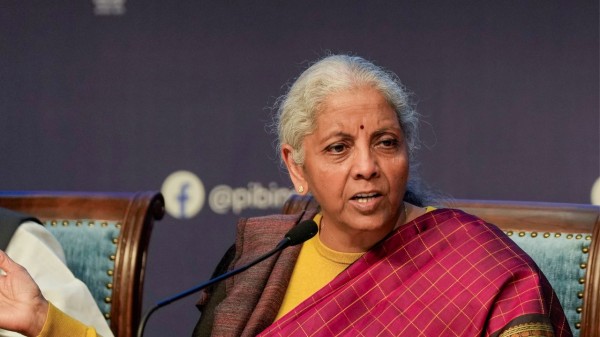
New Delhi: Finance Minister Nirmala Sitharaman on Sunday presented the Union Budget 2026–27 on Sunday, announcing major allocations across railways, defence, agriculture, MSMEs, healthcare and infrastructure, alongside key changes in income tax provisions. Prime Minister Narendra Modi described the Budget as “historic”, calling it a “highway of immense opportunities” that would accelerate India’s Reform Express and strengthen the foundation for a Viksit Bharat by 2047. While the transport sector, including the Indian Railway and roadways, had the biggest share earmarked in the Budget, the defence spending got a major boost in this year 's Budget. Sector-wise allotment of resources In the Union Budget 2026–27, transport sector saw the highest allocation at Rs 5,98,520 crore, followed closely by defence at Rs 5,94,585 crore. Rural development has been allotted Rs 2,73,108 crore, while home affairs gets Rs 2,55,234 crore. Agriculture and allied activities have been...


The budget is a statement which details the revenue and expenditure of a government. Under Article 112 of the Indian Constitution, the Union Budget or Annual Financial Statement details the estimated revenue and expenditure of the government for the financial year.
The word budget comes from the French word bougette, which means 'small bag'. This word was translated into English from French in the 15th century and from there it got popularly used across the world.
The first budget of pre-independent India was presented on April 7, 1860. The budget was presented by Scottish economist James Wilson under British rule.
India's first budget after independence was presented on November 26, 1947 by the then Finance Minister RK Shanmukham Chetty.
Pre-independence, the budget was presented in English, and the tradition continued after Independence. However, in 1955-56, the Congress government began presenting it in both English and Hindi.
Until 1950, the budget was printed at Rashtrapati Bhavan. However, a leak incident changed the scenario and it was then printed at a press on Minto Road in Delhi. Later, in 1980, the budget was started being printed at the government press within the Finance Ministry.
Until 1999, the budget was presented at 5 pm on the last day of February. This was because India's budget was presented according to British time. When it was 5 pm in India, it was 11 pm in Britain. Based on this, India had a tradition of presenting the budget at 5 pm. Then Finance Minister Yashwant Sinha ended this tradition and, starting in 1999, the Budget was presented at 11 am.
Before 2017, the budget was presented on the last day of February. However, in 2017, the then Union Finance Minister Arun Jaitley changed the date of the budget presentation to February 1st.
Until 2017, the Railway Budget was presented separately from the Union Budget. However, in 2017, the then Finance Minister Arun Jaitley ended the 92-year-old British tradition and merged the Railway Budget with the Union Budget. Which finance minister presented the longest budget speech?
The Interim budget is not constituted in the Indian Constitution. The government can present it more than once a year if it wishes. In the year when general elections are due, the government passes a Vote on Account. This accounts only revenue and expenditure, and covers salaries, pensions, and other government expenses for three or four months. The government does not make any policy decisions under the Vote on Account.
When government revenues are lower as compared to government spending, the difference is called the fiscal deficit. The fiscal deficit is the difference between a government's total revenues and total expenditures.
Revenue deficit defines the government's financial health. This situation arises when a government's revenue receipts are less than its revenue expenditure. Revenue expenditure includes salaries, pensions, and other expenses, while revenue receipts include tax revenue. A revenue deficit occurs when expenditures exceed receipts.
This deficit is related to a country's imports and exports. When a country's imports exceed its exports, the difference is called the current account deficit.