Kolkata: Job creation has emerged on top of the list of expectations that India Inc has, a survey by leading chamber of commerce Ficci has found. Next in he line of priorities that Ficci members would like to see finance minister Nirmala Sitharaman deliver are thrust on capital expenditure, support to exports, thrust on consumption, price stability, fiscal consolidation and focus on social sector spending (in that order).
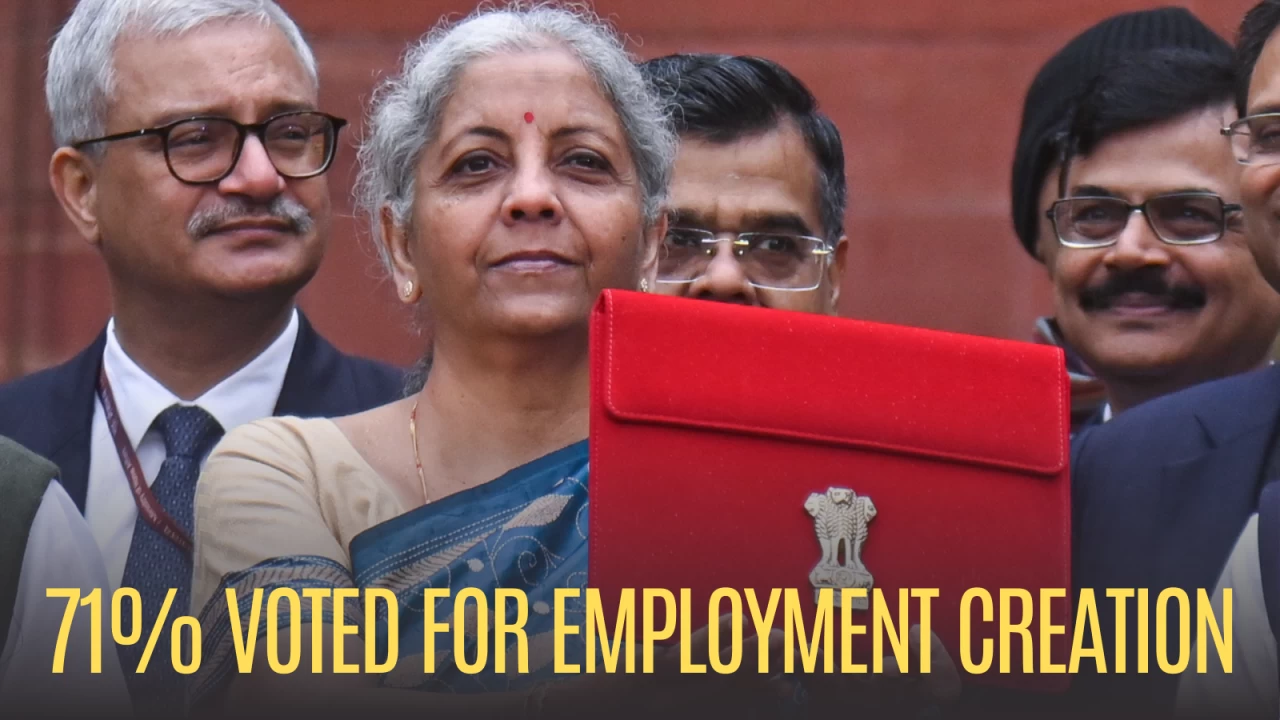
"India Inc identified job creation as the top priority, with 71 per cent of respondents emphasizing it, alongside a strong call for sustaining capital expenditure, cited by about 61 per cent as essential for supporting growth and investment," Ficci said in its survey report. In a first, the
Union budget will be presented on Sunday, Feb 1, 2026.
Expectations from Union Budget 2026-27
The question asked in he survey by FIIC: Given the current situation, in your assessment, what should be the major macro-economic themes for the Union Budget 2026-27? Three responses were taken from each respondent. The responses are as follows:
Job creation: 71%
Thrust on capital expenditure: 61%
Support to exports: 54%
Thrust on consumption: 43%
Price Stability: 27%
Fiscal consolidation: 23%
Focus on social sector spending: 10%
Ficci said that the survey was conducted between end December 2025 and mid January 2026. The results are based on responses from around 100 companies belonging to a wide array of sectors.
Waiting for clear policy direction
Budget 2026 will be placed against a "fragile and uneven" global economic environment with risks arising from geopolitical tensions, trade fragmentation, financial market volatility and climate-related shocks continuing to weigh on prospects.
Ficci said the Union Budget will be expected to provide "clear policy direction to sustain growth, crowd in private investment and preserve macroeconomic stability". The chamber of commerce has labelled the budget as an opportunity to strengthen confidence, support consumption and employment, and lay the groundwork for durable and inclusive growth.
Growth expectations
About 50 per cent respondents expect a GDP growth rate between 7 per cent and 8 per cent in the next fiscal year (2026-27), which is similar to the current financial year. Industrialists expect the government to adhere to the fiscal consolidation efforts while 42 per cent participants expect government to achieve the fiscal deficit target of 4.4 per cent.
In terms of policy thrust areas, more than 50% of the respondents emphasised reducing regulatory compliances and promoting research and development. They also emphasised futuristic digital technologies. "To enhance India's export performance and integration into global value chains, respondents emphasised streamlining trade facilitation and customs processes, reducing logistics and port-related bottlenecks, and strengthening export incentive and refund mechanisms," the survey mentioned.
In order to streamline the customs process, the respondents pointed to simplification of customs regulations, ongoing customs duty rationalisation, greater digitisation and improved adjudication which need reforms.