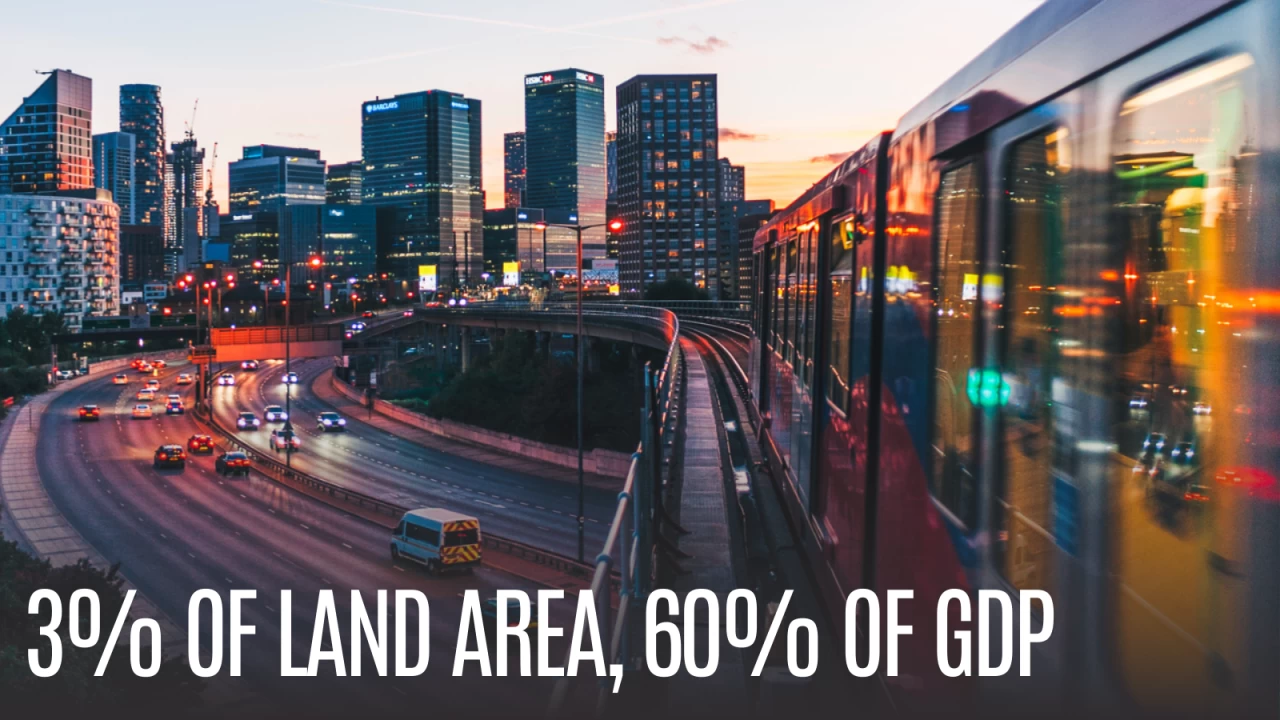
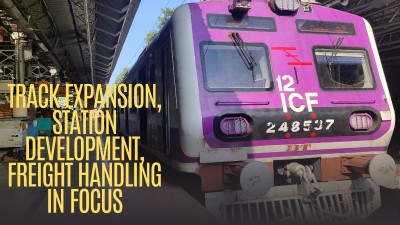
Kolkata: What sits on less than 3% of the Indian land but contributes to 60% of the GDP? Answer: its cities. India can still live in the villages but the economic pulse throbs in the cities. Against this rapidly urbanising scenario, management consultancy MNC PWC has focused on transport solutions in the expanding cities and has pointed out that pollution, congestion, hygiene, safety, ageing populations and rising expectations of convenience are all touchpoints to satisfy while trying to create affordable, fast, clean, and reliable public transport against a broad challenge of tight fiscal space. PWC has emphasised that five priorities stand out. These are:
Models for all cities projected to be million-plus
The budget should mandate transport models for all cities whose population will be more than 10 lakh by 2030, said PWC. This should be done so that "city-wide integrated transport and land-use models enable testing of the impact of proposed projects, simulate policy changes and prioritise investments based on measurable outcomes, and solve congestion by treating it not just as a transport problem but equally as a land-use and demand-management problem,".
For the million-plus cities, PWC's recommendation is, the Centre should make access to major urban transport funds. This should be contingent on regularly updating integrated transport and land-use models as well as using these models to appraise projects such as metro rail, BRT, elevated corridors and widening of large roads. It also said that these should be periodically reviewed updated to create comprehensive mobility plans based on the ground performance.
Creating a central nudge unit
PWC think a Central ‘nudge unit’ for urban behaviour and design should be created. It would trigger civic discipline and then embed the insights into standard, funding condition and capacity-building programmes. It can gp a long ay in ensuring infrastructure is used by studying how people actually use streets and public spaces and accordingly develop model design guidelines and low-cost interventions such as overpasses, subways and crossings.
Five-year rolling capital commitments
PWC has also harped o the need for large capital for transport infrastructure and come up with the recommendation of non-lapsable funds. "Large urban transport projects—metros, BRT corridors, depots, multimodal hubs—require long-term capital visibility. Yet, the current system of annual, stop–go budgeting creates uncertainty. Private contractors invest heavily in tunnelling machines, casting yards, and specialised equipment, and delayed or unpredictable payments increase their risk, which ultimately shows up as higher bid prices," is has said
Against this backdrop, the consultant has recommended that a non-lapsable urban transport fund under the Ministry of Housing and Urban Affairs with five-year rolling capital commitments should be created. The government should also provide multi-year sanction letters for approved projects. PWC thinks that there should be faster flow of funds directly to city or metro rail corporations, subject to milestones and governance standards.
O&M fund
An operations and maintenance challenge fund should be created for operations and maintenance of roads, flyovers, metros, depots and fleet of electric buses. The country has to come out of ‘build–neglect–rebuild’ or ‘buy–neglect–repurchase’ cycle that destroys value and erodes public confidence, the agency has said.
PWC has also emphasized the creation of a common technology framework and skilling ecosystem for advanced traffic management systems, intelligent transport systems, fare collection platforms and fleet management systems. "To manage this complexity, the Centre should promote a common technology framework," PWC has mentioned in its note.