Sign In
By signing in or creating an account, you agree with Associated Broadcasting Company's Terms & Conditions and Privacy Policy.
By signing in or creating an account, you agree with Associated Broadcasting Company's Terms & Conditions and Privacy Policy.
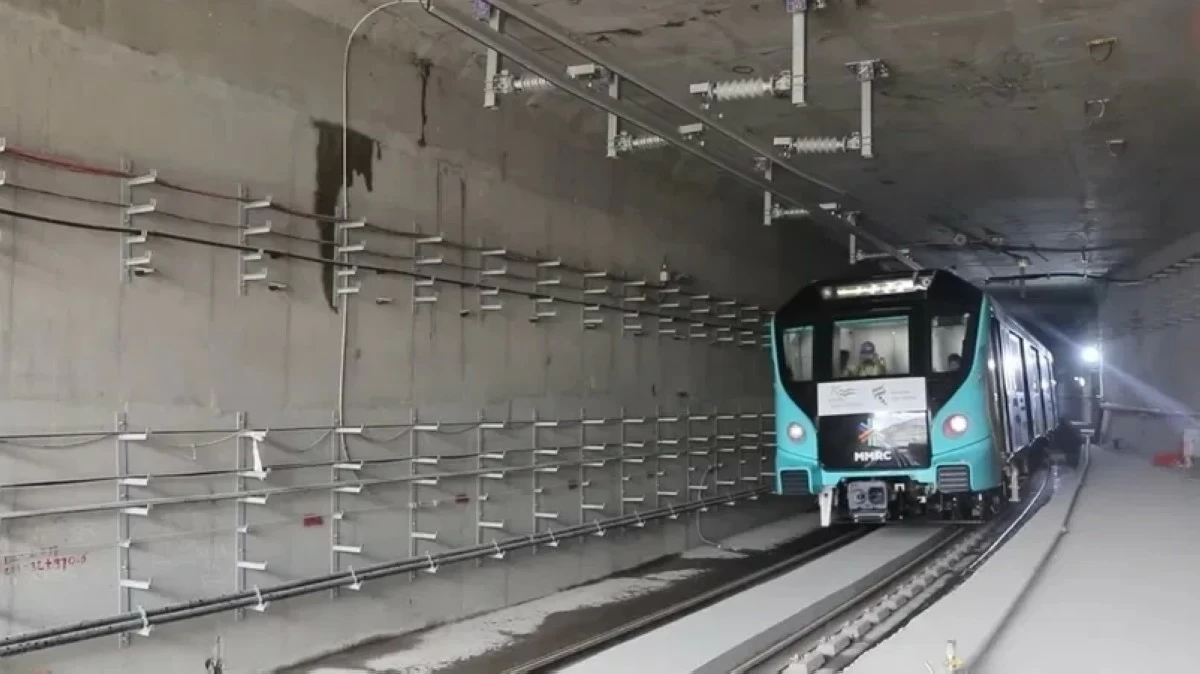


Mumbai: Ten years ago, on June 8, 2014, Mumbai witnessed a transportation revolution with the launch of Metro Line 1, popularly known as the Blue Line. Spanning 11.4 kilometers from Versova in the west to Ghatkopar in the east, the elevated corridor has since become an indispensable part of the city's daily commute. By slashing travel time and providing a seamless alternative to road congestion, it has reshaped the way Mumbaikars move across the city.
As the Blue Line marked its 10th anniversary on June 8, 2024, its impact on urban mobility stood tall. Over the past decade, the metro has completed an astounding 1.1 million trips with an impeccable punctuality rate exceeding 99 per cent. The 16-train fleet has collectively covered nearly 126 million kilometers averaging 790,000 kilometers per train a testament to its reliability and efficiency.
Mumbai Metro’s Blue Line is more than just a transit system; it’s a vital link connecting diverse neighborhoods. The 12 strategically located stations have enhanced accessibility and integrated with existing transportation hubs, making commuting more convenient than ever.
| Station Name | Interchange & Connectivity |
|---|---|
| Versova | - |
| DN Nagar | Mumbai Metro Line 2 |
| Azad Nagar | - |
| Andheri | Western Railway Line |
| Western Express Hwy | - |
| Chakala | - |
| Airport Road | - |
| Marol Naka | Mumbai Metro Line 3 |
| Saki Naka | - |
| Asalpha | - |
| Jagruti Nagar | - |
| Ghatkopar | Central Railway Line |
Before the metro, traversing the distance between Versova and Ghatkopar could take up to two hours due to endless traffic snarls and over 45 signals. Today, the same journey takes just 21 minutes. The introduction of Line 1 has not only made commuting predictable but also significantly reduced travel fatigue, offering a stress-free alternative to crowded roads and buses.
With an impressive weekday ridership of around 450,000 passengers, Mumbai Metro Line 1 operates 418 trips daily. During peak hours, trains arrive every 3.5 minutes, ensuring minimal wait times. This high-frequency service has made the metro a preferred alternative to the overcrowded local trains, reinforcing its importance in the city's transportation framework.
The influence of Line 1 extends beyond transportation. Areas like Andheri and Ghatkopar have seen a surge in property values, commercial establishments, and infrastructure projects. Enhanced connectivity has encouraged businesses to flourish, transforming these suburbs into bustling urban centers.
The success of Line 1 has laid the foundation for an expansive metro network in Mumbai. Several new lines are in development, aiming to integrate more suburbs and reduce the burden on the existing transport systems. The efficiency benchmarks set by the Blue Line serve as a guiding framework for future projects, ensuring that Mumbai’s transit system continues to evolve.
As Mumbai Metro’s Blue Line completes a decade, it stands as a symbol of urban transformation.