Sign In
By signing in or creating an account, you agree with Associated Broadcasting Company's Terms & Conditions and Privacy Policy.
By signing in or creating an account, you agree with Associated Broadcasting Company's Terms & Conditions and Privacy Policy.
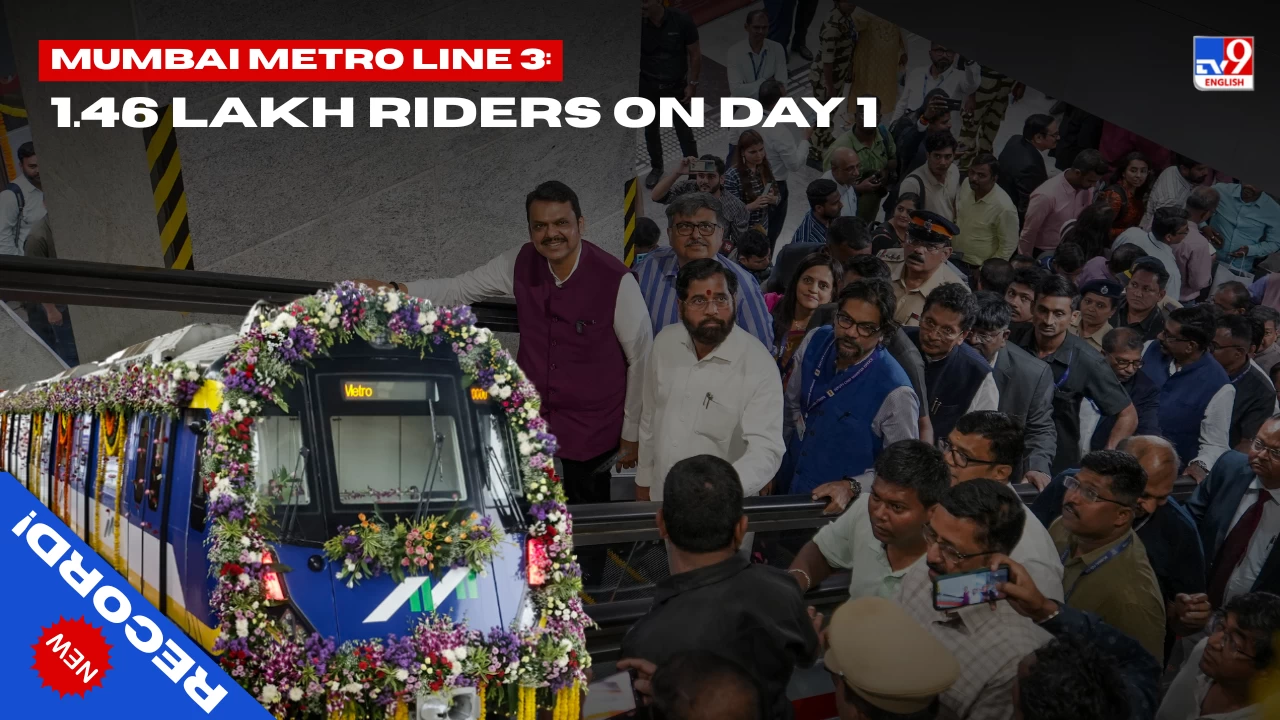


Mumbai: The long-awaited underground Metro 3, the Aqua Line, finally rolled into full operation on Thursday, signalling a transformative moment in the city’s public transport story. Nearly ten years in the making, the 33.5-kilometre corridor between Aarey and Cuffe Parade opened to an enthusiastic response, ferrying more than 1.46 lakh passengers by 9 PM on its first full day.
Linking south Mumbai with the western suburbs, the Aqua Line is now India’s longest fully underground Metro route constructed in a single phase. The strong ridership reflected the pent-up demand for a fast, direct link between the city’s residential areas and business hubs.
By early afternoon, passenger numbers had almost matched the 60,000 daily average recorded when only the partial Aarey–JVLR to Acharya Atre Chowk stretch was open, a sign of the system’s immediate popularity. The turnout far exceeded the figures from earlier trial phases this year, which saw 18,015 commuters on the opening day of Phase 1 in October and 32,791 on the first day of Phase 2A in May.
Crowds began building after 8.30 AM, particularly at major interchange points such as Worli and Dadar. For many commuters, the new Metro has already made a noticeable difference, helping them avoid traffic jams, long bus queues and the expense of taxis.
The effects were visible across the city’s surface transport network. Buses departing from Mantralaya and CSMT saw lighter loads, while taxis outside CSMT were left waiting for passengers, a rare sight in one of south Mumbai’s busiest corridors.
The Metro has also proved its efficiency in both time and cost. A trip from Aarey to Cuffe Parade now takes about 58 minutes at a fare of Rs 70, compared with one hour and 22 minutes by car costing nearly Rs 800. Similarly, the BKC–Churchgate journey has been cut to 31 minutes for Rs 30, while travelling from the airport’s Terminal 2 to CSMT now takes 40 minutes for Rs 50, a journey that would previously cost more than ₹900 by road. Overall, travel time has dropped by up to 40 per cent and travel costs by as much as 80 per cent.
Office-goers within south Mumbai have also gained from the new line, with quicker, more affordable journeys between Worli, CSMT and Nariman Point. During the evening rush, stations such as Vidhan Bhavan experienced heavy footfall, prompting temporary closure of one entrance to manage crowds safely.