Sign In
By signing in or creating an account, you agree with Associated Broadcasting Company's Terms & Conditions and Privacy Policy.
By signing in or creating an account, you agree with Associated Broadcasting Company's Terms & Conditions and Privacy Policy.
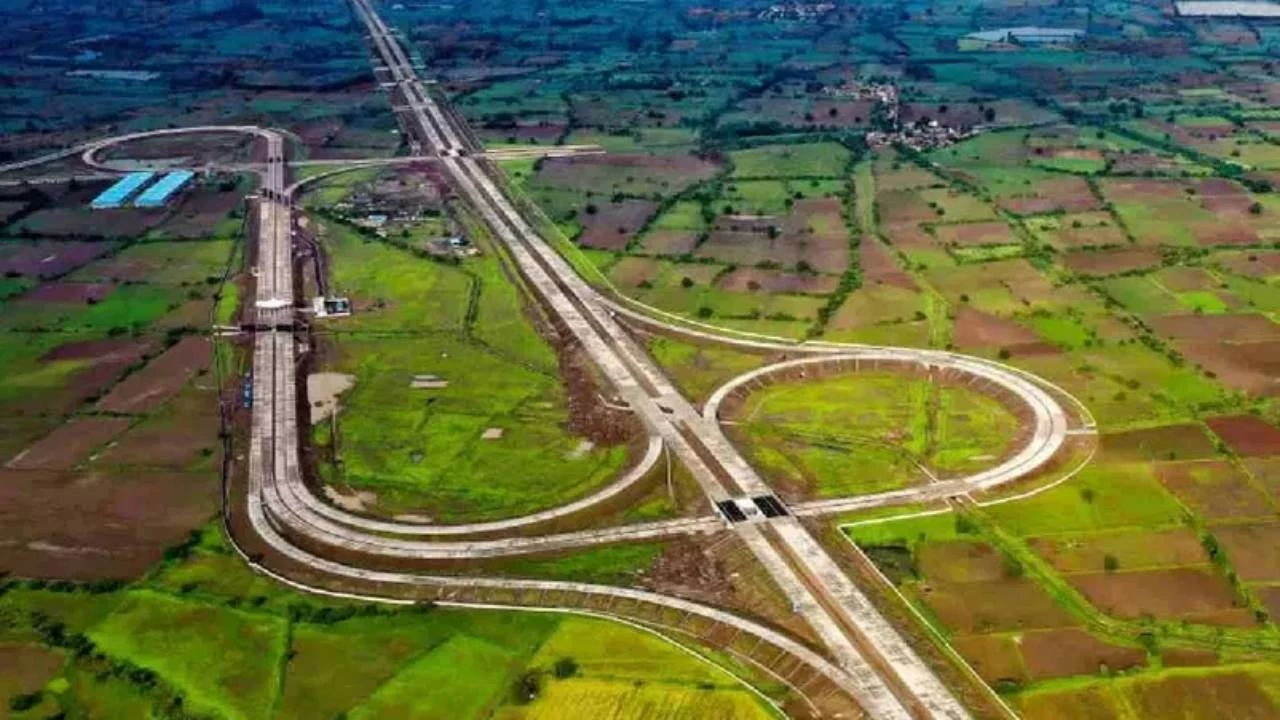


Mumbai: In a country where infrastructure serves as the backbone of economic development, Maharashtra has unveiled one of its most ambitious projects to date, the Hindu Hruday Samrat Balasaheb Thackeray Maharashtra Samruddhi Mahamarg, widely known as the Mumbai-Nagpur Expressway. Spanning an impressive 701 kilometers, this eight-lane expressway is more than just a road; it represents progress, connectivity, and the pinnacle of modern engineering.
Designed to reduce travel time between Mumbai and Nagpur from a grueling 16 hours to a swift 7-8 hours, this highway is set to revolutionise road travel while opening up unprecedented economic opportunities for businesses, traders, and commuters.
Bringing such a massive project to life was no small feat. The Maharashtra State Road Development Corporation (MSRDC) spearheaded the initiative, ensuring that the expressway met international standards in safety, efficiency, and speed. Vehicles can travel at speeds of up to 120 km/h, making it one of the fastest highways in India.
For decades, the journey from Mumbai to Nagpur was characterised by delays, rough terrain, and congestion. Now, travelers can experience a smooth, scenic, and safe journey, a testament to the advancements in Indian road infrastructure.
The Mumbai-Nagpur Expressway is not just a direct route between two major cities; it is a lifeline that connects 10 districts, 24 talukas, and 392 villages. The expressway passes through key regions, including Thane, Nashik, Ahmednagar, Aurangabad, Jalna, Buldhana, Washim, Amravati, Wardha, and Nagpur. Additionally, 14 more districts will benefit through feeder roads, ensuring even smaller towns are linked to Maharashtra’s economic hubs.
Strategically connected to major industrial corridors like the Delhi-Mumbai Industrial Corridor and the Bengaluru-Chennai Economic Corridor, the expressway is poised to become a game-changer for trade and commerce.
Unlike traditional highways, the Samruddhi Mahamarg is equipped with cutting-edge technology to enhance safety, comfort, and efficiency.
A state-of-the-art monitoring system ensures real-time traffic updates, speed enforcement, and lane discipline, significantly reducing the risk of accidents and making travel safer.
Certain sections of the expressway are designed to function as emergency landing strips for aircraft in times of natural disasters or national security emergencies, showcasing its multifaceted utility.
Modern amenities for travellers
To enhance the travel experience, the expressway includes:
Advanced safety infrastructure
Equipped with:
Staged development for maximum impact
To ensure smooth execution, the project was divided into four key phases:
Economic transformation through connectivity
Beyond being a marvel of engineering, the expressway is a catalyst for Maharashtra’s economic transformation.
The reduced travel time means goods can be transported faster, leading to more efficient supply chains. This benefits industries, logistics parks, and agricultural markets, fostering rapid economic growth.
New townships in plans
To maximi se its potential, the government has planned 24 townships along the expressway, featuring:
Enhancing tourism and culture
Several historical and natural tourist destinations are now easily accessible via the expressway. With improved connectivity, Maharashtra’s tourism industry is set to thrive, benefiting local businesses and artisans.
Sustainable and safe for environment
The Samruddhi Mahamarg is not just about speed and efficiency, it is built with environmental consciousness and safety in mind.
To counteract the removal of 2.36 lakh trees during construction, a large-scale reforestation initiative aims to plant 33.65 lakh trees along the route, ensuring ecological balance.
Since the expressway passes through biodiverse regions, special measures such as wildlife corridors and noise barriers have been implemented to minimi se environmental impact.
A solar energy project with a capacity of 138.47 MW has been incorporated into the expressway’s infrastructure, aligning with India’s sustainability goals.
The Mumbai-Nagpur Expressway is not just a highway, it is a blueprint for India’s future infrastructure projects. It showcases how advanced technology, meticulous planning, and sustainability can converge to redefine connectivity and economic development.
As the final phase nears completion, the expressway is set to transform Maharashtra’s landscape, unlock new opportunities, and solidify the state’s position as one of India’s most developed regions. For commuters, businesses, and industries alike, the Samruddhi Mahamarg is more than just a road, it is a high-speed gateway to prosperity.