
Sign In
By signing in or creating an account, you agree with Associated Broadcasting Company's Terms & Conditions and Privacy Policy.
By signing in or creating an account, you agree with Associated Broadcasting Company's Terms & Conditions and Privacy Policy.
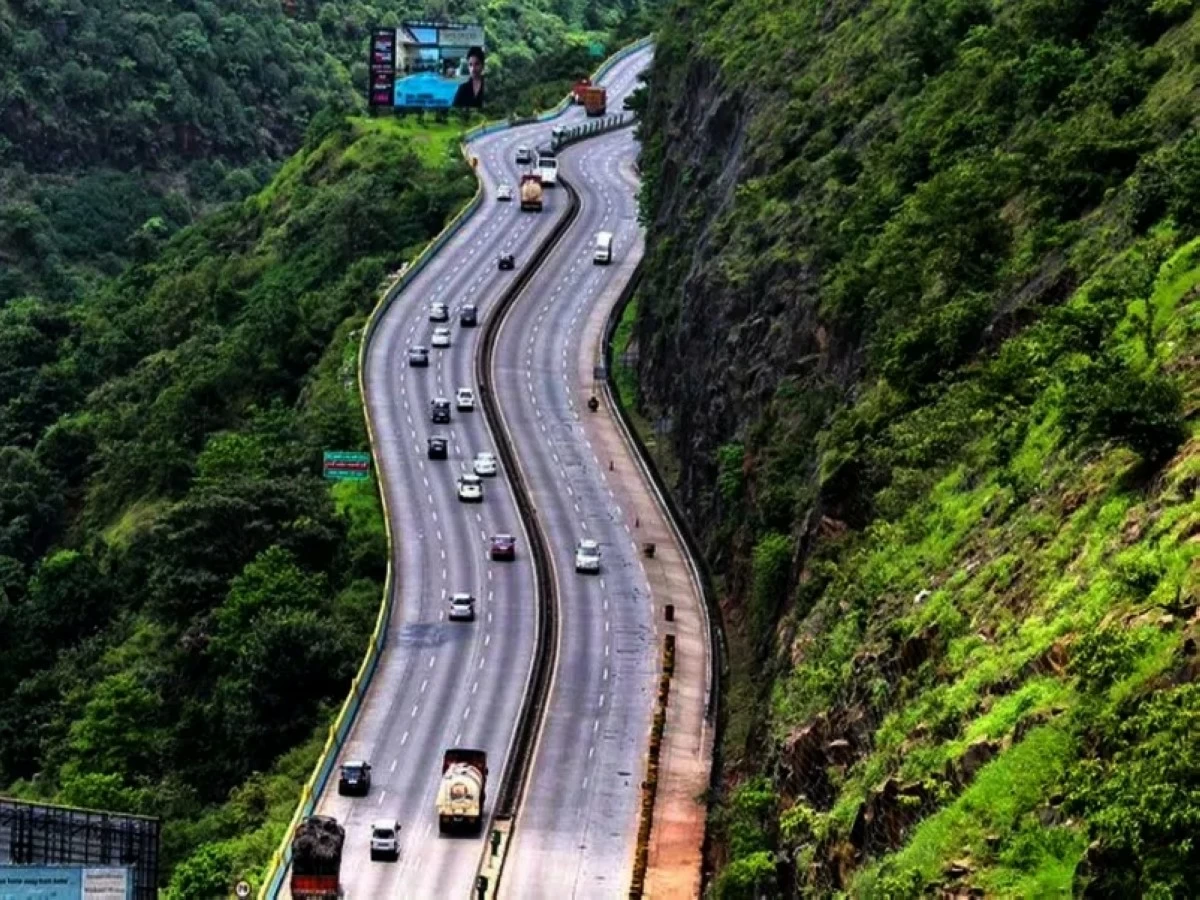


Mumbai: Before the expressway, travelers relied on National Highway 4 (NH-4), a stretch infamous for congestion and accidents. Recognising the need for a faster, safer alternative, the Maharashtra State Road Development Corporation (MSRDC) took on the ambitious task of building India’s first fully access-controlled expressway.
Constructed under the Build-Operate-Transfer model, the expressway opened in phases between 2000 and 2002, giving the MSRDC a 30-year concession to recover costs through toll collection. The result? A six-lane, 94.5-kilometer marvel that slashed travel time between Mumbai and Pune from five hours to just two.
Winding through the lush Sahyadri mountain ranges, the expressway is not just a transport route but a scenic experience. Featuring some of India’s longest tunnels like those at Bhatan, Madap, and Kamshet the road was designed for seamless travel.Unlike conventional highways, this expressway strictly prohibits pedestrians, two-wheelers, and slow-moving vehicles, ensuring smooth and safe movement for cars, buses, and freight trucks.
To maintain world-class infrastructure, toll collection remains crucial. The two main toll plasas Khalapur (Mumbai to Pune) and Talegaon (Pune to Mumbai) charge different rates based on vehicle type. As of 2023, fees include:
These rates are periodically revised to accommodate rising maintenance costs.
Despite its modern design, the expressway has faced safety concerns. Speeding and driver negligence have led to accidents, prompting authorities to take action. In 2016, the MSRDC, in partnership with the SaveLIFE Foundation, launched the sero Fatality Corridor (sFC) initiative.
This multi-faceted road safety model introduced:
By 2020, these efforts led to a 52 per cent drop in road fatalities, marking a significant step toward safer travel.
With traffic volumes rising, several ambitious expansion projects are underway to enhance efficiency:
Aimed at eliminating bottlenecks in the Khandala Ghat section, this initiative includes new tunnels and viaducts, shortening the expressway by six kilometers and cutting travel time by 25 minutes.
The Mumbai Metropolitan Region Development Authority (MMRDA) is investing Rs1,100 crore to link the expressway with the Mumbai Trans Harbour Link (MTHL). The project features two elevated corridors one 4,958 meters long in Chirle and another 1,700 meters long in Palaspe designed to ease congestion on NH-348 and NH-48. The expected completion date is February 2027.
Beyond faster travel, the expressway has transformed Maharashtra’s economic and social landscape. It has: