Sign In
By signing in or creating an account, you agree with Associated Broadcasting Company's Terms & Conditions and Privacy Policy.
By signing in or creating an account, you agree with Associated Broadcasting Company's Terms & Conditions and Privacy Policy.


Dehradun: Uttarakhand, known for its serene landscapes and sacred rivers, is now becoming a hotspot for disasters. Cloudbursts, landslides, and flash floods are no longer rare events—they’re becoming routine. While climate change plays a role, experts say the real danger lies in how humans are reshaping the land.
From the Kedarnath tragedy in 2013 to the recent devastation in Dharali village of Uttarkashi, the pattern is clear: unplanned development and excessive tourism are turning natural hazards into full-blown disasters.


Tourism boom, but at what cost?
Tourism is the backbone of Uttarakhand’s economy. Every year, millions of pilgrims and travelers visit places like Mussoorie, Char Dham, Valley of Flowers, and Nainital. To cater to them, hotels, homestays, shops, and roads are being built at breakneck speed.
But many of these constructions ignore basic safety norms. Buildings are coming up dangerously close to rivers, on unstable slopes, and in landslide-prone zones. In the race to offer “river-view” rooms and scenic stays, the natural flow of rivers and streams is being blocked. When heavy rains hit, water finds new paths—often through homes and markets.

Dharali cloudburst: A wake-up call
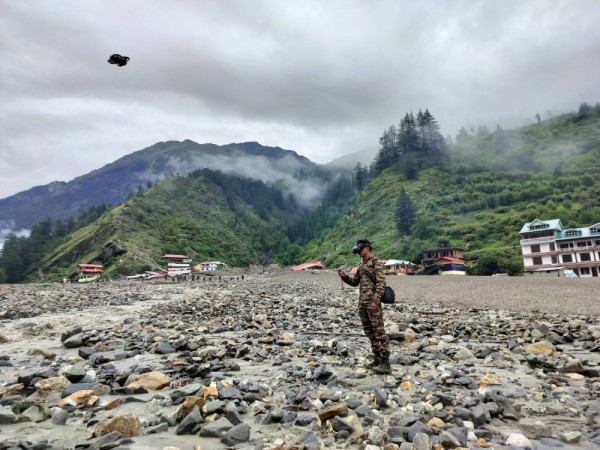
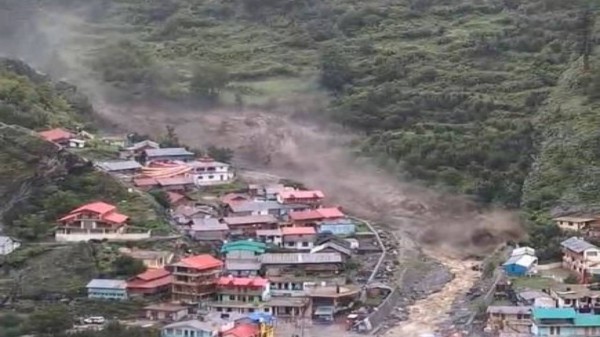
The recent cloudburst in Dharali village is a grim reminder. Located near the Kheerganga river, Dharali saw massive destruction when debris-laden water swept away homes, shops, and roads. The area had seen rapid construction in recent years, with little regard for geological safety.
Experts say this was not just a natural disaster—it was man-made. Had buildings been kept at a safe distance from the river, and had proper geological surveys been done, the damage could have been minimized. Kavita Upadhyaya, a environment researcher from Uttarakhand, says, "The 2013 and current floods are not the only instances where Dharali was hit by floods. The village’s market area is established on a debris-flow fan – a fan-shaped area formed by repeated debris deposition from flows. Being a debris-flow fan makes the area unstable and unsuitable for construction. Yet, despite repeated floods, the Uttarakhand government and local administration have taken no steps to ensure minimum loss during such events."
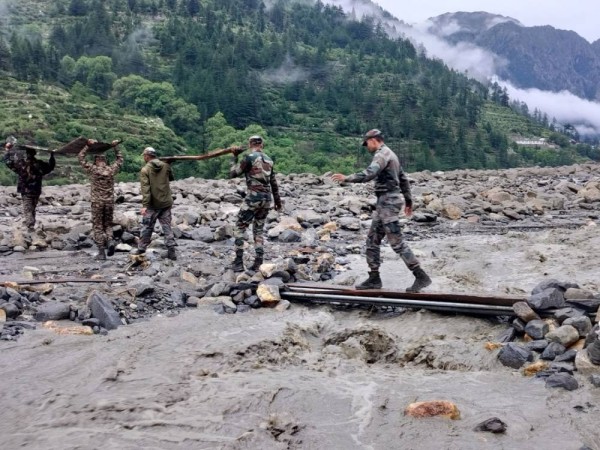
In 2013 too, the Kheer Ganga, or Kheer Gad, flash-flooded and deposited a few feet of sediment in Dharali. Following this, flood protection work was carried out to protect the village from future floods. However, the flood on Tuesday broke through these protection works and caused heavy damage in Dharali, she added further.
Scientists have been warning about Uttarakhand’s vulnerability
Scientists and geologists have been warning about Uttarakhand’s vulnerability for decades. The state lies in a high seismic zone and is prone to landslides. Yet, their advice is often ignored in the name of development.
Prof. M.P.S. Bisht of Garhwal Central University recalls past disasters in the Gangotri valley, including one in the 18th century that submerged entire villages. He says the geography of the region has changed drastically due to debris and rainfall, and warns that history is repeating itself.
Despite multiple tragedies—Chamoli in 2021, Joshimath’s land subsidence in 2023, and now Dharali—there’s little sign of a shift in policy or public behavior. Geographical situation is also responsible. Dr. S.P. Sati, a leading geologist in Uttarakhand known for his expertise in geomatics and his research on the environmental impact of construction projects in the region, stated that the slope streams in the Kheer Gad rivulet are so steep that even minor flooding can wreak havoc, bringing boulders and sediments at a much faster speed.
Cost of unplanned construction
Illegal and unscientific construction is rampant. Local administrations often turn a blind eye, and builders flout rules with impunity. In many places, drains and natural water channels are blocked, forcing rainwater to flood settlements. In the last 25 years, Uttarakhand has seen dozens of cloudbursts, killed hundreds and destroyed thousands of homes. The Kedarnath disaster alone claimed thousands of lives. Yet, construction continues unabated—even in ecologically sensitive zones.
Balancing development and nature
Experts say development is not the enemy—but it must be planned and sustainable. A strong master plan is needed at the state level, with strict monitoring of construction in sensitive areas. Tourism must be nature-friendly, not nature-threatening.
Simple steps like maintaining distance from rivers, conducting geological tests before building, and preparing for disasters in advance can save lives. But these require political will, public awareness, and administrative action.
Citizens, businessmen, and planners must also take responsibility
It’s not just the government that needs to act. Citizens, businessmen, and planners must also take responsibility. Choosing to build or stay in risky zones, ignoring warnings, and chasing profit over safety all contribute to the problem.
The mountains are telling their woes through floods, landslides, and tremors. If we don’t listen now, the consequences will be irreversible.
The clock is ticking
Uttarakhand’s beauty is its biggest asset—but also its biggest vulnerability. The Himalayas are young and fragile. Every road carved, every hotel built, every tree cut has an impact. The state has given enough warnings—Kedarnath, Chamoli, Joshimath, Dharali. The question is: will we learn, or wait for the next disaster?