Sign In
By signing in or creating an account, you agree with Associated Broadcasting Company's Terms & Conditions and Privacy Policy.
By signing in or creating an account, you agree with Associated Broadcasting Company's Terms & Conditions and Privacy Policy.
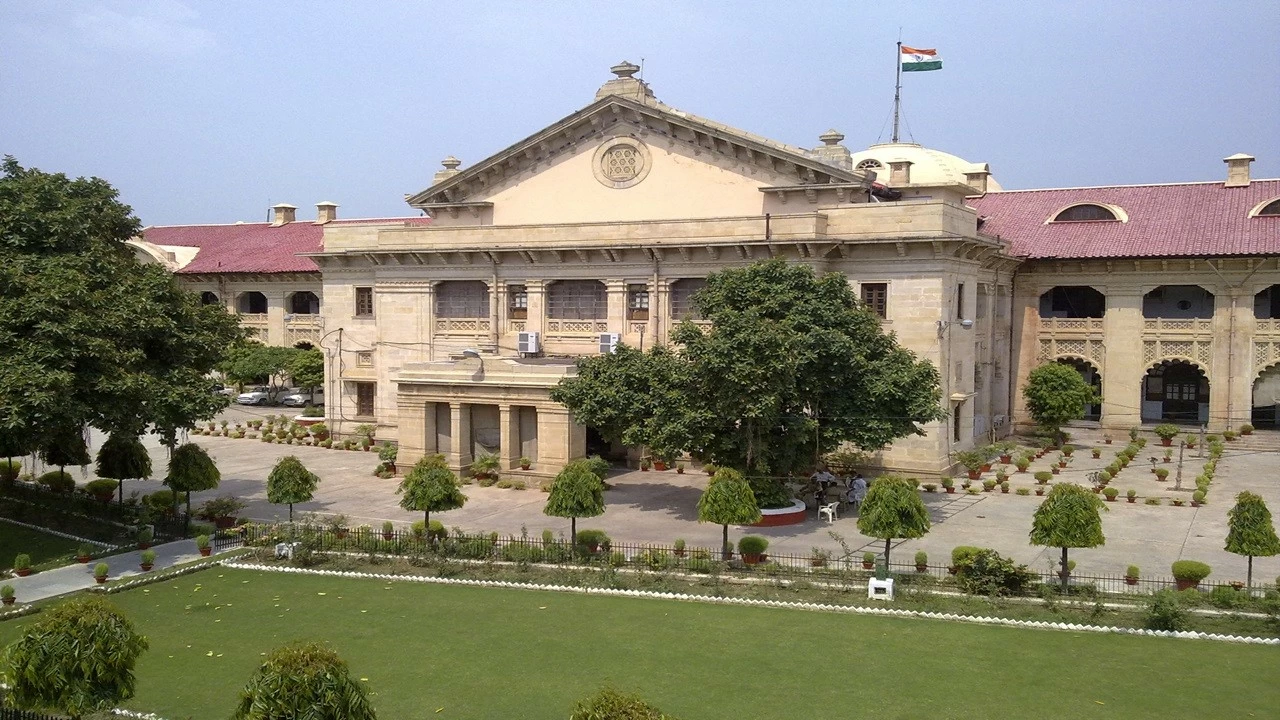

New Delhi: In a landmark ruling, the Allahabad High Court recently directed the Uttar Pradesh government to look into cases in which converted Christians are allegedly continuing to avail reservation benefits under the Scheduled Castes (SCs).
The court order seeks to check instances where people who have converted to Christianity continue to claim benefits reserved for SCs. It has given all district magistrates a four-month deadline to act as per the law and identify and prevent such cases.
The judgment said that upon conversion to Christianity, an individual ceases to belong to their original caste. The court further observed that claiming caste-based benefits merely for the purpose of availing reservation after such conversion amounts to a fraud on the Constitution.
Justice Praveen Kumar Giri’s order referred to Paragraph 3 of the Constitution (Scheduled Castes) Order, 1950, which says that only Hindus, Sikhs, or Buddhists can be recognised as members of a Scheduled Caste community.
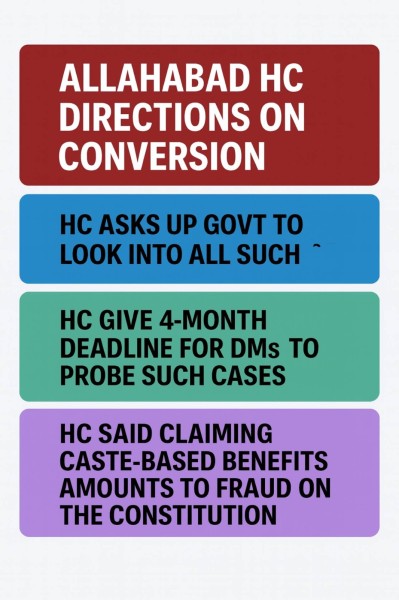
The court issued directions to the principal secretary of the minorities welfare department to take appropriate measures to make sure that that the separation line between minority and SC status was firmly maintained and enforced.
The order said that retention of SC status who has converted to Christianity will be construed as a “fraud on the Constitution and contrary to the ethos of reservation policies” since there is no caste system in Christianity.
Justice Giri gave the order in a case related to Jitendra Sahani, a resident of Maharajganj in Uttar Pradesh. Sahani had stated that in April 2023, he received permission from the Maharajganj SDM to organise sermons on Jesus Christ on his property, in which several Christian devotees participated. He alleged that certain anti-social elements tried to cause disruptions in the prayer meeting he had organised.
In December 2023, the Maharajganj SDM, who had revoked his approval for the prayer meeting, submitted a report before the court. It said that Sahani pitched up a tent at a public place, where he used to hold prayer meetings and tried to convince people about embracing Christianity. An FIR was lodged in the case and later a charge sheet was also filed.
In an affidavit filed in the court, Sahani had identified his religion as Hindu. But witnesses testified that he had converted to Christianity and served as a priest. Sahani was also accused of “mocking Hindu deities” and fostering enmity. A witness also alleged that Sahani scoffed the Hindu faith by claiming it offered no respect due to caste hierarchies, while converting to Christianity would lead to “jobs, business growth and financial benefits from the missionaries”.
Sahani had urged the court to quash the charge sheet against him on the ground that he had sought permission from the authorities to “preach the words of Jesus Christ on my land”. Justice Giri gave his verdict while turning down Sahani's plea. He underlined that Sahani mentioned his religion as “Hindu” in his affidavit, although he had converted to Christianity. It also surfaced that the appellant belonged to the Scheduled Caste community prior to his conversion to Christianity.
The court ruling means that people who convert to Christianity can no longer claim SC benefits. Since availing such benefits has been termed as unconstitutional, legal action can be taken against the culprits or offenders. The verdict reinforces that SC benefits cannot be claimed by those who no longer belong to the caste system due to conversion. The order also calls for clear demarcation between minority status and SC reservation rights.
The verdict will go a long way in preventing the misuse of SC reservation benefits by people who have converted to Christianity. It makes sure that caste-based quota are available only to communities who are eligible.