Sign In
By signing in or creating an account, you agree with Associated Broadcasting Company's Terms & Conditions and Privacy Policy.
By signing in or creating an account, you agree with Associated Broadcasting Company's Terms & Conditions and Privacy Policy.
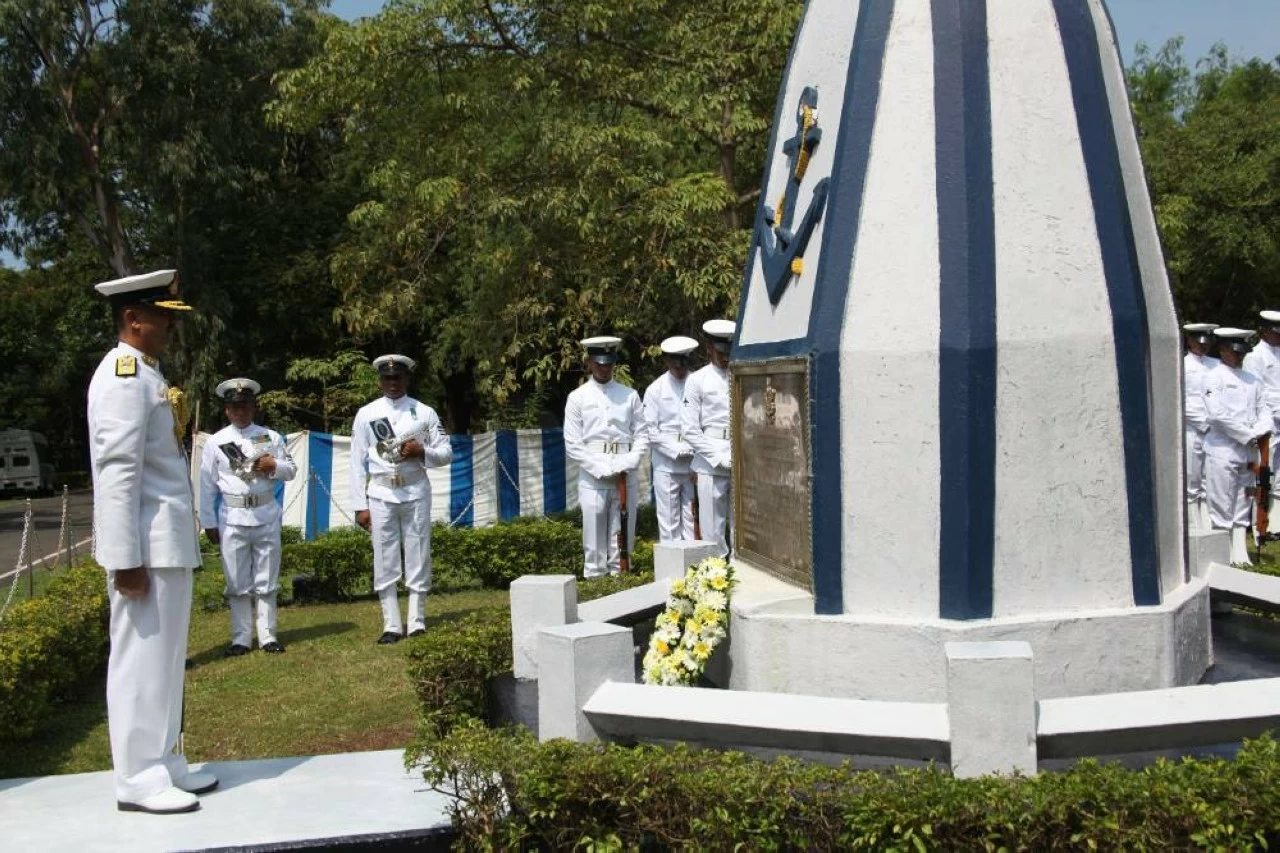


New Delhi: Around six decades back, on December 19, 1961, Goa was liberated from Portugal’s colonial rule. With Russian President Vladimir Putin on a two-day trip in India, attention has again shifted to Moscow’s little-known backing for New Delhi during the 1961 crisis.
India gained its Independence in 1947 and it was assumed that Portuguese and French would give their remaining settlements and enclaves. Britain left India. Later, France transferred Pondicherry, Karaikal, Mahé, Yanam and Chandernagore. But it was only on December 19, 1961 that Goa got liberation from the Portuguese rule.
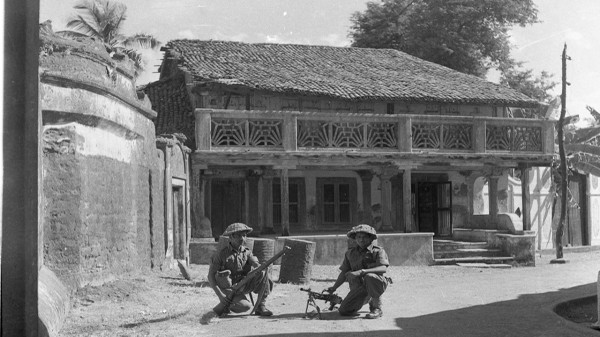
Portuguese explorer and navigator Vasco da Gama was the first person to open the sea route from Europe to Asia via the Cape of Good Hope. In 1510, Afonso de Albuquerque took over Goa. It was the first territory seized by Portuguese in all of Asia. It spanned 4,193 square kilometres. The territory included the city of Goa — then the Portuguese capital — along with Daman, Diu, and the enclaves of Dadra and Nagar Haveli. Over a period of time, Portuguese settlers intermarried with local residents, and this gave rise to a sizeable Eurasian community.
During the 16th century, Goa reached its pinnacle, almost matching Lisbon in wealth and influence. However, due to the arrival of the Dutch, it suffered decline. This weakened the Portuguese power in India and by the 18th century, its glory faced setbacks and challenges.
India achieved its Independence in 1947. While the British left, French vacated their settlements. However, the Portuguese refused to go back to their country and leave Goa. Portugal, underlining concerns for the safety of Goan Catholics, downplayed the fact that the majority of Goans were Hindus — and that millions of Catholics were already living safely and peacefully elsewhere in India.
There was tension. In 1946, a liberation march witnessed protesters, including women, arrested, lathi-charged and threatened. In 1955, Indian volunteers staged a satyagraha in Goa. They were fired at by Portuguese forces, resulting in the deaths of nearly two dozen people.
In a sharp response, the then PM Jawaharlal Nehru imposed an economic blockade, even though he refrained from taking military action. Portugal, which had become a member of the North Atlantic Treaty Organisation (NATO) by then, sought backing from the United States and Britain.
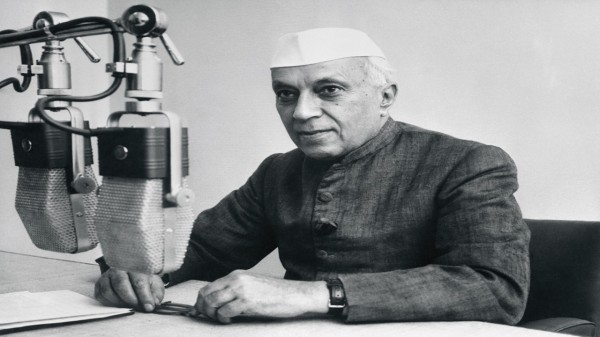
It was in December 1960, Portugal brushed off a United Nations resolution on decolonisation. UN resolution had asked Portugal when it would vacate its colonies in Asia and Africa. The following year, border clashes between Indian and Portuguese forces raged. These clashes mounted in September 1961. In November that year, Portuguese forces claimed to have repelled Indian attacks on Anjediv Island, and Indian fishing boats and vessels reportedly came under fire.
Following this, Nehru declared that “India’s patience was exhausted”. The government announced Goa would join India “either with full peace or with full use of force”.
Even though Western leaders, including then US President John F Kennedy, British PM Harold Macmillan and UN Secretary-General U Thant, appealed not to take military action, Indian forces launched ‘Operation Vijay’ on December 18 and 19, 1961 and landed in Goa, Daman and Diu.
Portuguese forces did not put up much resistance. The then Portuguese Governor-General of Goa, Manuel António Vassalo e Silva, signed the surrender on December 19, bringing to an end over 450 years of Portuguese rule.
The military action by India was strongly condemned by Western countries such as the US, UK, Canada, Australia, New Zealand, France, the Netherlands, Spain, and West Germany. Its policy of non-violence came in for sharp criticism.
The Portuguese government knocked at the UN door in an effort to retain control of its territory. The US, UK and France supported a Portuguese resolution demanding that India withdraw its forces from Goa and that “the positions prevailing before 17 December 1961” be restored.
It was at this critical juncture that the Union of Soviet Socialist Republics (USSR) stepped in. It vetoed the Portuguese resolution. The Soviet permanent representative, Valerian Zorin, hit out at Western “double standards”.
He declared: “When Portugal exterminates tens and hundreds of thousands of Angola citizens, the United States and the United Kingdom do not condemn it; they do not say that is infringing the United Nations Charter, they do not call it an act of aggression, and they do not propose making Portugal cease fighting in Angola and withdraw its troops from Angola and from its other colonies.” Zorin added that Goa and India were inseparable “both by reason of its geographical position and by its history, culture, language and traditions”.
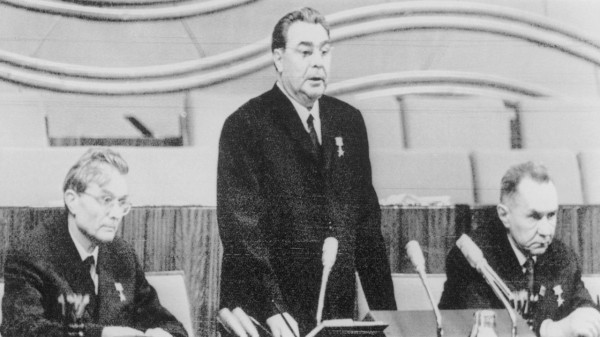
It was a coincidence that Soviet leader Leonid Brezhnev was on a state visit to India at the time. Brezhnev said Moscow had “complete sympathy for the Indian people’s desire to liberate Goa, Daman, and Diu from Portuguese colonialism.” He urged India to ignore “…those who are accustomed to strangle the people’s striving for independence… and from those who enrich themselves from colonialist plunder”. Interestingly, December 19 -- the day of Goa liberation -- also marks Brezhnev's birthday.
Nikita Khrushchev, another towering Soviet leader, told Nehru that “the resolute actions of the Government of India to do away with outposts of colonialism in its territory were absolutely lawful and justified”, and thet the Soviet people “unanimously approve of these actions”.
Historian SR Sharma, in his book India-USSR Relations – Volume 1, wrote: “The (Russian) veto saved India from a very awkward situation as the West was determined to get a ceasefire and withdrawal resolution passed in the Security Council.”
On December 31, 1974, India officially welcomed Goa into the Union after signing a treaty with Portugal. As India and Russia solidify their ties, the role of the Soviet veto must remind us that in the current geopolitical chaos, historical alliances should not be ignored or forgotten.