


Sign In
By signing in or creating an account, you agree with Associated Broadcasting Company's Terms & Conditions and Privacy Policy.
By signing in or creating an account, you agree with Associated Broadcasting Company's Terms & Conditions and Privacy Policy.
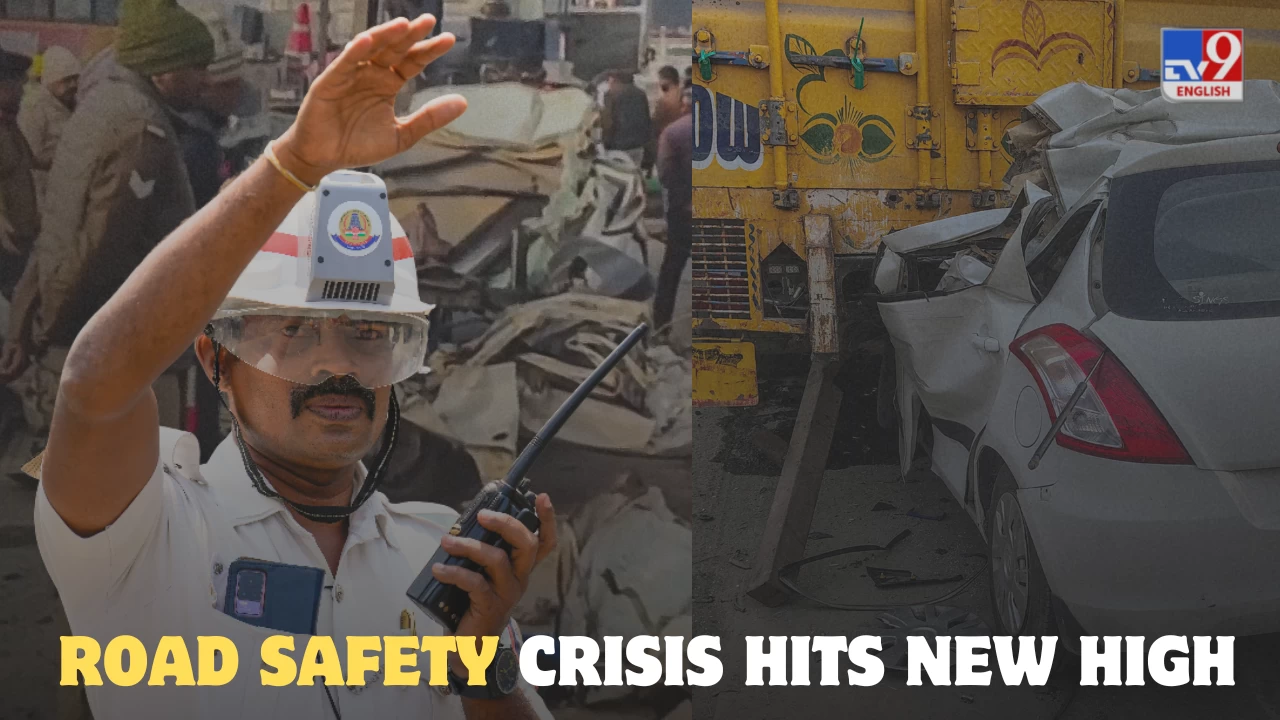


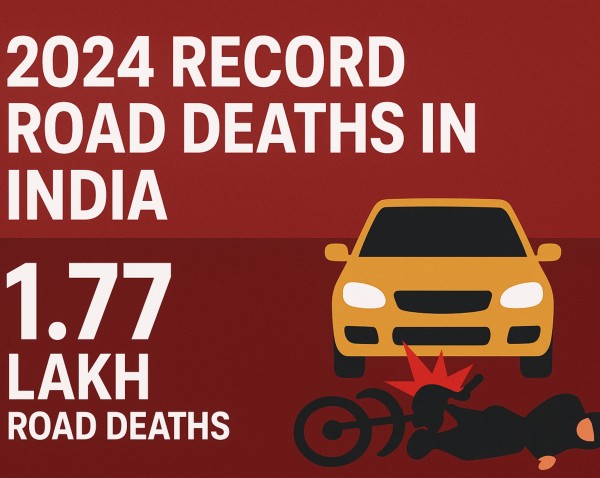
New Delhi: India recorded more than 1.77 lakh road deaths in 2024, the highest annual toll ever reported. The figure, disclosed in a written reply by the Ministry of Road Transport and Highways in Parliament, exposes the scale of a crisis that India has struggled to contain for years.
It is a stark reminder that even as the country builds wider highways and expands its transport network, Indian roads remain perilously unsafe. The loss of lives reflects deep gaps in discipline, infrastructure and enforcement that affect millions of commuters every day.



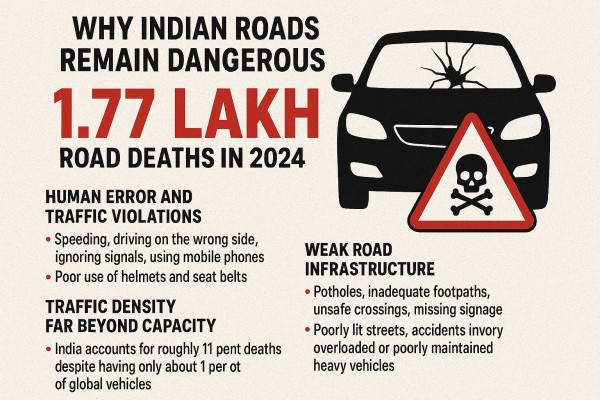
Experts say a combination of long-standing and systemic issues continues to push the fatality count upwards. Key reasons include:
• Human error and traffic violations: Speeding, driving on the wrong side, ignoring signals and using mobile phones remain the biggest contributors. In 2022 alone, speeding caused nearly 120,000 deaths. Poor use of helmets and seat belts further increases vulnerability.
• Weak road infrastructure: Potholes, inadequate footpaths, unsafe crossings, missing signage and poorly lit streets turn everyday travel into a risk. Many accidents also involve overloaded or poorly maintained heavy vehicles.
• Traffic density far beyond capacity: India accounts for roughly 11 per cent of the world’s road deaths despite having only about 1 per cent of global vehicles. High congestion, limited safety features and weak enforcement widen this mismatch.
Preliminary figures from states and Union Territories suggest that the 2024 toll is likely to surpass 2023, even though a few states reported small improvements. Specialists warn that unless deaths on national and state highways fall sharply, India may miss its global commitment under the Stockholm Declaration to halve road fatalities by 2030.
Reducing fatalities will require strong, coordinated intervention on multiple fronts. Priority steps include:
• Stricter enforcement: Consistent action on speeding, drink driving, mobile phone use and wrong-side driving.
• Better road design and maintenance: Repairing potholes, adding street lighting, building safe pedestrian crossings, underpasses and clear signage.
• Improving vehicle safety: Mandatory safety features, regular inspections and encouraging safer two-wheelers and cars.
• Public awareness: Long-term campaigns promoting helmets, seat belts and responsible driving behaviour.
The record-breaking toll of 2024 is more than a number. It is a warning that without urgent and sustained effort, India risks remaining trapped in a cycle of preventable road tragedies.

