Sign In
By signing in or creating an account, you agree with Associated Broadcasting Company's Terms & Conditions and Privacy Policy.
By signing in or creating an account, you agree with Associated Broadcasting Company's Terms & Conditions and Privacy Policy.
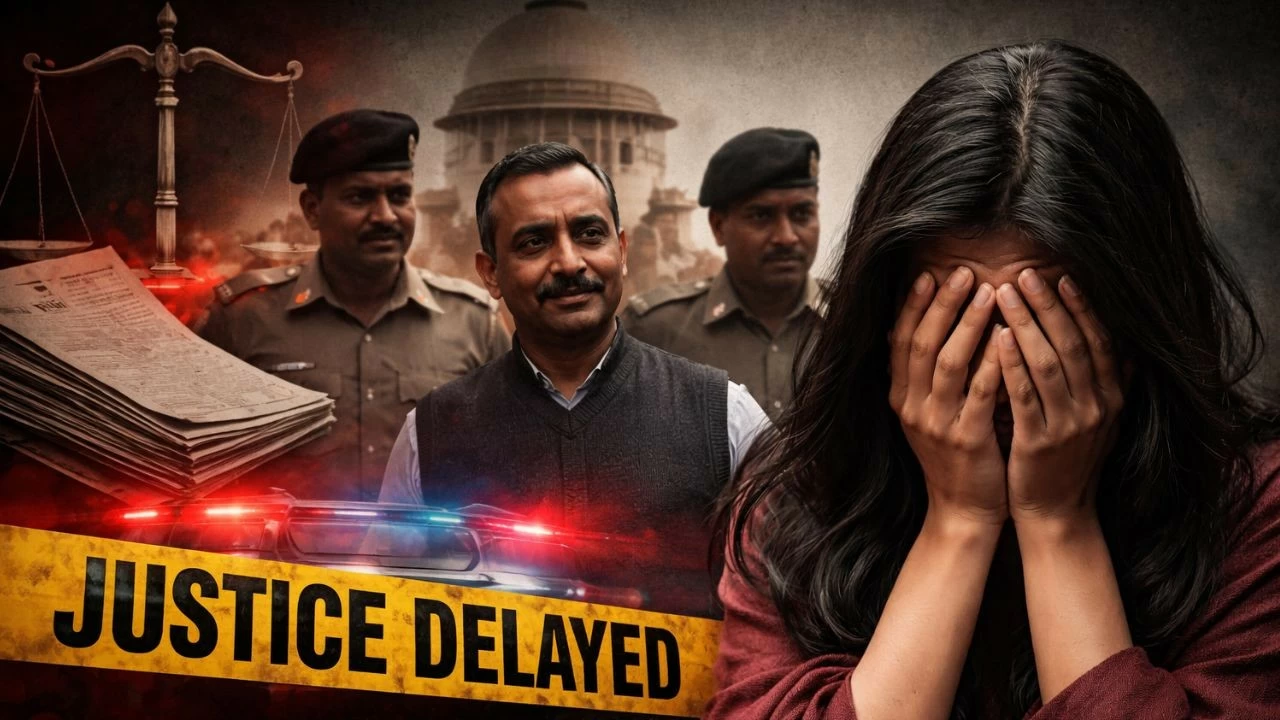


New Delhi: The Unnao rape case sparked nationwide outrage and raised serious questions about the fairness of India’s judicial system. A troubling issue that emerges is whether the suspension of life imprisonment in the case was influenced by a political backdrop.
The Delhi High Court’s decision appears, to many, to reflect judicial inconsistency—where loopholes within the legal framework are seemingly used to favour the powerful. Most disturbingly, individuals such as former BJP MLA Kuldeep Singh Sengar appear to receive repeated concessions despite being convicted of heinous crimes like rape under the POCSO Act.



On December 23, the Delhi High Court held that a Member of the Legislative Assembly does not fall within the definition of a “public servant” under Section 21 of the Indian Penal Code. The court further reasoned that the provisions under which Sengar was convicted were therefore not applicable. While, at first glance, the reasoning may appear legally sound, the court arguably failed to adequately consider the broader context and history of the case.
Additionally, the victim’s family has repeatedly expressed fears of intimidation following Sengar’s release. This concern is not new. Over the past three years, Sengar has been granted bail on multiple occasions—for his daughter’s wedding, cataract surgery, and other medical treatments—each time raising objections from both the CBI and the survivor.
Court documents reveal that in 2019, when the survivor sought the framing of more serious IPC charges, the CBI did not support her plea. The trial court rejected the request, and the CBI chose not to challenge the decision. Records of the Delhi High Court explicitly note this omission.
More troublingly, the trial court observed that certain aspects of the CBI’s investigation operated to the survivor’s disadvantage. The survivor later informed the High Court that even after the case was transferred to the CBI, fairness was not fully ensured. She also alleged that age-related evidence had been suppressed—claims that are documented in judicial orders, not activist statements.
Even though the CBI has now challenged the Delhi High Court’s ruling and appealed to the Supreme Court, a critical question remains: why did it take so long for these loopholes to be addressed? This delay represents a profound disappointment for the legal system.
The Unnao case underscores a harsh reality—when justice is delayed, it effectively becomes justice denied.