Sign In
By signing in or creating an account, you agree with Associated Broadcasting Company's Terms & Conditions and Privacy Policy.
By signing in or creating an account, you agree with Associated Broadcasting Company's Terms & Conditions and Privacy Policy.


New Delhi: Winning a Grand Slam cements your name in tennis history but what about proving you were the undisputed best player over the entire gruelling season? That’s a different kind of mountain to climb. The ATP Tour has officially crowned a year-end World No.1 since 1973. It’s about more than just peaking at the majors, as it requires relentless consistency, racking up wins from the heat of Australia in January to the pressure of the ATP Finals in November, navigating different surfaces, time zones, and fending off hungry challengers week in, week out.
Reaching that top spot is tough, but ending the year there is monumental and repeating that feat multiple times requires consistency throughout the season. To enter legendary territory, the ultimate proof of sustained dominance against the world's best is usually the marathon runners who truly ruled their seasons. Let's count down the players who claimed the year-end throne most frequently.
Stefan Edberg is well known for his elegant serve and volley game and unwavering sportsmanship. He reached the pinnacle of the men's game right as the official ATP Tour began. The Swede secured the coveted year-end No. 1 ranking for two consecutive years, 1990 and 1991, highlighting his peak performance during that competitive transition period from amateur to open era in tennis.
Lleyton Hewitt burst onto the scene with trademark intensity and relentless retrieving as he made history at a very young age. The energetic Australian finished atop the rankings for two straight years, 2001 and 2002. His 2001 finish was particularly notable as he became the youngest player ever to claim the year-end No. 1 spot in ATP history.
Despite his legendary status and incredible dominance at Grand Slams, particularly Roland Garros and Wimbledon, Bjorn Borg faced stiff competition for the top ranking throughout his career. The cool Swede managed to secure the year-end No. 1 position twice, in 1979 and 1980, reflecting his peak seasons amidst fierce rivalries with Jimmy Connors and John McEnroe in his prime.
With his unique blend of fiery competitiveness and sublime touch at the net, John McEnroe firmly stamped his authority on the early 1980s. The American lefty finished four seasons as the undisputed World No. 1, achieving this in 1981, 1982,1983, and capping it off with his phenomenal and near-unbeatable season in 1984.
A pioneer of modern power baseline tennis, backed by unparalleled fitness and determination, Ivan Lendl was a dominant force in the mid-to-late 1980s. The Czech-American star finished four demanding seasons atop the ATP rankings, claiming the year-end No. 1 honour in 1985, 1986, 1987, and again in 1989.
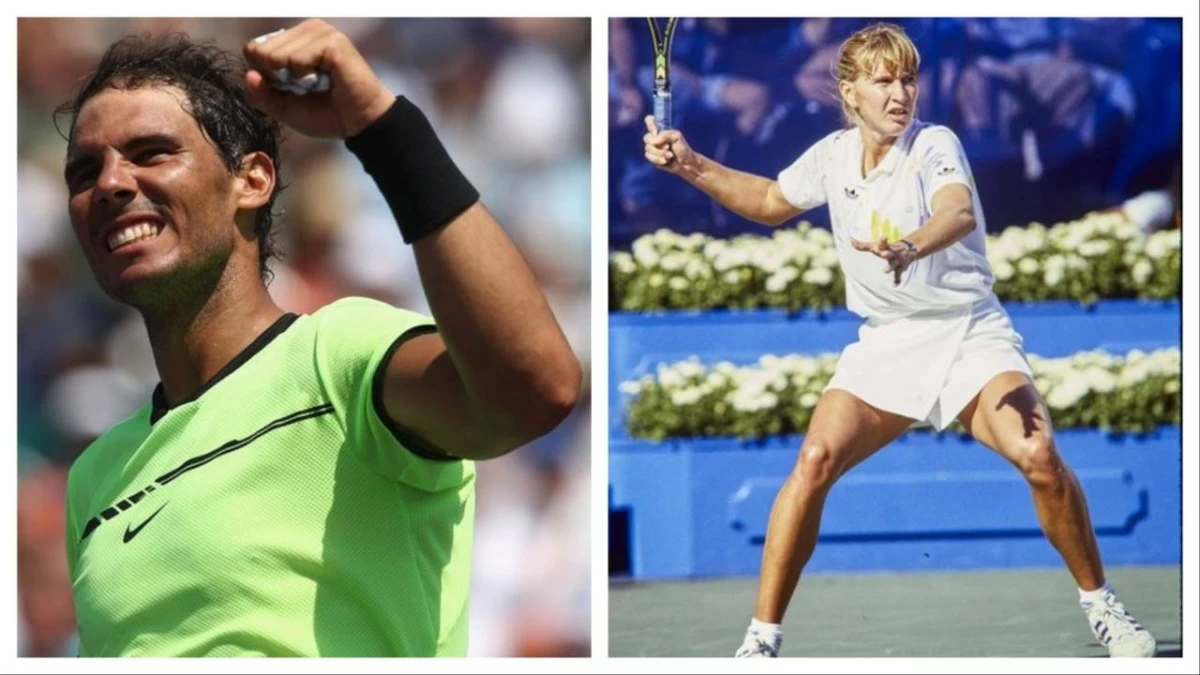
Rafael Nadal has showcased an incredible longevity and the ability to peak across different phases of his career. The King of Clay matched his great rival Roger Federer with five year-end No. 1 finishes. The Spanish legend achieved this feat in 2008, 2010, 2013, 2017, and 2019. His 2019 finish demonstrated his enduring class, making him (33) the oldest player to end the year on top.
Synonymous with grace and sustained excellence, Roger Federer also mastered the art of finishing the year as the world's best player five times. His reign included an incredibly dominant period where he held the year-end No. 1 spot for four consecutive years (2004, 2005, 2006, 2007), adding another finish in 2009 during the height of the 'Big Three' era. As described, the Swiss maestro is poetry in motion as he has dismantled his opponents very gracefully over the years, especially his 2017 Australian Open triumph comeback after injury against Nadal was insane.
Jimmy Connors set the early standard for year-long dominance in the ranking era as he achieved the year-end No. 1 ranking five times. Impressively, the American professional did this in five consecutive years from 1974 through 1978, showcasing his relentless consistency during a golden age of tennis.
The American legend Pete Sampras comes to mind when you think of dominating an entire decade. He defined the 1990s by finishing as the ATP year-end No. 1 for an incredible, unbroken streak of six consecutive years from 1993 through 1998. This remarkable record highlights his mastery, particularly on faster courts during his prime time.
Standing alone at the summit with the most year-end No. 1 finishes in history is Novak Djokovic. The Serbian superstar has achieved this record eight times, demonstrating unparalleled consistency and dominance across more than a decade (2011, 2012, 2014, 2015, 2018, 2020, 2021, and 2023). His 2023 finish also made him the oldest player (36) ever to secure the year-end top spot, cementing his legacy as a master of season-long excellence.
| Rank | Player | No. of times finished as No. 1 | Years |
|---|---|---|---|
| 1 | Novak Djokovic | 8 | 2011, 2012, 2014, 2015, 2018, 2020, 2021, 2023 |
| 2 | Pete Sampras | 6 | 1993, 1994, 1995, 1996, 1997, 1998 |
| 3 | Jimmy Connors | 5 | 1974, 1975, 1976, 1977, 1978 |
| 4 | Roger Federer | 5 | 2004, 2005, 2006, 2007, 2009 |
| 5 | Rafael Nadal | 5 | 2008, 2010, 2013, 2017, 2019 |
| 6 | Ivan Lendl | 4 | 1985, 1986, 1987, 1989 |
| 7 | John McEnroe | 4 | 1981, 1982, 1983, 1984 |
| 8 | Bjorn Borg | 2 | 1979, 1980 |
| 9 | Lleyton Hewitt | 2 | 2001, 2002 |
| 10 | Stefan Edberg | 2 | 1990, 1991 |
In the fiercely competitive world of the WTA Tour, winning majors is spectacular but earning the title of Year-End World No. 1 holds a unique prestige. It's the ultimate crown bestowed upon the player who reigned supreme over the entire season, proving herself the most consistent and dominant force from the first serve in January to the final point in November.
Since 1975, this honour has recognised the athlete who not only captured big titles but expertly navigated the relentless demands of global travel, diverse surfaces, and deep, talented fields week after week. It's about resilience, adaptability, and the mental strength required to stay on top when everyone is aiming for you. Finishing a year as the queen of the court is remarkable; achieving it multiple times places a player among the true icons who defined their generations. Let’s take a closer look at the incredible women who ruled the WTA Tour season after season.
Arantxa Sanchez Vicario is known for her incredible fighting spirit and relentless retrieving skills. She climbed to the very top of the women's game during a fiercely competitive period. The Spaniard managed to secure the prestigious year-end No. 1 ranking once, in 1995, a testament to her tenacity and ability to battle past legendary rivals like Graf and Seles during that era.
Former World No.1 Ashleigh Barty became the dominant force in women's tennis in the recent era with her silken all-court game, tactical brilliance, and calm demeanor. The popular Australian finished three consecutive years as the undisputed World No. 1 (2019, 2020, 2021), showcasing her consistent excellence before her surprising retirement while still holding the top spot.
Martina Hingis took centre stage as a teenage prodigy with exceptional court sense and finesse. She quickly rose to the pinnacle of the sport. Hingis set a series of "youngest-ever" records during the 1990s, including youngest-ever Grand Slam champion at just 17 and youngest-ever world No. 1. The Swiss star finished as the year-end No. 1 three times (1997, 1999, 2000).
Justine Henin possessed one of the most aesthetically pleasing and effective one-handed backhands in tennis history, he proved that skill and fighting spirit could conquer all. The tenacious Belgian finished three seasons as the World No. 1 (2003, 2006, 2007), highlighting her period of dominance in the mid-2000s despite often being physically smaller than her rivals.
Before an unfortunate off-court incident altered her career, Monica Seles established herself as a dominant force with her revolutionary power game. She finished atop the year-end rankings twice during her initial surge (1991, 1992) and bravely returned to share the No. 1 honour with Steffi Graf in 1995, totaling three year-end top finishes.
Lindsay Davenport had clean, powerful groundstrokes and a formidable serve, which helped her consistently challenge for the top honours throughout her career. The well-liked American finished four different seasons as the WTA year-end No. 1 (1998, 2001, 2004, 2005), demonstrating impressive longevity and the ability to peak across different eras of competition.
A paragon of consistency and grace under pressure, Chris Evert was instrumental in shaping the early years of the WTA Tour and its rankings. The American icon finished as the year-end World No. 1 five times, including the first three official years (1975, 1976, 1977) and added two more in 1980 and 1981 during her legendary rivalry with Navratilova.
A transcendent global superstar whose power and competitive drive redefined the sport, Serena Williams also belongs to the elite group with five year-end No. 1 finishes. The American legend achieved this feat in 2002, 2009, 2013, 2014, and 2015. The 13-year span between her first and last year-end No. 1 seasons highlights her incredible longevity and dominance.
Bringing a new level of athleticism and an aggressive serve-and-volley style to the forefront of the women's game, Martina Navratilova dominated the rankings for much of the 1980s. The Czech-American powerhouse finished the year as World No. 1 an impressive seven times (1978, 1979, and a remarkable five consecutive years from 1982 to 1986).
Standing alone at the very top with the most year-end No. 1 finishes in WTA history is the iconic Steffi Graf. The German legend, famed for her explosive forehand, finished the season as the world's best player a record eight times (1987, 1988, 1989, 1990, 1993, 1994, 1995, 1996). This included her historic 1988 "Golden Slam" year, cementing her status as one of the most consistently dominant players ever in the women’s category.
| Rank | Player | No. of times finished as No. 1 | Years |
|---|---|---|---|
| 1 | Steffi Graf | 8 | 1987, 1988, 1989, 1990, 1993, 1994, 1995, 1996 |
| 2 | Martina Navratilova | 7 | 1978, 1979, 1982, 1983, 1984, 1985, 1986 |
| 3 | Serena Williams | 5 | 2002, 2009, 2013, 2014, 2015 |
| 4 | Chris Evert | 5 | 1975, 1976, 1977, 1980, 1981 |
| 5 | Lindsay Davenport | 4 | 1998, 2001, 2004, 2005 |
| 6 | Monica Seles | 3 | 1991, 1992, 1995 |
| 7 | Justine Henin | 3 | 2003, 2006, 2007 |
| 8 | Martina Hingis | 3 | 1997, 1999, 2000 |
| 9 | Ashleigh Barty | 3 | 2019, 2020, 2021 |
| 10 | Arantxa Sanchez Vicario | 1 | 1994 |