Sign In
By signing in or creating an account, you agree with Associated Broadcasting Company's Terms & Conditions and Privacy Policy.
By signing in or creating an account, you agree with Associated Broadcasting Company's Terms & Conditions and Privacy Policy.
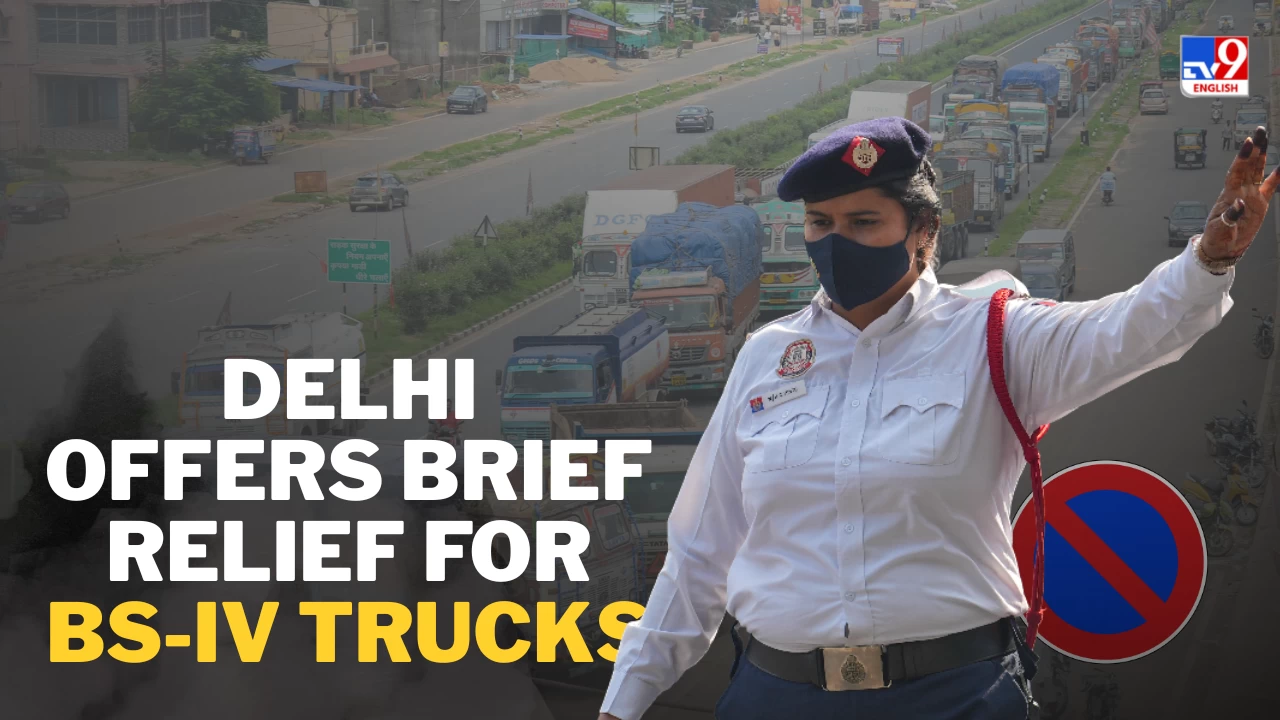


New Delhi: In a significant move to fight rising pollution levels, the Commission for Air Quality Management (CAQM) has amended its earlier directive to restrict the entry of polluting commercial goods vehicles into Delhi. The step, aimed at cutting emissions from thousands of trucks entering the city daily, forms part of broader efforts to clean Delhi’s toxic air, which worsens during winter.
The CAQM issued an amendment to Direction No. 88 on October 17, under which all non-BS-VI compliant commercial goods vehicles registered outside Delhi will be barred from entering the National Capital Territory from November 1. This restriction applies to all categories, including Light Goods Vehicles (LGVs), Medium Goods Vehicles (MGVs), and Heavy Goods Vehicles (HGVs).
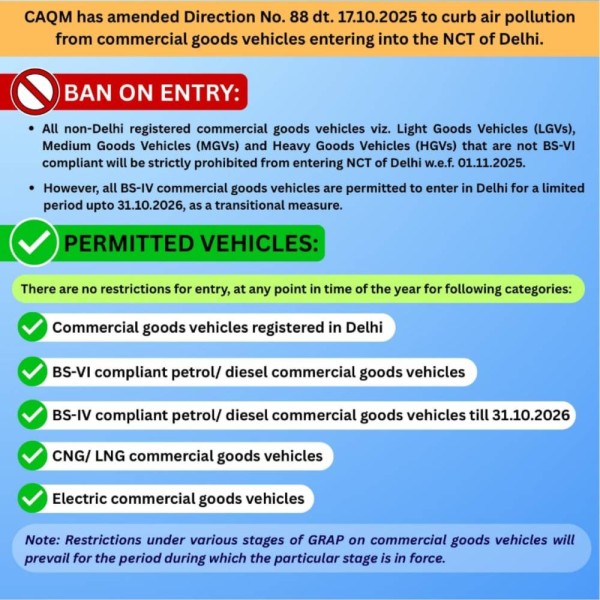
However, in a transitional relief, BS-IV compliant vehicles will be allowed to enter Delhi till October 31, 2026. The commission has clarified that this one-year window is to enable transporters and logistics companies to upgrade their fleets to cleaner fuel technologies.
The CAQM emphasised that these directions are part of a phased transition towards cleaner freight movement. The restrictions also align with the Graded Response Action Plan (GRAP), under which additional curbs may be imposed when air quality worsens.
The amendment follows extensive discussions between the CAQM, Delhi’s Transport Department, MCD, NHAI, and transport officials from Haryana, Uttar Pradesh and Rajasthan. Stakeholders raised concerns about congestion at border checkpoints caused by physical verification of vehicles carrying essential goods. Nearly 40 per cent of goods vehicles entering Delhi transport essential supplies such as vegetables, grains, milk and poultry.
In September 2025, the Supreme Court lifted exemptions for vehicles carrying essential commodities after being informed that verification procedures led to long stoppages, idling engines and added emissions. The court observed that such checks were impractical and contributed further to pollution near Delhi’s borders.