Sign In
By signing in or creating an account, you agree with Associated Broadcasting Company's Terms & Conditions and Privacy Policy.
By signing in or creating an account, you agree with Associated Broadcasting Company's Terms & Conditions and Privacy Policy.
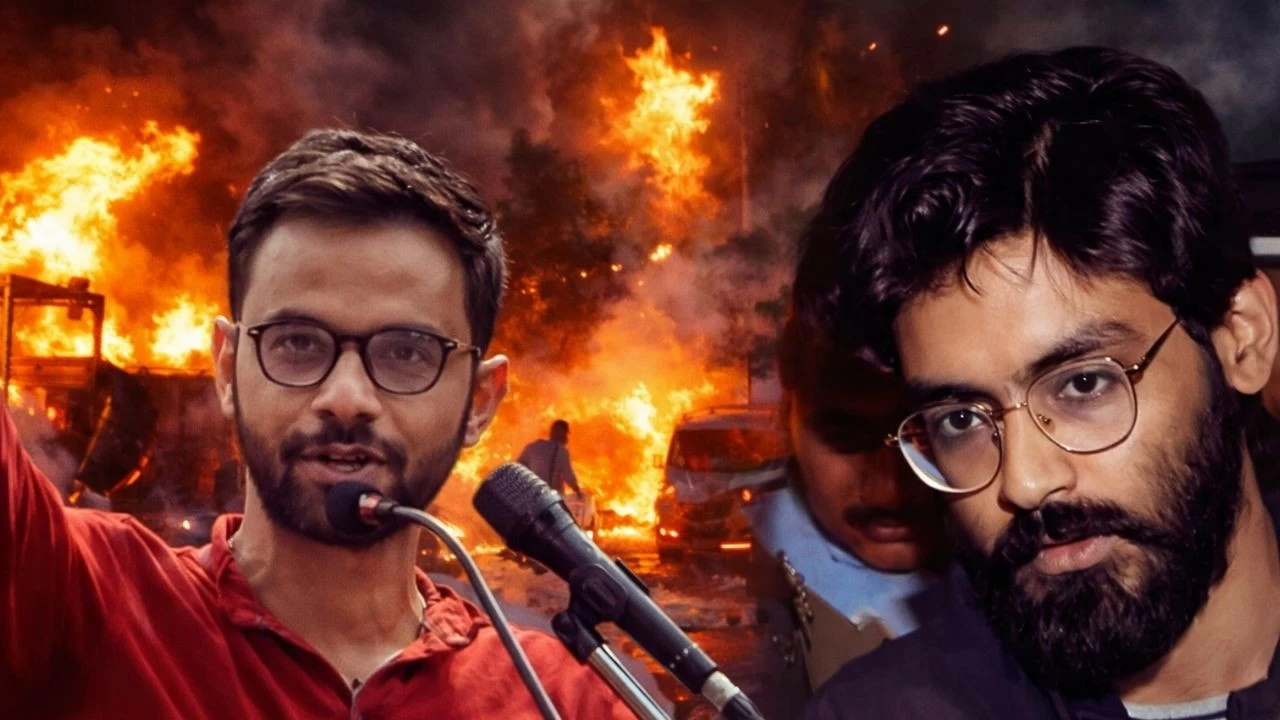


New Delhi: Former JNU scholar Sharjeel Imam on Thursday rejected claims that he was “mentored” by Umar Khalid in engineering the 2020 Delhi riots. The student activist added that he had distanced himself from the protests days before the riots broke out in February. At the Kakurdoma court hearing, he claimed that his associates had advised him to step away from the agitation, as he was being accused of giving “communal colours” to the movement.
The bench was chaired by Additional Sessions Judge Sameer Bajpai. Imam was represented by advocate Talib Mustafa, who argued that Imam had drifted away from the movement, noting that no violence had been reported while he was involved. The hearing is considered crucial to the case, as it marks the first time Imam has publicly dissociated himself from Umar Khalid.
Mustafa contended that, even according to the prosecution’s case, Imam’s alleged involvement was limited to December 2019—several weeks before the February 2020 violence. He argued that this timeline alone ruled out Imam’s participation in planning or executing the riots.
The lawyer said that police allegations claiming Imam drafted pamphlets and addressed protest sites at Shaheen Bagh and Jamia Millia Islamia did not meet the provisions of the Unlawful Activities (Prevention) Act (UAPA). Mustafa added that Imam had consistently advocated non-violence during the protests. “I told everyone that with elections impending, mobilisation should not increase and violence should not take place. Till I was heading the protest, there was no violence,” he said, adding that Imam’s role was largely limited to coordinating speakers at some protest sites.
Further, Mustafa stated that Imam was never part of the Delhi Police Support Group (DPSG) WhatsApp group, which police allege was created to initiate chakka jams and renewed mobilisation. Instead, Imam had created a separate group, “Muslim Students of Jamia (MSJ)”, to carry out peaceful protests against the CAA.
The lawyer also rejected claims that protests on February 2020 were deliberately planned to coincide with US President Donald Trump’s visit. “By the time the direction of the protest allegedly changed, I was already in custody,” Mustafa told the court.
In a pointed submission, the defence specifically distanced Imam from former JNU student Umar Khalid, rejecting police claims that Khalid had mentored Imam. “There is no call record or meeting to show that I was mentored by Umar Khalid. We had not spoken for almost six years on campus,” Mustafa said.
The hearing comes days after Umar Khalid and Sharjeel Imam were denied bail by the Supreme Court in the Delhi riots case. The top court held that the two played a “central and formative role” in instigating the riots.
However, five other co-accused—Gulfisha Fatima, Meeran Haider, Shifa-ur-Rehman, Mohd Saleem Khan, and Shadab Ahmed—were granted bail after nearly five years of incarceration. The SC observed that their prolonged custody was not indispensable for a fair trial, given the subsidiary nature of the allegations, and granted bail subject to stringent conditions.