


Sign In
By signing in or creating an account, you agree with Associated Broadcasting Company's Terms & Conditions and Privacy Policy.
By signing in or creating an account, you agree with Associated Broadcasting Company's Terms & Conditions and Privacy Policy.
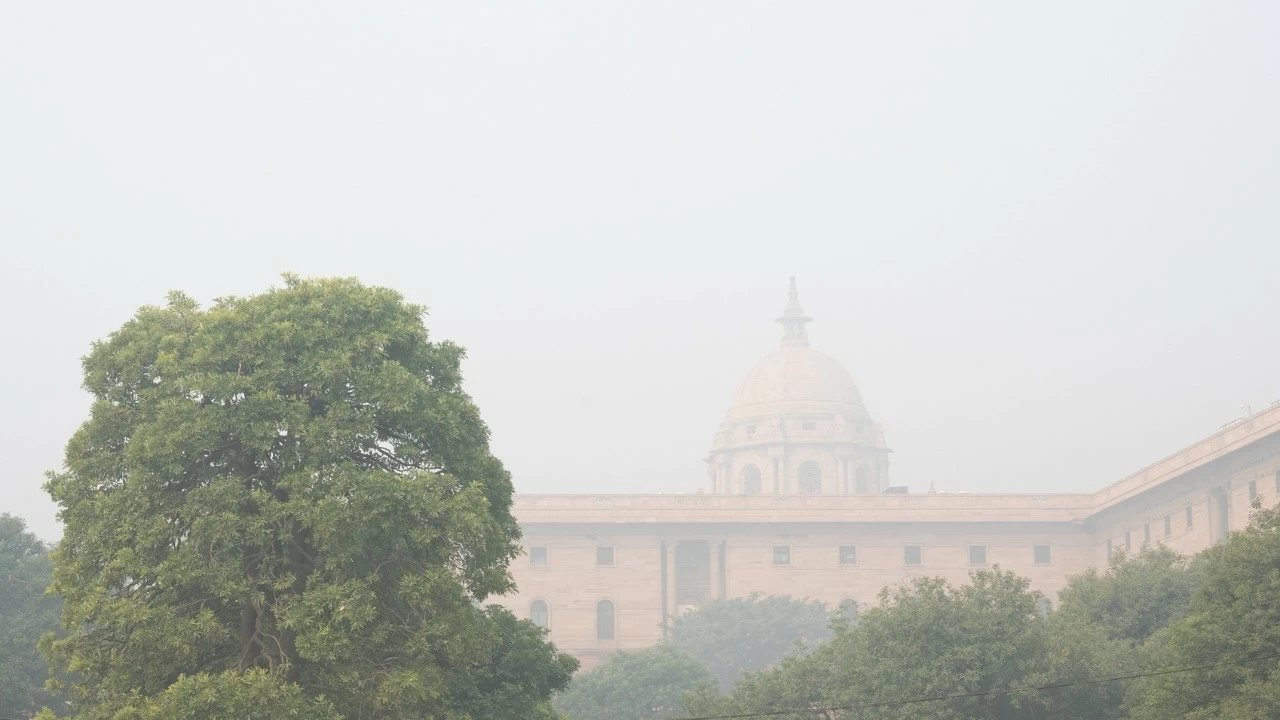


New Delhi: Amid a sharp deterioration in air quality across Delhi and the National Capital Region (NCR), the Commission for Air Quality Management’s (CAQM) sub-committee on the Graded Response Action Plan (GRAP) on Saturday ordered the immediate implementation of all measures under Stage 4, the most stringent level of curbs under the framework.
Stage 4 is categorised as ‘Severe+’, is triggered when Delhi’s Air Quality Index (AQI) crosses 450. While the AQI stood just below the threshold at 448 at 7 pm on Saturday, according to Central Pollution Control Board (CPCB) data, authorities decided to invoke the measures in view of the worsening trend. A day earlier, the 24-hour average AQI was 349, placing air quality in the ‘very poor’ category. Forecasts by the Air Quality Early Warning System for Delhi (AQEWS) suggest pollution is likely to remain in the severe category on Sunday, with marginal improvement to ‘very poor’ levels by Monday.



With GRAP Stage 4 coming into force across the entire NCR, all construction and demolition (C&D) activities have been banned, including work on linear public infrastructure projects such as highways, roads, flyovers, overbridges, power transmission lines, pipelines and telecom projects.
The curbs extend sharply to vehicular movement. Entry of BS-IV trucks into Delhi has been stopped, except for vehicles carrying essential commodities or providing essential services. However, LNG, CNG, electric and BS-VI diesel trucks will be permitted. In addition, Delhi-registered diesel-operated BS-IV and below heavy goods vehicles have been barred from plying in the city, barring those ferrying essential supplies.
Light commercial vehicles registered outside Delhi, other than electric, CNG and BS-VI diesel vehicle, will also not be allowed to enter the city unless engaged in essential services.
Under Section 5 of the Environment (Protection) Act, 1986, CAQM has directed all government offices under the GNCTD and private offices in Delhi to function with only 50 per cent staff, with the remaining employees working from home.
On the education front, schools for Classes 6 to 9 and 11 in Delhi, Gurugram, Faridabad, Ghaziabad and Gautam Buddha Nagar will operate in a hybrid mode, combining physical and online classes wherever feasible. The option to attend online classes will rest with students and their guardians. NCR states may extend the hybrid model to other districts as well, while additional emergency steps such as college closures, shutdown of non-essential commercial activities or odd-even vehicle schemes may also be considered.
Alongside the curbs, CAQM issued fresh directions to NCR states after reviewing sector-specific measures in its 23rd enforcement sub-committee meeting. Flagging gaps in traffic congestion management, road dust control and municipal solid waste handling, the commission ordered intensified vacuum-based road cleaning, night patrols against garbage and biomass burning, and stricter enforcement through ANPR cameras at petrol pumps.
CAQM also appealed to residents to follow the GRAP Citizen Charter, advising children, the elderly and those with respiratory or cardiac ailments to avoid outdoor activities and wear masks if stepping out.

