Sign In
By signing in or creating an account, you agree with Associated Broadcasting Company's Terms & Conditions and Privacy Policy.
By signing in or creating an account, you agree with Associated Broadcasting Company's Terms & Conditions and Privacy Policy.



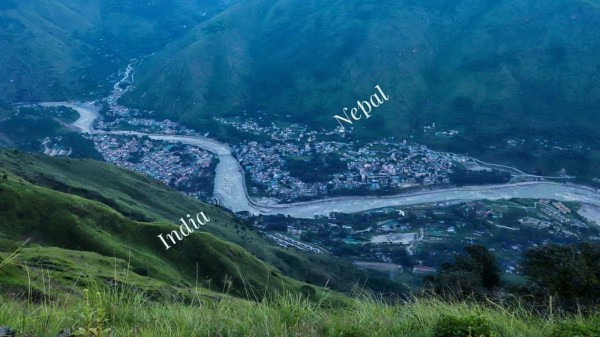
Pithoragarh: In the age of 5G, thousands of residents in Uttarakhand’s border villages are still deprived of reliable Indian mobile signals. Instead, their phones automatically connect to Nepalese telecom networks, leaving them frustrated and worried.
The problem is most severe in villages located just 18 to 20 kilometers from Pithoragarh district headquarters, where Indian telecom towers fail to provide coverage.




Nepali signals stronger than Indian telecom networks
Munakot block, located near the Nepal border, is one of the worst affected areas. Villages such as Vada and Badalu, situated around Jhulaghat, receive strong signals from Nepalese towers, while Indian networks remain weak or absent. As a result, residents are unable to make calls, use the internet, or access essential services.

Students cannot attend online classes
The lack of connectivity has created serious problems. Students cannot attend online classes, families struggle to book gas cylinders, and video calling remains a distant dream. “While the world is in the digital age, it feels like we are living in the ancient era,” said Anil Chand, a social activist from the area. He explained that villages like Matkoda, Basera, Sirkuch, Jakhpant, Majirkanda, Chyaudi, Zarkani, Dholakhol, and Katiyani are all suffering due to poor Indian network coverage.

No concrete action has been taken for better network
Anil Chand has been campaigning for years to improve communication services. He claims to have submitted memorandums 1,046 times to various authorities, including MLAs and MPs, demanding mobile towers. Despite his efforts, no concrete action has been taken. Recently, he submitted another memorandum to the Chief Minister through the District Magistrate, urging immediate intervention.
Many villages are still deprived
The problem is not limited to Munakot. In the Kanalichhina and Dharchula development blocks, thousands of residents face similar issues. Along the 100‑kilometer stretch from Dharchula to Pancheshwar, many villages continue to receive Nepalese signals instead of Indian ones. Although BSNL and private companies have installed towers in some areas, residents say they are not functioning properly.
DM Pithoragarh acknowledged the issue
Pithoragarh District Magistrate Ashish Bhatgani acknowledged the issue and said discussions are underway with BSNL and Jio. “BSNL has been directed to install towers in areas where communication services are not available. Where towers already exist, companies have been instructed to operate them. Soon, communication services will be restored in border villages,” he assured.
Poses serious national security risk
Beyond inconvenience, the dominance of Nepalese signals poses serious national security risks. Normally, countries install jammers along borders to block foreign mobile signals. But in Pithoragarh, the absence of strong Indian networks allows Nepalese towers to dominate.
Experts warn that when phones connect to foreign networks, privacy can be compromised. Neighboring countries may monitor the location and activities of individuals, including officials. Criminals and terrorists could misuse foreign networks to plan anti‑national activities. This makes the issue not just a matter of convenience but also of strategic importance.
People are suffering on day-to-day basis
For villagers, however, the immediate concern is daily survival. Students preparing for exams cannot access online study material. Farmers cannot use mobile apps for weather updates or government schemes. Families cannot make digital payments or access online services. In emergencies, the inability to make calls has put lives at risk.
Residents say that installing a tower at GIC Mayalekh could solve the problem for several villages. But despite repeated appeals, the demand has not been met.
BSNL and private companies have installed towers in some places
Although BSNL and private companies have installed towers in some places, poor maintenance and lack of follow‑up have left them ineffective. Villagers complain that promises are made during elections, but once the polls are over, the issue is forgotten.
Opposition leaders have accused the government of neglecting border villages
The problem has also taken a political turn. Opposition leaders have accused the government of neglecting border villages. They argue that while the state talks about digital progress, thousands of people are still cut off from Indian networks. The dominance of Nepalese mobile signals in Uttarakhand’s border villages highlights a serious gap in infrastructure and governance. For residents, it is a daily struggle that affects education, livelihood, and safety. For the nation, it is a matter of security and sovereignty.