


Sign In
By signing in or creating an account, you agree with Associated Broadcasting Company's Terms & Conditions and Privacy Policy.
By signing in or creating an account, you agree with Associated Broadcasting Company's Terms & Conditions and Privacy Policy.
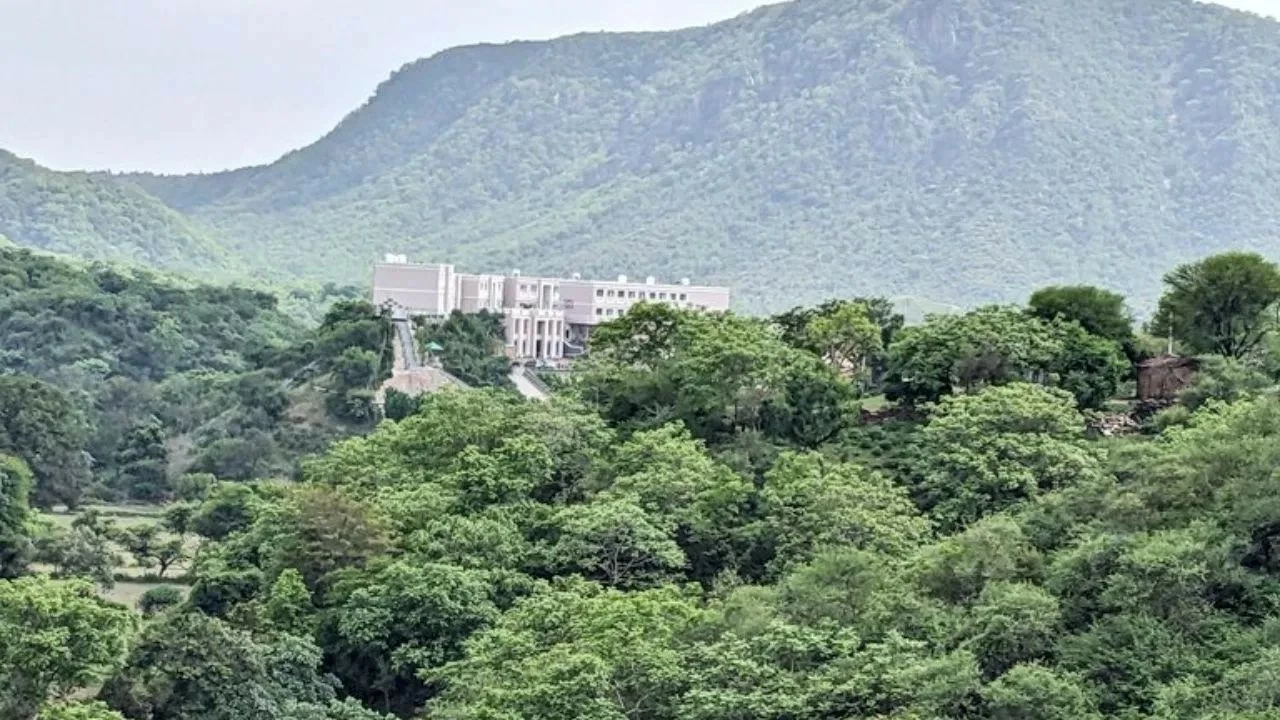


New Delhi: The Supreme Court will hear the matter related to mining in the Aravalli Hills on Monday, with a three-judge bench headed by the Chief Justice taking up the case suo motu. Former forest conservation officer R P Balwan has also approached the apex court with a separate petition linked to mining in the ecologically fragile region.
The court’s intervention has renewed optimism among environmental activists, particularly in the backdrop of concerns raised over the November 20 verdict. Many conservationists believe the upcoming hearing could lead to a more environment-centric judicial approach to the long-standing issue of mining in the Aravallis.


The hearing coincides with a series of fresh directions issued by the Union Ministry of Environment, Forest and Climate Change, which on Wednesday ordered all states concerned to impose a complete ban on granting new mining leases across the Aravalli range, stretching from Delhi to Gujarat. The ministry said the prohibition would apply uniformly across the landscape to curb illegal and unregulated mining and protect the integrity of the ancient mountain system.
In addition, the ministry has directed the Indian Council of Forestry Research and Education to identify more areas within the Aravallis where mining should be prohibited, beyond zones already notified by the government. This identification will be based on ecological, geological and landscape-level assessments.
ICFRE has also been tasked with preparing a comprehensive, science-based Management Plan for Sustainable Mining for the entire Aravalli region. The plan will evaluate cumulative environmental impacts and ecological carrying capacity, identify conservation-critical and ecologically sensitive zones, and propose measures for restoration and rehabilitation. The draft plan will be placed in the public domain for stakeholder consultations.
The latest directions came two days after Union Environment Minister Bhupender Yadav dismissed allegations that recent policy changes were aimed at opening up the Aravallis to mining, calling such claims “misinformation.” He said the government was committed to a balanced approach that integrates ecological protection with economic considerations.
Yadav clarified that mining is not permitted in the Delhi-NCR region and that legally approved mining activities account for only a small portion of the Aravalli landscape. The ministry reiterated that the new measures would significantly expand the areas shielded from mining, underlining the Aravallis’ vital role in preventing desertification, conserving biodiversity, recharging groundwater and providing essential environmental services.

