
Sign In
By signing in or creating an account, you agree with Associated Broadcasting Company's Terms & Conditions and Privacy Policy.
By signing in or creating an account, you agree with Associated Broadcasting Company's Terms & Conditions and Privacy Policy.
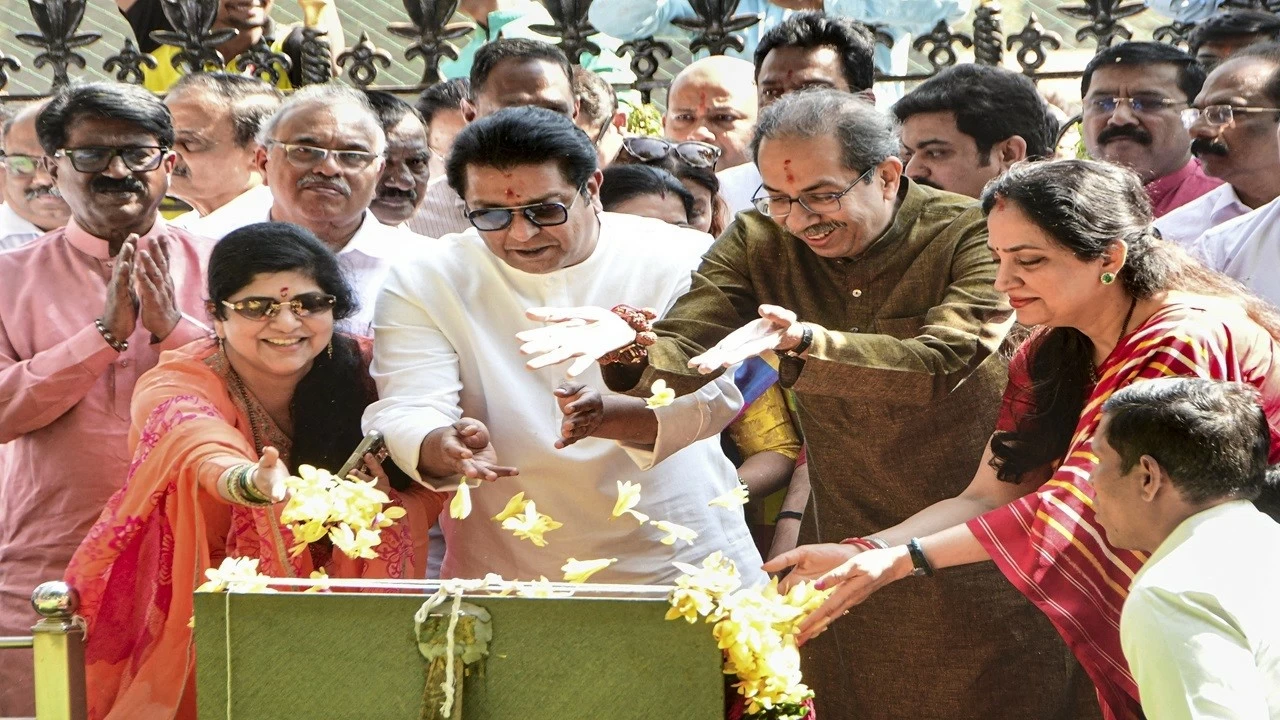

New Delhi: The estranged Thackeray brothers -- Shiv Sena (UBT's) Uddhav Thackeray and MNS president Raj Thackeray -- made their coming-together official on Wednesday. The two brothers announced that they would take on the ruling Bharatiya Janata Party (BJP) in the upcoming corporation elections, including the high-stakes Brihanmumbai Municipal Corporation (BMC).
Their reunion ahead of the Brihanmumbai Municipal Corporation elections has assumed a lot of political importance. While no formal seat-sharing agreement has been announced, it is widely believed that the Uddhav-led Shiv Sena (UBT) will contest around 150 seats, with the Raj-led Maharashtra Navnirman Sena fielding candidates in the rest of the 77 seats. The BMC has a total of 227 seats.
The reunion announcement was likely expedited taking in view the outcome of last week’s local body elections in Maharashtra, where the BJP-led Mahayuti alliance secured 207 of the 288 posts. It underscored the magnitude of the challenge confronting the opposition.
It was in 2006 that Raj was reportedly unhappy over his cousin Uddhav’s elevation as working president of the undivided Sena. This apparently forced him to quit the party and form the MNS. The reunion of the Thackeray cousins after almost two decades could bring about changes in the political ecosystem of Mumbai. It is set to pave the way for bigger realignment in political landscape of the state.
The Shiv Sena (UBT) harps on Bal Thackeray's legacy and how the Thackeray family collectively fought during the Maharashtra movement. People acknowledge their huge contribution. On Wednesday, Uddhav underlined that the cousins reunited after a gap of 20 years with a clear aim of safeguarding the interest of "Marathi Manoos".
The Thackerays have long been championing the cause of the "Marathi Manoos". Marathi speakers are traditionally their core support base. They account for about 26 per cent of Mumbai’s population. When the Shiv Sena was united, it forged a strong emotional bond with Marathi-speaking communities, effectively appealing to their local pride and cultural identity. With the two reuniting ahead of the crucial BMC elections, political analysts argue that the alliance could reignite that powerful sentiment, providing a fresh boost to their regional support and influence.
Muslims, who make up almost 11 per cent, may also go with the non-BJP forces. The city’s Dalit population, estimated at another 11 per cent, could swing the result in Thackerays' favour as well.
These factors should be a huge concern for the Bharatiya Janata Party.
The split between the Shiv Sena and the MNS had helped the BJP in the past. It had divided the Marathi-speaking vote. However, a reunion of the Thackerays is likely to significantly reduce this “vote-cutting” effect, especially in central Mumbai and its suburbs.
The BJP has dubbed the reunion as a "desperate act of survival". The BJP-led Mahayuti is pushing the "Development (Vikas) vs. Dynasty" narrative, banking on the support of non-Marathi voters (Gujaratis, North Indians) and the performance of the Eknath Shinde-led government. Sources say that BJP may bank more on its ally, the Eknath Shinde-led Shiv Sena, mostly in areas where Marathi-speaking population dominate.
And even though the BJP has downplayed the reunion impact, “counter-strategies” are reportedly being devised to deal with it.
The BMC election is an acid test for the united Thackerays. It is a fight for survival of the family brand. If they lose in the BMC -— which has been the source of the Sena’s financial and organisational power for long -- it could the end of the road for them. The Thackerays will have to poll in all their efforts to combat BJP's strong organisational machinery and its Hindutva narrative.
They will have to make sure that there is good coordination between the cadres of the Shiv Sena (UBT) and the MNS. This will require leadership qualities of both Udhav and Raj. Seat-sharing formula has to be chalked out without causing any rift or friction. Internal clashes could send a wrong message to the voters and go a long way in undermining the purpose of the reunion.
Apart from BJP, the reunion may also face challenge from the Maha Vikas Aghadi (MVA) of which Uddhav is a part. The Congress apparently is not too keen on bringing Raj Thackeray’s MNS into the MVA fold. The local Mumbai Unit of the Congress wants to fight the polls alone. There are concerned that aligning with Raj could distance it from the Congress’s core support base of minorities and North Indian migrants. Raj's “sons-of-the-soil” rhetoric and aggression could become an impediment in wooing such voters. And if Congress goes solo, the Thackerays could lose out on a key vote bank. Vote-splitting and erosion caused by the Congress would eventually help the Mahayuti alliance.