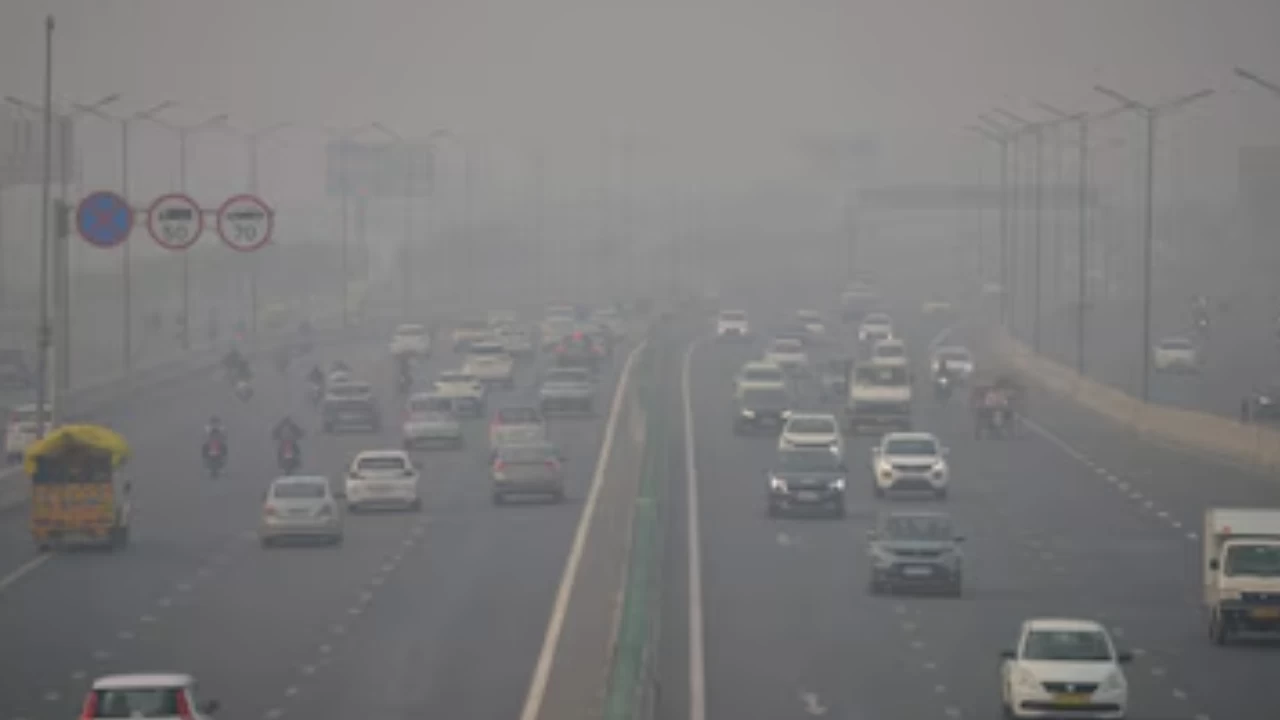
New Delhi: With festivities knocking at the door, Delhi's pollution is reaching the worst levels, leading to massive changes in weather and an increase in health risks. Akshardham on Saturday recorded an Air Quality Index of 230, which falls under the "poor category", as per the Central Pollution Control Board (CPCB).
The AQI around Jawaharlal Nehru Stadium, including the Barapullah Bridge area, has reached 252. Neighbouring cities such as Ghaziabad and Noida also recorded poor weather conditions in recent days. Ghaziabad recorded a ‘very poor’ AQI of 306, the worst in the country, on Friday. Noida (278) and Gurugram (266) also registered ‘poor’ air quality, while Faridabad (105) remained in the ‘moderate’ range.
Noida, Ghaziabad records, among top 10 polluted cities
On Friday, Ghaziabad recorded the worst air quality in India, with Noida, Gurugram, and Delhi, part of the Delhi-NCR region, also ranking among the country’s top 10 most polluted cities. Out of Delhi’s 38 monitoring stations, five reported air quality in the ‘very poor’ category. Anand Vihar recorded the highest AQI at 382, followed by Wazirpur (351), Jahangirpuri (342), Bawana (315), and Siri Fort (309).
CPCB data reveals that Delhi’s air quality began deteriorating from October 14 onwards and continues to worsen with every passing day. The weather department reported that the national capital recorded a minimum temperature of 18.4 degrees Celsius on Friday, 1.2 degrees below the season’s normal.
The relative humidity was recorded at 74 per cent at 8.30 am. Meanwhile, experts warn that pollution’s impact extends beyond temporary discomfort like breathlessness or eye irritation — it quietly elevates blood pressure, strains the heart, and damages the brain.
Experts warn about lung-related diseases
According to Dr Anurag Agrawal, a pulmonologist and biomedical scientist, people suffering from hypertension, would have hazarduous effects on their health. While, people with heart failure may experience worsening symptoms.
He explained that prolonged exposure to such pollution impacts not only the lungs but also takes a toll on the heart and brain. “From a lung health perspective, the most sensitive people are those with asthma or chronic lung diseases like Chronic Obstructive Pulmonary Disease (COPD) — which cause choking, narrowing of the airways, and difficulty in breathing."