Sign In
By signing in or creating an account, you agree with Associated Broadcasting Company's Terms & Conditions and Privacy Policy.
By signing in or creating an account, you agree with Associated Broadcasting Company's Terms & Conditions and Privacy Policy.
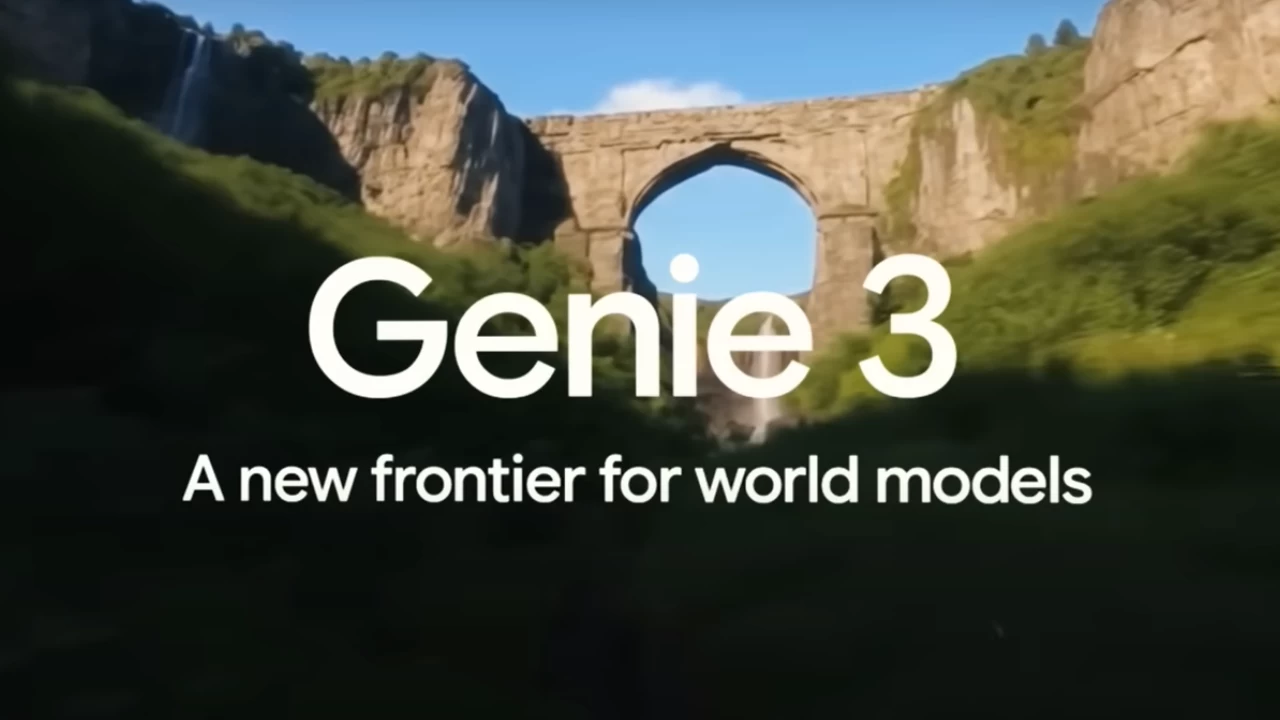


Google DeepMind has introduced Genie 3, an advanced AI world model that generates interactive 3D scenes given a short text description. On August 5, 2025, it was announced that the model will support navigation through virtual worlds in real time, including 720p resolution at 24 frames per second. Genie 3, as compared to its predecessors, has a better consistency, as it stabilises environments over several minutes. The development is a big milestone for the future of AI-based simulations used in gaming, learning, or robotics training.
The model is based on previous attempts by Google to develop Genie 1 and Genie 2 that were aimed at the creation of environments of AI agents. Genie 3 has the extra ability of real-time interaction, where the user can change a world on the fly with a text command, e.g., adding a character or altering the weather. At present, it is open to a limited circle of scholars and artists so that they can use it in research. Google has plans of extending the accessibility in the future, and some of the limitations include durations of scenes and the processing requirements.
Google DeepMind considers Genie 3 as one of the milestones in the search for artificial general intelligence (AGI). World models such as Genie 3 have a realistic setting where the AI agents can learn and develop through trial and error. This ability resembles the process of human learning, and it allows one to perform such tasks as finding the way through a virtual warehouse or an adventure in the natural environment. This capability of the model to remember items and scenes improves its training potential for autonomous systems, including robots or self-driving cars.
Genie 3 works in an autoregressive manner, where each frame is based on the preceding frame in order to make it consistent. In contrast to other game engines that have pre-coded physics, it can learn the physics of objects intuitively and results in realistic interactions such as flowing water or falling objects. It has the ability to support promptable world events, whereby a user can make changes to environments using text input immediately. Nevertheless, there are still issues to solve, including the ability to be consistent after a few minutes and increased visual fidelity.
Genie 3 has immense educational and robotics applications outside of gaming. It is able to generate training simulations, e.g., virtual classrooms or warehouses to navigate robots. Genie 3 was tested by Google using its SIMA agent, which managed to accomplish the tasks, such as the search of objects in dynamic environments. The model is yet to be announced publicly, but it has the potential to change the way artificial intelligence systems are trained, providing an unlimited amount of virtual environments and training them without the limitations of the real world.
Google DeepMind has intentions to improve Genie 3 by rectifying its weaknesses, such as expanding scene consistency and lowering the computational expenses. The recent research preview of the model is limited, and expanded testing is in the future. Researchers believe it is a game changer for the development of AI, and scaling this to the masses is a challenge. With the increasing competition with models such as OpenAI Sora and Genie 3, Google will make itself a leader in interactive AI simulations.