
Sign In
By signing in or creating an account, you agree with Associated Broadcasting Company's Terms & Conditions and Privacy Policy.
By signing in or creating an account, you agree with Associated Broadcasting Company's Terms & Conditions and Privacy Policy.
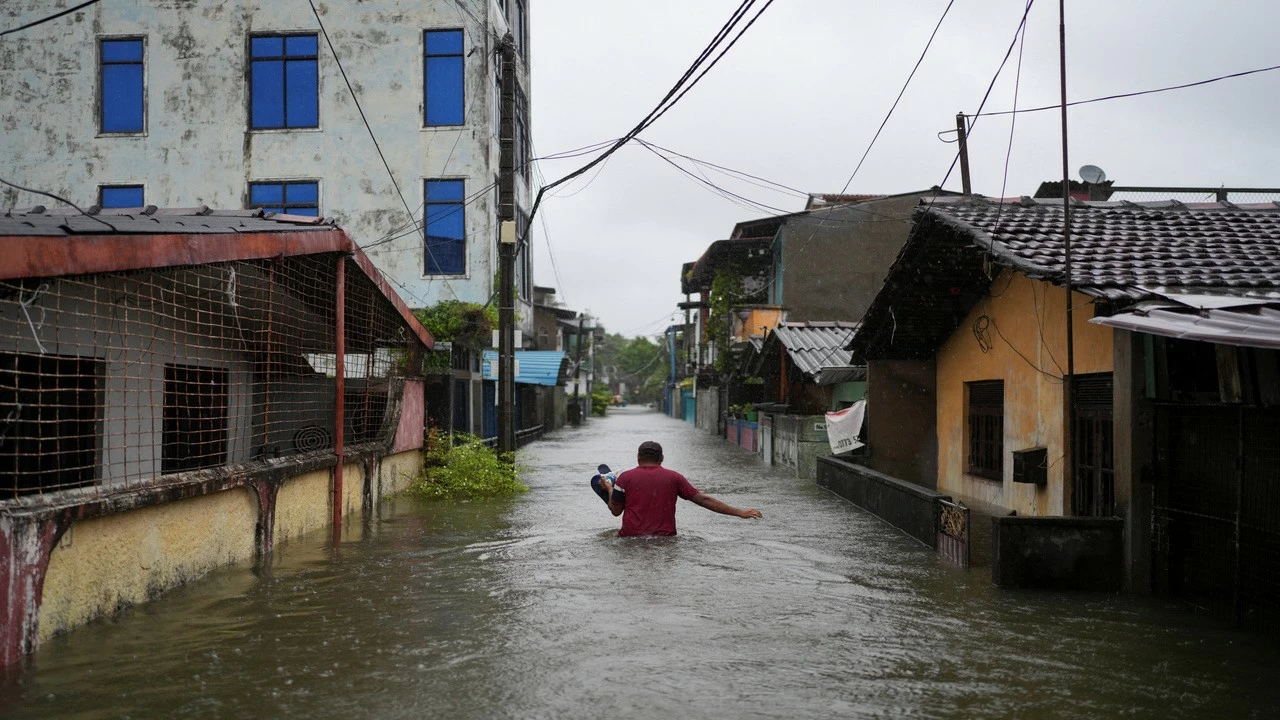

New Delhi: Indonesia, Sri Lanka, Thailand, Vietnam and Malaysia are currently facing massive floods. This is mainly due to the effect of intense tropical cyclones and extreme monsoonal weather.
As a result, authorities say that thousands have lost their lives, and even more have been rendered homeless. Current official numbers state that at least 502 people in Indonesia, 334 in Sri Lanka and 176 in Thailand have lost their lives due to the extreme weather event.
The damage due to the floods has been intense in Sri Lanka, Indonesia and Thailand. As a result, Indonesia President Prabowo Subianto pledged to rebuild infrastructure while visiting areas impacted by floods and landslides on Sumatra island that left thousands homeless and 508 people missing as of Monday. Flooding displaced 290,700 people in North Sumatra, West Sumatra and Aceh provinces, the National Disaster Management Agency said.
“We need to confront climate change effectively,” Prabowo said to survivors. “Local governments must take a significant role in safeguarding the environment and preparing for the extreme weather conditions that will arise from future climate change,” he further added.
Meanwhile in Sri Lanka authorities said that rescuers are still searching for nearly 370 missing people. Nearly 148,000 people are housed in temporary shelters as a result of the massive flooding. In Thailand, the first batch of compensation payments are set to be distributed on Monday. Government spokesperson Siripong Angkasakulkiat pledged to work on cleaning up streets and restoring infrastructure including water and electricity. This is especially true for the southern part of the country where damage has been most pronounced.
The combination of atypically strong tropical cyclones and heavy monsoon rains has caused massive damage in many parts of Asia, killing more than 1,000 people and leaving many more homeless. The change in the weather patterns can be attributed not just to peculiar seasonal variations but to the impact of human-induced climate change as well.
While heavy rains have often been prevalent in the region during this time of the year, it has become extreme currently due to the formation and larger interaction of two tropical cyclones, Koto and Senyar. These have helped fuel rains by bringing in more moist, warm air.
The conditions are not typical. Equator close regions usually lack the Coriolis force that enables strong storms to develop. Indonesia should thus ideally not see cyclones of such intensity develop, but the formation of Senyar in the strait of Malacca did occur even though it may be termed a ‘rare’ event.
In the case of Sri Lanka, the cause is Cyclone Ditwah. Forming over the Bay of Bengal, it combined with the north-east monsoon season to bring disastrous rains. While natural aspects have also to be taken into account, human-induced climate change is also to blame for such extreme weather events. Warmer oceans by providing more energy to produce stronger storms have undoubtedly exacerbated the problem. Extreme rainfall too has become more common and more intense due to climate change.