Sign In
By signing in or creating an account, you agree with Associated Broadcasting Company's Terms & Conditions and Privacy Policy.
By signing in or creating an account, you agree with Associated Broadcasting Company's Terms & Conditions and Privacy Policy.


Explained: Importance of Al-Aqsa mosque, latest flashpoint in Israel-Hamas conflict
New Delhi: The Israel-Palestine conflict refuses to de-escalate. The latest point of aggravation came when Israeli National Security Minister Itamar Ben-Gvir visited the contentious al-Aqsa mosque compound in Jerusalem on Sunday. The move triggered significant pushback across the region.
Ben-Gvir, reportedly accompanied by around 1,250 people and police, offered prayers at the site which is holy to both Islamic and Jewish people. This was seen as a breach of a long-standing and sensitive “status quo” agreement that allows Jews to visit the site but not offer prayers there.
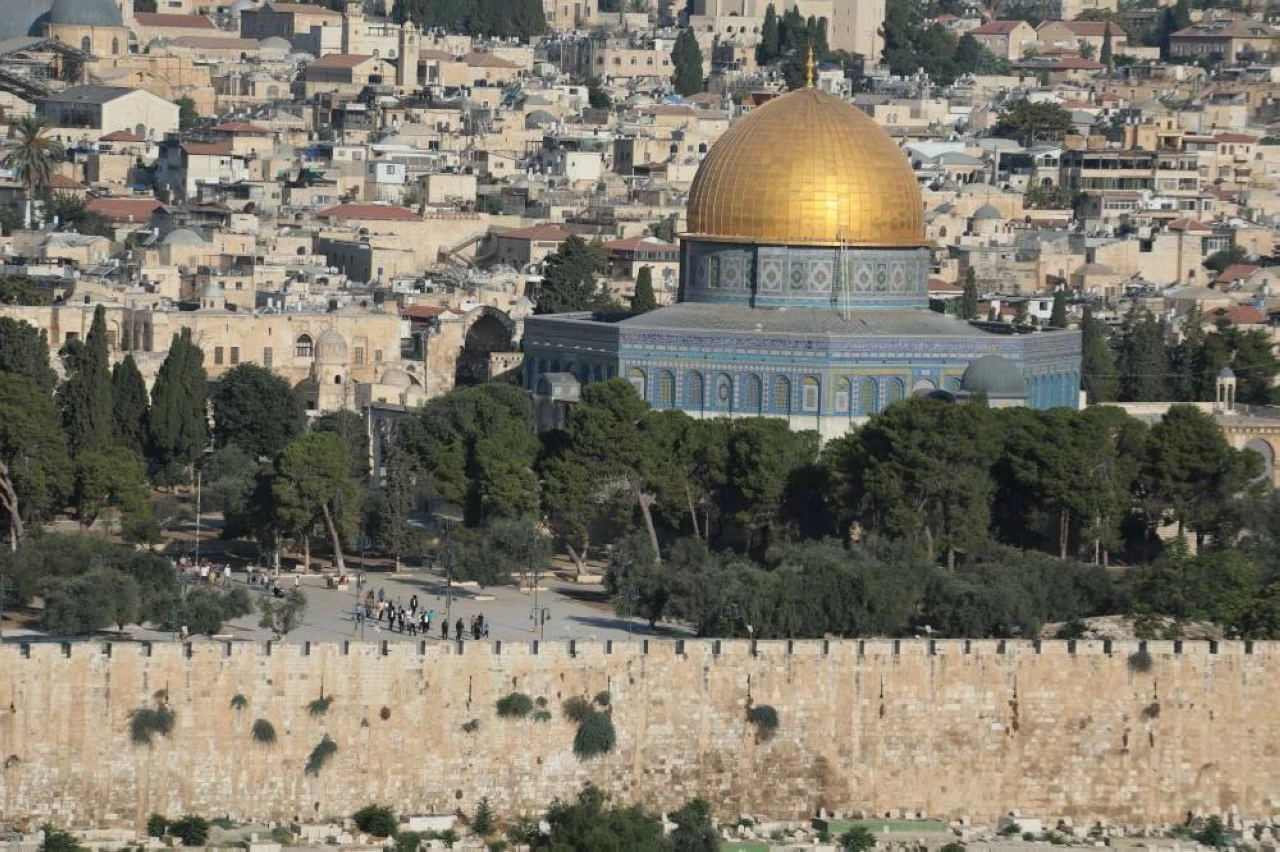
The Al-Aqsa mosque, situated in the Old City of Jerusalem is holy to both Jews and Muslim. The location of the site makes it extremely contentious, and it is run by Jordanian Islamic foundation through a delicate decades-old status quo arrangement. Despite the arrangement, the site has been a major point of contention between Israelis and Palestinians and has often resulted in initiation and prolongation of conflict.
The Waqf, the foundation that administers the complex, said Mr Ben-Gvir was among another 1,250 who ascended the site and prayed there, going against the long-held arrangement that has been in place. The move saw wide condemnation both inside the region and outside.
Saudi Arabia, condemning Ben-Gvir’s visit, called it a violation of international law. “The Kingdom strongly condemns the repeated provocative actions by Israeli officials against al-Aqsa mosque,” the Saudi Foreign Ministry wrote on X.
The Jordanian Foreign Ministry described the act as a “flagrant violation of international law and international humanitarian law, an unacceptable provocation, and a condemned escalation”. Being responsible for the administration of the site, he said that Israel holds no sovereignty over Al Aqsa Mosque.
Prime Minister Benjamin Netanyahu’s office reacted to the comments, saying that there has been no change in Israel’s policy. “Israel’s commitment to maintaining the status quo on the Temple Mount remains unchanged,” his statement read.
Things in Gaza only worsened then, with at least 27 people reportedly being killed by Israeli forces while attempting to access food in Gaza on Sunday. Additionally, six others reportedly lost their lives due to starvation and malnutrition.
On the other hand, Hamas released a video of an emaciated Israeli prisoner Evyatar David in a tunnel. This resulted in outrage in Israel, with the country’s opposition leader Yair Lapid commenting on X that, “Let every government member watch Evyatar's video tonight before going to sleep and try to fall asleep while thinking of Evyatar trying to survive in a tunnel.”
While the conflict between Israel and Palestine is historic, it has escalated to an extreme since the October 7 Hamas attack on Israeli territory. The conflict is multi-faceted, and the Al-Aqsa Mosque has often been a major point of contention in the conflict.
Also referred to as the Qibli Chapel, it is a historically significant holy place in the Old city of Jerusalem. Built originally during the rule of the second Islamic caliphate, the place has seen many conquests, revisitations and renovations. From natural disasters to administrative takeovers, the site has been a purveyor of occupation for ages, and since the beginning of the Israeli occupation of the West Bank, it has been independently administered by the Jerusalem Islamic Waqf.
The Al-Aqsa Mosque holds immense religious, historical, and cultural significance, especially in Islam. It is considered the third holiest site in Islam after the Masjid al-Haram in Mecca and the Masjid an-Nabawi in Medina. Historically, it is often seen as part of the larger Haram al-Sharif or Temple Mount complex, which is sacred to Muslims, Jews and Christians.
Apart from the Islamic significance, the site has also come to be known as an important symbol of Palestinian identity. Since the Israeli occupation, and the contested ownership of Jerusalem, Palestinians see the site as a representation of a spiritual and historic claim to the region.
For Jews as well, the site is important. The area surrounding the Al-Aqsa Mosque, known as the Temple Mount or 'Har HaBayit' in Hebrew, is one of the holiest places in Judaism. It is believed to be the location of the First and Second Temples, which were the central places of worship for ancient Israelites. The Western Wall, a remnant of the Second Temple’s retaining wall, remains a sacred place of prayer for Jews till this day. Like it is for the Palestinians, the wall is one of the most symbolically important pieces of Israeli religious heritage in the region.