Sign In
By signing in or creating an account, you agree with Associated Broadcasting Company's Terms & Conditions and Privacy Policy.
By signing in or creating an account, you agree with Associated Broadcasting Company's Terms & Conditions and Privacy Policy.
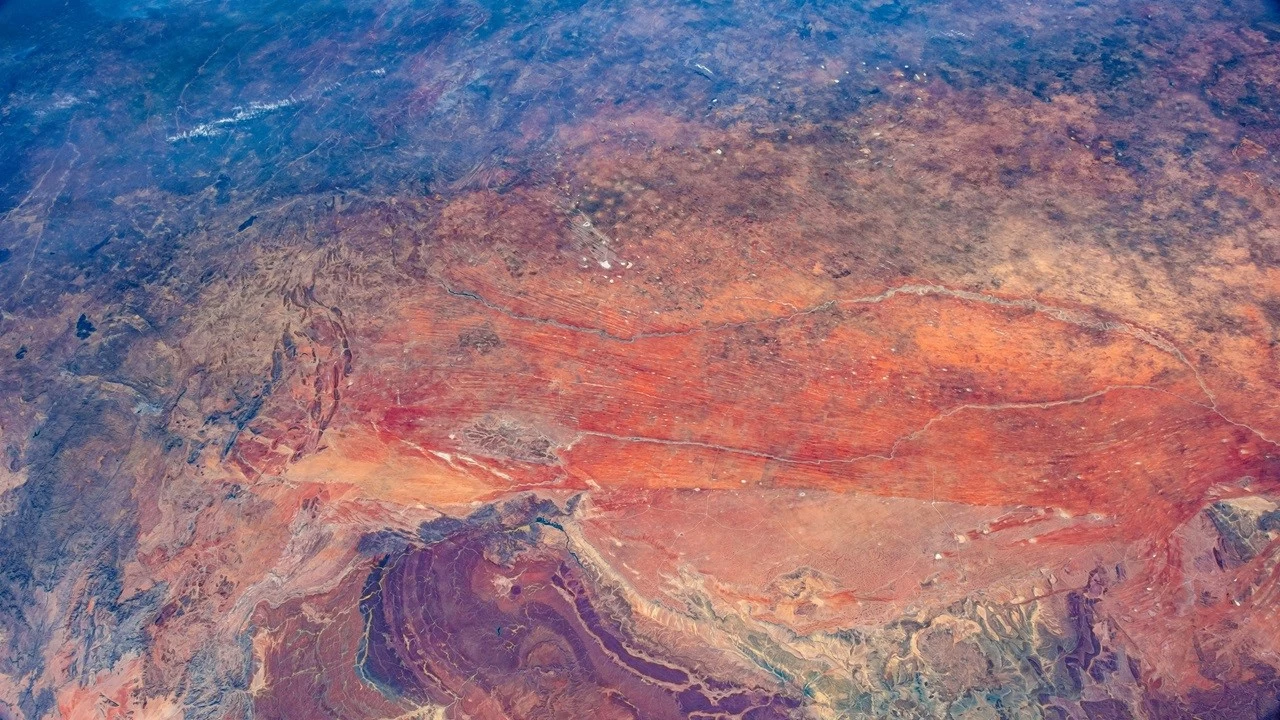

New Delhi: Africa is undergoing a dramatic geological shift that could lead to the splitting of the continent into two separate landmasses, according to researchers.
New magnetic data throws light on the shifting patterns in Earth's crust beneath Africa, showing a gradual yet persistent tearing that could one day give rise to a completely new ocean.
The new findings were published in the Journal of African Earth Sciences.
The ongoing separation is progressing from the northeast to the south in a motion scientists liken to “the zip on a jacket,” tearing through the continent alongside intense volcanic and seismic activity. According to current geological timelines, the complete split is expected to occur within the next five to ten million years.
The current separation is advancing from the northeast towards the south in a motion scientists compare to unzipping a jacket. It is cutting through the continent amid intense volcanic and seismic activity. As per the current geological timelines, the full split is expected to take place within the next five to ten million years.
Once this geological process gets over, Africa is expected to split into two separate landmasses. The larger western block would encompass countries like Egypt, Algeria, Nigeria, Ghana, and Namibia, while the eastern block would include Somalia, Kenya, Tanzania, Mozambique, and much of Ethiopia.
Professor Peter Styles, geologist at Keele University, reportedly said: "These findings give a unique perspective on how our planet is constantly changing and shifting right beneath our feet."
This projection is based on the theory of plate tectonics, which shows that the arrangement of Earth’s continents has always been in motion. Across geological timelines covering millions to billions of years, Earth’s tectonic plates have repeatedly broken apart and moved away from one another, creating new oceanic crust through the process of seafloor spreading.
This active rearrangement is mostly seen in the East African Rift, a huge tectonic fissure spanning around 4,000 miles from Jordan, down through eastern Africa to Mozambique.
Measuring an average of 30 to 40 miles across, the rift is an area where the crust is stretching and weakening. Over geological time, as the divide grows, it is expected to pass directly beneath large East African lakes like Lake Malawi and Lake Turkana.
To carry out their analysis, researchers focused on the Afar region, where the Red Sea meets the Gulf of Aden. This area is unique: three rift systems — the Main Ethiopian Rift, the Red Sea Rift, and the Gulf of Aden Rift — converge to form a triple junction. Scientists see Afar as the place where the earliest and most clear signs of continental breakup are already surfacing.
Magnetic data originally collected in 1968 and 1969 by airborne instruments were studied by the experts. They reinterpreted these "vintage" measurements by using modern techniques. Through this work, they uncovered new details about the magnetic signals preserved in the crust.
The data points to the ancient flips in Earth’s magnetic field — signatures that function like tree rings or barcodes —and distinctly show seafloor spreading between Africa and Arabia tens of millions of years ago.
This magnetic imprint provides strong evidence of gradual but persistent rifting. The crust in this region appears to be thinning and stretching like pliable material until it finally breaks, paving the way for a new ocean basin. Experts say that the shifting is taking place today at a pace of around 5 to 16 millimetres per year in the northern segment of the rift.