Sign In
By signing in or creating an account, you agree with Associated Broadcasting Company's Terms & Conditions and Privacy Policy.
By signing in or creating an account, you agree with Associated Broadcasting Company's Terms & Conditions and Privacy Policy.
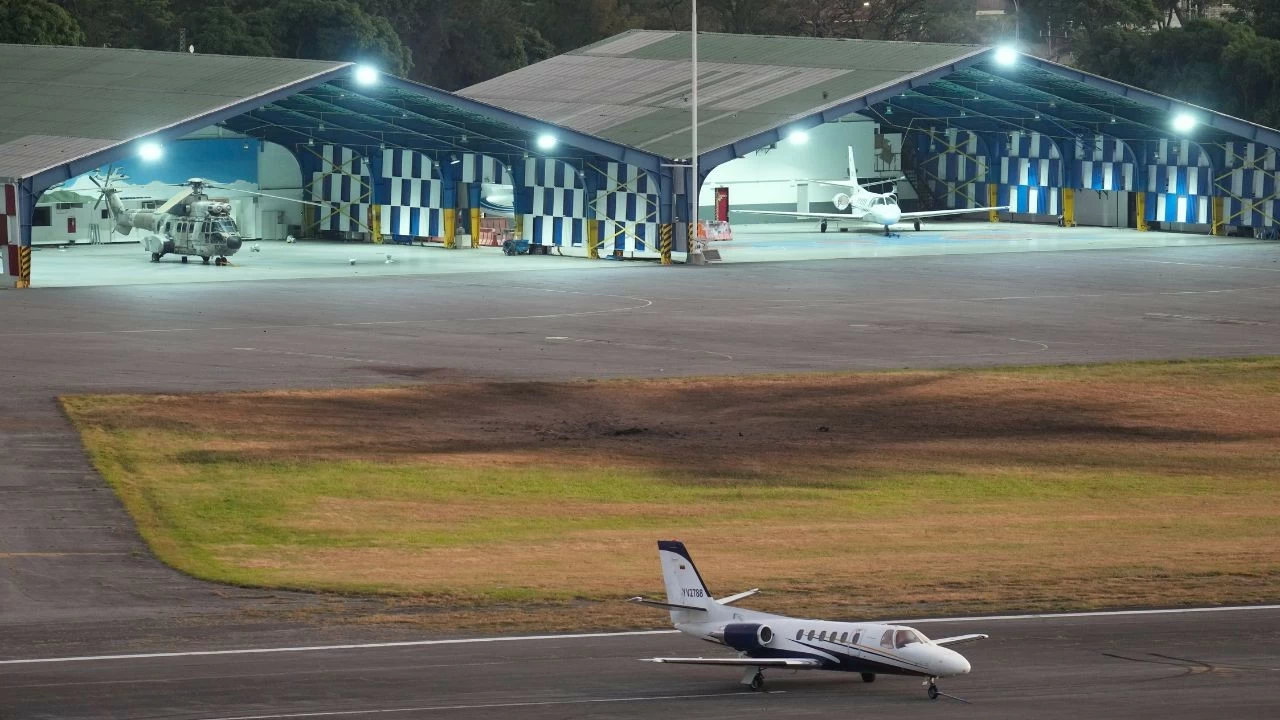


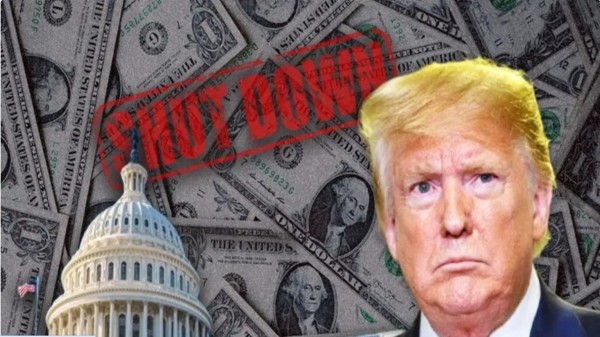
New Delhi: The United States’ decision to carry out military strikes in Venezuela’s capital, Caracas, in January 2026 has taken its long-running confrontation with the South American nation into uncharted territory. President Donald Trump claimed that the operation led to the capture of Venezuelan leader Nicolás Maduro, a statement that, if confirmed, would represent the most dramatic intervention by Washington in Venezuela in decades.
For years, US policy towards Venezuela relied on sanctions, diplomatic isolation and criminal indictments. The latest strikes, however, signal a shift towards overt military action, justified by the Trump administration as part of a broader campaign against transnational drug trafficking networks.
US officials argue that these groups pose a direct and imminent threat to American security, while critics warn the move stretches international law, risks regional instability and blurs the line between counter-narcotics operations and regime change in a country already facing economic ruin and humanitarian distress.
1. In January 2026, US forces launched strikes targeting Caracas, marking the most significant military escalation in the decades-long dispute with Venezuela’s leftist government. President Trump said the operation resulted in Maduro’s capture, though details remain contested.
2. The White House has described the strikes as part of an expanded effort to curb the flow of illegal drugs into the United States. Officials accused Maduro of heading the so-called Cartel de los Soles, which Washington has designated a global terrorist organisation.
3. In a major policy shift, the administration notified Congress that the US is now in a formal “armed conflict” with certain drug cartels, categorising them as unlawful armed combatants rather than criminal networks.
4. A classified directive signed by Trump in August 2025 reportedly authorised the Pentagon to use direct military force against select Latin American drug cartels, including those allegedly operating from or linked to Venezuela.
5. Following the directive, Washington deployed warships, Marines and sailors to the Caribbean, intensifying patrols near Venezuelan waters and enforcing what US officials have described as an effective oil blockade.
6. On September 2, 2025, US naval forces struck a vessel said to be operated by the Tren de Aragua gang, killing 11 people. The operation, conducted without Coast Guard involvement, sparked debate over its legal justification.
7. Washington has refused to recognise Maduro as Venezuela’s legitimate president since disputed elections in 2018. In 2020, US authorities charged him with narco-terrorism and announced a bounty that later increased to USD 50 million.
8. Sweeping US sanctions on Venezuela’s oil industry and foreign trading partners, tightened after 2019, have deepened an economic collapse marked by hyperinflation, failing infrastructure and severe shortages of food and medicine.
9. Despite international pressure, Maduro has remained in power with support from Russia, China, Iran and Cuba. Russia sent troops to Venezuela in 2019, while China has continued to invest in infrastructure and energy projects.
10. Analysts caution that sustained US military pressure could destabilise the wider region, intensify refugee flows — already estimated at nearly eight million since 2015 — and create uncertainty over governance and security if Maduro is removed.
As tensions rise, the US–Venezuela confrontation now stands at its most volatile point yet, with significant implications for regional stability, international law and the future of