Sign In
By signing in or creating an account, you agree with Associated Broadcasting Company's Terms & Conditions and Privacy Policy.
By signing in or creating an account, you agree with Associated Broadcasting Company's Terms & Conditions and Privacy Policy.


Kolkata: What is common to Lehman Brothers, Kodak, Pan Am, Toys R Us and General Motors? The answer: they are all big corporations flying the flag of the great American corporate dream before they failed spectacularly. The sad part of a big business is that though they touch millions of lives and make billions in profit, they can fail. The scenario is not any different in India.
In this country, too, a number of companies, which were not only high profile, but also had a big public face, sunk between the years 2000 and 2025. While India spent the last five decades of the last century in emerging out of grinding poverty, paucity of resources and a stifling controlled economy, the first quarter of the current century was spent in gaining and nurturing the animal spirits of entrepreneurship. Standing at the end of the first quarter century of the third millennium, it is worth taking a look back at the past 25 years and see which companies have wilted along the way -- companies that were almost part of the daily lives of millions but have now remained as a fast fading memory only.
Companies fail due to myriad reasons. Many companies find it difficult to adapt to changes in competition, regulatory changes and technological innovation. Often management find it difficult to respond to financial and human resource challenges.
In many high-profile sectors which touch the lives of crores of individuals businesses have shut shop. Let's have a look at the following list:
Kingfisher Airlines
Year: 2012
Reason: Huge debt, financial distress
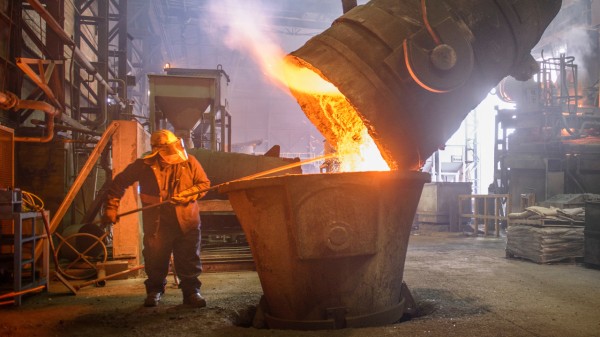
Bhushan Steel
Year: 2017
Reason: Unmanageable debt
Essar Steel
Year: 2017
Reason: Heavy debt, declining steel prices
Alok Industries
Year: 2017
Reason: Choked by debt
Lanco Infratech
Year: 2017
Reason: Big losses, high debt
Amtek Auto Group
Year: 2017
Reason: Too much debt, bad financial decisions
Videocon Industries
Year: 2018
Reason: Big losses, debt burden
Jet Airways
Year: 2019
Reason: Rising operational costs, poor management, fierce competition from low-cost airlines
Dewan Housing Finance
Year: 2019
Reason: Money problems, huge debt
Reliance Communications
Year: 2019
Reason: Aggressive expansion led to massive debt, intense competition
Realty Firms (Jaypee Infratech, Unitech)

Year: 2020
Reason: Delayed projects, financial mismanagement, slowdown in the real estate market
Go First Airlines
Year: 2023
Reason: High costs, poor management, steep competition
Just as death is a part of life, the closure is as much a part of business as it is setting up. Modern policymaking recognises the perishability of a business and wants to create a climate that is conducive to quick and smooth liquidation, paying off employees and creditors so that a new business can come up quickly.
Data show that more than 2.04 lakh private companies were shut down in the five years between 2020-21 and 2024-25 and these closures could be attributed to amalgamation of businesses, conversion to Limited Liability Partnerships (LLP), dissolution or simply being struck off the register. The most number of closures of companies in a single fiscal year was in 2022-23, when as many as 83,452 firms shut shop.
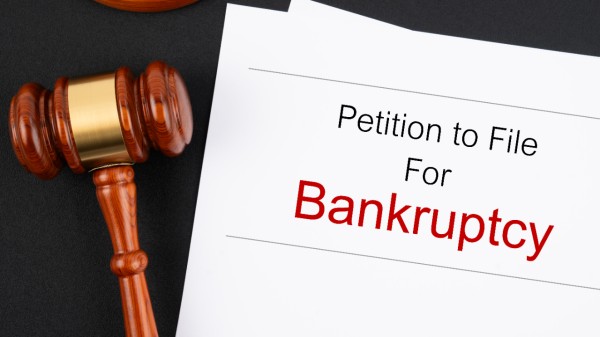
It is often futile to point to a single reason for causing bankruptcy. if is often the outcome of one or more challenges triggering multiple inappropriate decision over a period of time and the crisis deepening over a few years. An organisation's inability to meet its financial obligations is often a culmination of a number of different reasons. But there are a few major reasons for bankruptcy in India. These are:
Too much debt: One of the primary causes of bankruptcy in this country. Companies often borrow extensively and the deployment of the funds fail to generate returns that are sufficient to service that level of debt.
Poor management: This is often a trigger for failure. Ill planning, poor skills in drawing up a budget and improper cash flow for a prolonged period can lead to it.
Stiff competition: Increased competition has killed many businesses. These can be from nimble-footed players or those harnessing new technologies. Often businesses become prisoner to their successful formula and refuse to change with time.
Economic downturn: Economic downturns can lead to crisis as the global financial crisis in 2008 or the COVID-19 pandemic have done to numerous businesses. During these times demands dry up as consumers don't have the money, or the confidence to spend, or both.
Legal/regulatory issues: Even legal and regulatory issues can lead to crisis. Firms can face lawsuits or tax-related issues which can put them in stress.