
Sign In
By signing in or creating an account, you agree with Associated Broadcasting Company's Terms & Conditions and Privacy Policy.
By signing in or creating an account, you agree with Associated Broadcasting Company's Terms & Conditions and Privacy Policy.
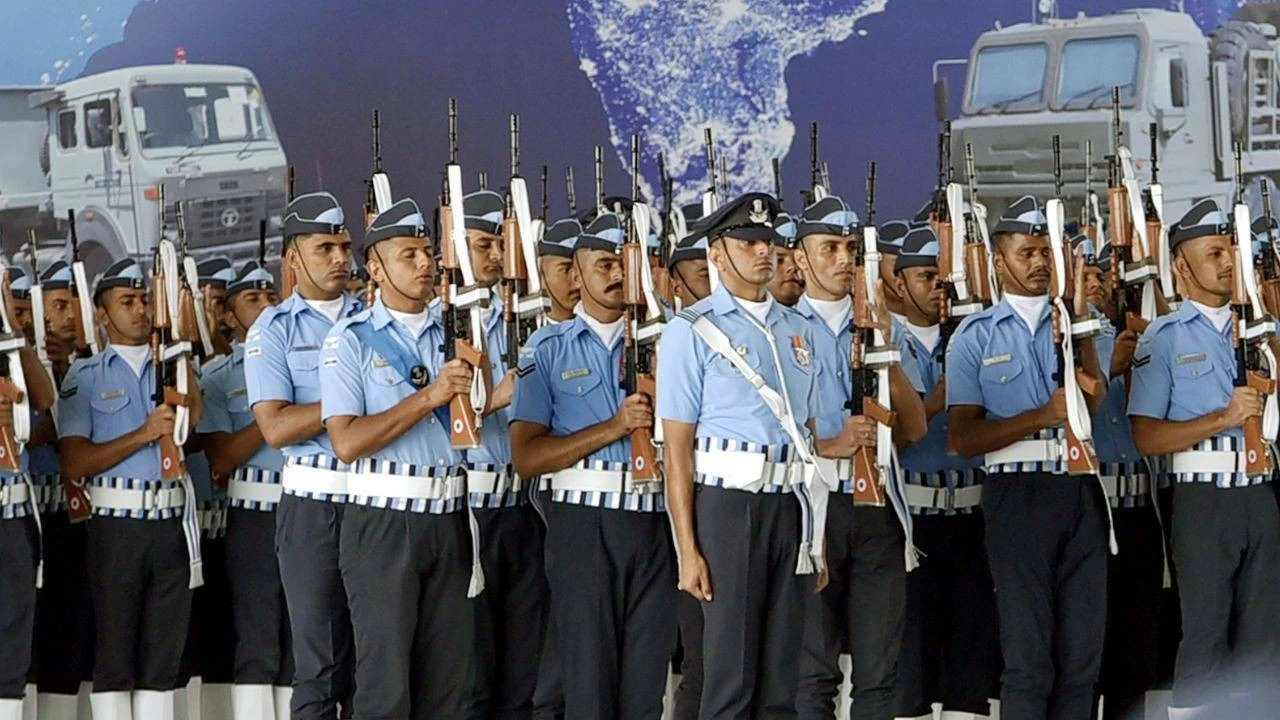


New Delhi: The Indian Air Force is the world's fourth largest air force after the United States, China and Russia. It conducts relief and rescue operations during disasters, participates in international peacekeeping and evacuates Indian citizens from overseas conflict zones.
Emphasising its commitment, Air Chief Marshal AP Singh cited Operation Sindoor as an example in demonstrating its capabilities and inter-service coordination.
Before India got independence, the force operated under the designation Royal Indian Air Force. The first formation took on April 1, 1933 where there were six trained officers and 19 airmen. After independence, the prefix 'Royal' got vanished leading to the creation of the Indian Air Force, the current version.
The Indian Air Force contributed significantly during World War 2. It was operating under Army command until Air Marshal Sir Thomas W.
Sir Thomas W Elmhurst took charge as the first Chief of Air Staff post-independence. He served from August 15, 1947, to February 22, 1950. The IAF adopted its blue flag in the year 1951. The IAF flag features the national flag in the upper quarter alongside a tricolour circle which represents saffron, white and green at its centre.
Candidates seeking to become pilot in the Indian Air Force need to meet the prescribed physical and educational requirements.
Physical standard specifications-
Candidates who get shortlisted undergo preliminary training at the Air Force Academy in Dundigal, Hyderabad. The initial training period spans approximately one year. In the one-year training period, candidates need to go through ground subjects, physical conditioning and basic flying training on propeller aircraft. The trainees advance to intermediate jet training on aircraft such as the Hawk advanced jet trainer.Fighter pilot training extends beyond technical proficiency and involves high-G-force tolerance tests, master aerobatics and developing split-second decision-making capabilities. The curriculum includes navigation, weapons systems, tactical manoeuvres and formation flying.