Sign In
By signing in or creating an account, you agree with Associated Broadcasting Company's Terms & Conditions and Privacy Policy.
By signing in or creating an account, you agree with Associated Broadcasting Company's Terms & Conditions and Privacy Policy.
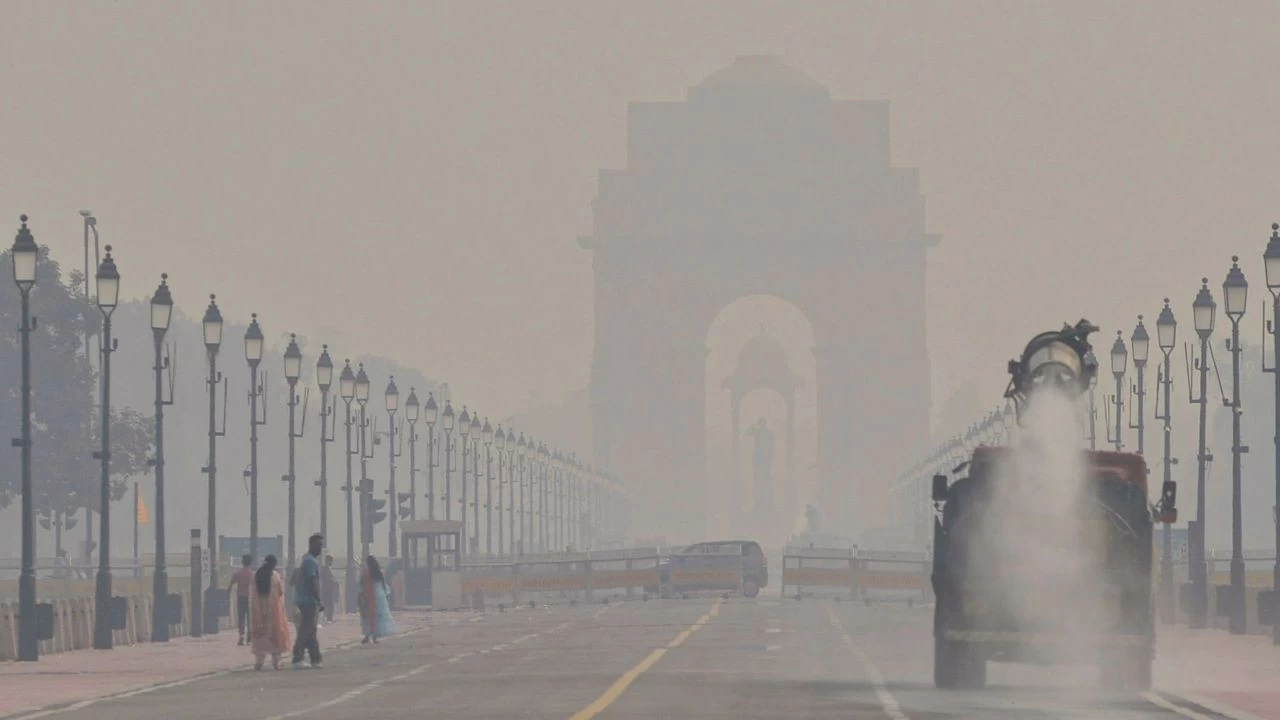


Residents of the national capital experienced a marginal improvement in air quality on Tuesday morning, with the Air Quality Index (AQI) dropping from the 'severe' category to 'very poor'. This slight respite comes after several consecutive days of hazardous pollution levels that had blanketed the city in a dense, choking haze.
As of 6:30 AM on Tuesday, the Central Pollution Control Board's (CPCB) Sameer app reported Delhi's AQI at 381. While still a cause for concern, this figure represents a significant decrease from Monday's average AQI of 427, which had marked the third consecutive day the city was engulfed in 'severe' category pollution.
Several areas continue to grapple with severe AQI
Despite the overall improvement, several areas within Delhi continue to grapple with extremely poor air quality. Wazirpur emerged as the most polluted locality, recording an alarming AQI of 434. Jahangirpuri followed closely with an AQI of 430. Other monitoring stations in Mundka, Delhi Technical University (DTU), and Nehru Nagar also registered 'severe' levels, with AQI readings ranging from 424 to 420.
According to the CPCB's classification, an AQI between 0 and 50 is considered "good." AQI levels from 51 to 100 are "satisfactory," 101 to 200 are "moderate," 201 to 300 are "poor," 301 to 400 are "very poor," and anything from 401 to 500 falls into the "severe" category.
Little relief from Monday's suffocating haze
The preceding day, Monday, was marked by a dense, suffocating haze that severely limited visibility across Delhi. This perilous atmospheric condition led to widespread disruptions, with hundreds of flights originating from or destined for the national capital being impacted. Both the airport authorities and airlines issued advisories to passengers as visibility plummeted, underscoring the severity of the air pollution crisis.
While the current dip in AQI offers a temporary reprieve, the persistent 'very poor' and pockets of 'severe' pollution highlight the ongoing need for stringent measures to combat air pollution in Delhi.
Earlier on Monday, a thick haze engulfed the national capital, reducing visibility and making it difficult to see even a short distance ahead. The deteriorating conditions had a direct impact on aviation, with hundreds of flights from Delhi affected. Both airlines and airport authorities issued advisories as fog and haze disrupted departures and arrivals.
Airlines issue advisories to avoid chaos at airport
Airlines have urged passengers to stay alert and plan ahead to avoid chaos at the airport. In an advisory posted on X, IndiGo said winter fog in northern India can slow flight movements during early mornings and asked passengers to check flight status before heading to the airport. The airline added that its teams were closely monitoring weather conditions and making operational adjustments to minimise inconvenience.
Echoing the advisory, Delhi Airport authorities said flight operations are steadily recovering, but cautioned that disruptions may still persist for some arrivals and departures due to prevailing visibility conditions.