


Sign In
By signing in or creating an account, you agree with Associated Broadcasting Company's Terms & Conditions and Privacy Policy.
By signing in or creating an account, you agree with Associated Broadcasting Company's Terms & Conditions and Privacy Policy.
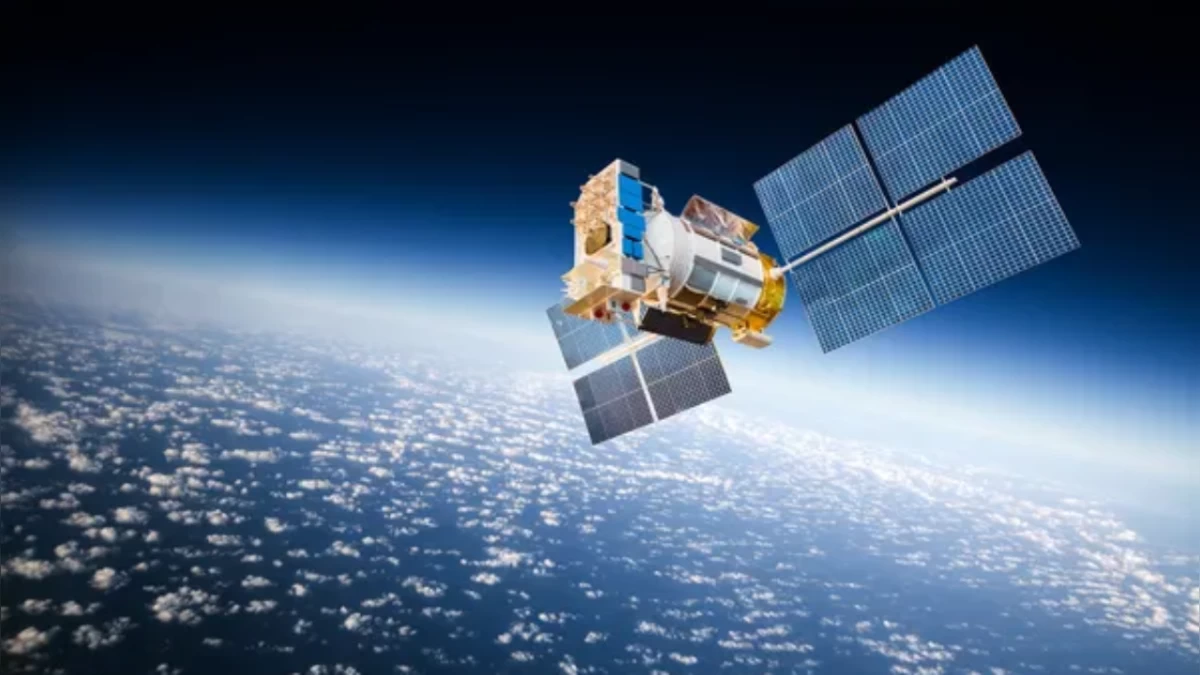


Kolkata: The need for deep and continuous surveillance over enemy territory during Operation Sindoor has forced India to rapidly expand its space capabilities. India is preparing to speed up the program to launch 52 special defence satellites. Along with this, a comprehensive 'Military Space Doctrine' is also in its final stages.
The Cabinet Committee on Security, headed by Prime Minister Narendra Modi, approved the third phase of the 'Space Based Surveillance' (SBS) program in October last year. In this, a total of 52 satellites were planned to be built and launched for Rs 26,968 crore. Of these, 21 satellites will be made by ISRO while the work of manufacturing 31 satellites has been assigned to three private companies.



The first satellite will be launched by April 2026 and all 52 satellites will be deployed in space by the end of 2029. The project will be completed under the supervision of the Defense Space Agency (DSA) under the Integrated Defense Staff (IDS) of the Ministry of Defense.
According to sources, preparations are underway to send these satellites into low earth orbit (LEO) and geostationary orbit quickly. Private companies have been instructed to speed up the work so that large areas of China and Pakistan can be monitored repeatedly in a short time.
During Operation Sindoor, India used domestic satellites like Cartosat as well as foreign commercial satellites to monitor military activities in Pakistan. According to sources, this new series of 52 satellites will further intensify our OODA (Observe, Orient, Decide, Act) loop. The Indian Air Force is also preparing to buy three High-Altitude Platform System (HAPS) aircraft. These are unmanned aircraft that operate on long-term intelligence surveillance missions in the stratosphere.
On the other hand, China is continuously increasing its power in space. China's military space program, which started with just 36 satellites in 2010, has reached more than 1,000 satellites by 2024, of which 360 satellites are for direct surveillance and intelligence purposes. By forming the PLA Aerospace Force last year, China has made it clear that space is being considered as the 'ultimate high ground' in modern warfare.
According to sources, Chinese satellites are now practising complex warfare strategies like dogfighting in LEO to track and destroy enemy space assets. This is why India is now engaged in giving a new shield to its military surveillance capabilities. This preparation of India after Operation Sindoor will prove to be a game changer in dealing with rivals like China-Pakistan in the future.

