Sign In
By signing in or creating an account, you agree with Associated Broadcasting Company's Terms & Conditions and Privacy Policy.
By signing in or creating an account, you agree with Associated Broadcasting Company's Terms & Conditions and Privacy Policy.


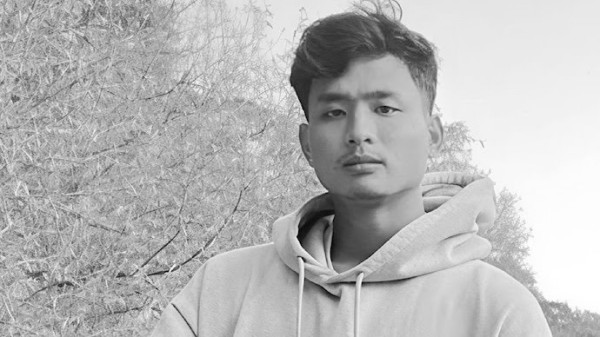
Dehradun: A shocking incident has raised questions about identity, prejudice, and ignorance in India. A boy from the Northeast was killed after being mocked as “Chinese.” His facial features resembled those of Himalayan communities in Uttarakhand, such as Gorkhas and Garhwalis, yet he became a victim of misplaced stereotypes.
Angel Chakma, a 24-year-old MBA student from Tripura, was brutally attacked in Dehradun after confronting racial slurs where he was wrongly called “Chinese.” He succumbed to injuries on December 26, 2025, sparking outrage across the Northeast and highlighting the dangers of racial discrimination faced by students outside their region. Four accused in Angel Chakma's death belong to Dehradun, while the main accused, Yagya Awasthi, is a Nepali national currently absconding, prompting police to extend search operations across the border.
Shared Himalayan ancestry
Experts say many Himalayan groups, including Gorkhas, Garhwalis, and people from the Northeast, share ancestral links to Tibeto-Burman or Indo-Tibetan migrations from Central Asia. This ancestry often results in similar physical traits—distinct eye shapes, complexions, and facial structures. Historically, these groups were classified under broad “Mongoloid” categories.
In Uttarakhand, Garhwalis also have strong Indo-Aryan and Rajput roots, which blend with Himalayan features. This creates a mix of similarities and differences, but the resemblance is enough for outsiders to confuse identities.
Linguistic and cultural ties
Languages like Garhwali, Kumaoni, and Nepali evolved from Khas Kura, showing deep linguistic ties across Himalayan regions. Similarly, Tibeto-Burman languages dominate much of the Northeast. These connections reflect centuries of migration and shared geography.
Communities across the Himalayas have long exchanged culture, trade, and traditions
The Gorkha conquest of Garhwal in the 1800s and the rule of the Khasa kingdom further cemented historical interactions. Communities across the Himalayas have long exchanged culture, trade, and traditions.
Key differences
Despite physical similarities, cultural differences remain strong. Gorkhas and Garhwalis are predominantly Hindu, while many groups in the Northeast are Christian. Languages also differ—Pahari dialects in Uttarakhand versus Tibeto-Burman tongues in the Northeast.
Identity issues also vary. Gorkhas often struggle with recognition in India, while Northeasterners face confusion with East Asians. This confusion has sometimes led to discrimination, as seen in the tragic killing of the boy wrongly labeled “Chinese.”
The danger of stereotypes
The incident reflects how ignorance about India’s diversity can turn deadly. Outsiders often fail to recognize the rich variety of Himalayan identities. Instead, they reduce people to simplistic categories based on appearance.
Villagers acknowledge that their features resemble those of Northeastern communities
In Uttarakhand, villagers acknowledge that their features resemble those of Northeastern communities. But they stress that cultural, linguistic, and religious identities are distinct. Experts warn that failing to understand these nuances fuels prejudice and violence.
Himalayan belt is home to diverse communities
The killing of the boy is not just a crime—it is a reminder of the urgent need for awareness. India’s Himalayan belt is home to diverse communities with overlapping features but unique identities. Recognizing this diversity is essential to prevent discrimination.
Educators and activists argue that schools, media, and government must promote awareness about ethnic groups. Respecting differences while acknowledging similarities can help build harmony.
Gorkhas and Garhwalis share physical resemblances with Northeastern communities
The tragedy of a North-Eastern boy being killed after being called “Chinese” shows how dangerous stereotypes can be. In Uttarakhand, Gorkhas and Garhwalis share physical resemblances with Northeastern communities due to shared Himalayan ancestry. But identity is more than appearance—it is culture, language, and history. Unless society learns to respect this diversity, such incidents will continue to haunt India’s collective conscience.