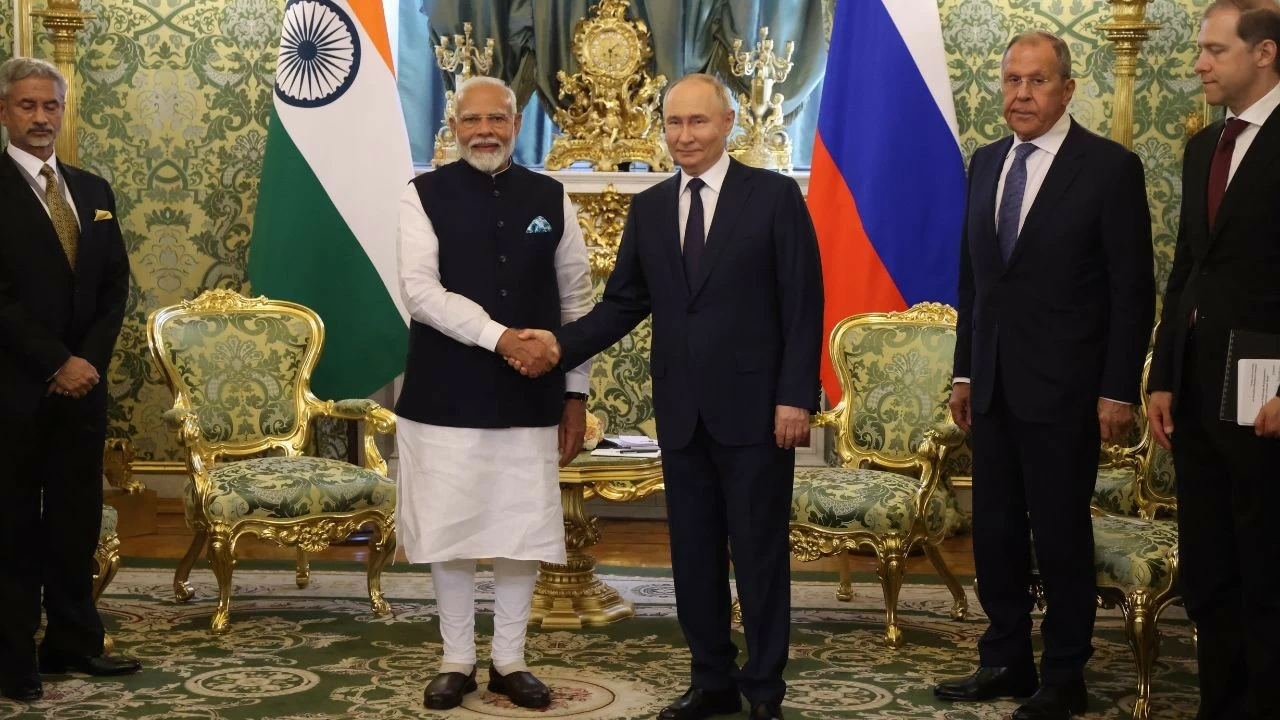
New Delhi: Russian President Vladimir Putin will travel to New Delhi on December 4–5 for the annual India–Russia summit, the external affairs ministry announced on Friday. During the visit, he will hold bilateral talks with Prime Minister Narendra Modi, who had attended last year’s summit in Russia.
Strategic visit ahead
The visit comes at a time when Washington is pushing New Delhi to scale back its imports of Russian oil and defence equipment. This will be Putin’s first trip to India since the Ukraine conflict began in February 2022. According to officials familiar with the preparations, several major agreements and initiatives are expected to be unveiled on December 5. Putin’s previous visit to India was in 2021.
In a statement, the external affairs ministry said the visit will give both sides a platform to “review progress in bilateral relations, set the vision for strengthening the Special and Privileged Strategic Partnership and exchange views on regional and global issues”.
President Droupadi Murmu is also expected to receive Putin and host a state banquet during the nearly 24-hour trip, which mirrors the shorter foreign visits the Russian leader has made in recent years.
Officials said the summit is crucial for enhancing strategic and economic cooperation, particularly as the US continues to urge India to reduce dependence on Moscow. One official said that “the geopolitical and geo-economic situation has changed considerably since August and the visit will allow both sides to look at ways to boost trade and economic engagement”.
Beyond the formal meetings in New Delhi, Putin is also scheduled to inaugurate the India-specific channel of Russian state broadcaster RT.
Defence and energy push
Discussions on defence cooperation have been ongoing, and officials indicated that India is considering an additional order of S-400 air defence systems, particularly after the system’s strong performance in the May confrontation with Pakistan. India had earlier signed a USD 5.43-billion contract in 2018 for five S-400 units, of which three have already been delivered.
Even though India has gradually reduced its oil imports from Russia, Moscow has recently increased energy discounts to retain its position as a major supplier, officials said. New announcements on civil nuclear cooperation are also likely.
Economic matters, including greater Indian access to Russian markets and ways to correct the widening trade imbalance, are expected to be discussed. Bilateral trade reached an all-time high of USD 68.7 billion in 2024–25, driven largely by India’s purchase of discounted Russian crude, while India’s exports were only USD 4.88 billion.
Leaders reaffirm ties
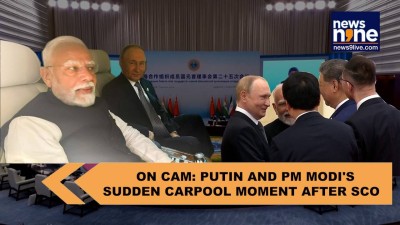
PM Modi and President Putin have remained in regular contact, with several phone calls focusing on the Ukraine situation. They last met on the sidelines of the Shanghai Cooperation Organisation (SCO) Summit in China in early September, where they reaffirmed their commitment to the strategic partnership that will complete 25 years on October 3.
Their meeting also came four days after US President Donald Trump raised tariffs on Indian exports by imposing a 25 per cent duty in response to India’s Russian oil imports. During the interaction, PM Modi said India and Russia have “always stood shoulder-to-shoulder even in the most difficult situations”.