


Sign In
By signing in or creating an account, you agree with Associated Broadcasting Company's Terms & Conditions and Privacy Policy.
By signing in or creating an account, you agree with Associated Broadcasting Company's Terms & Conditions and Privacy Policy.
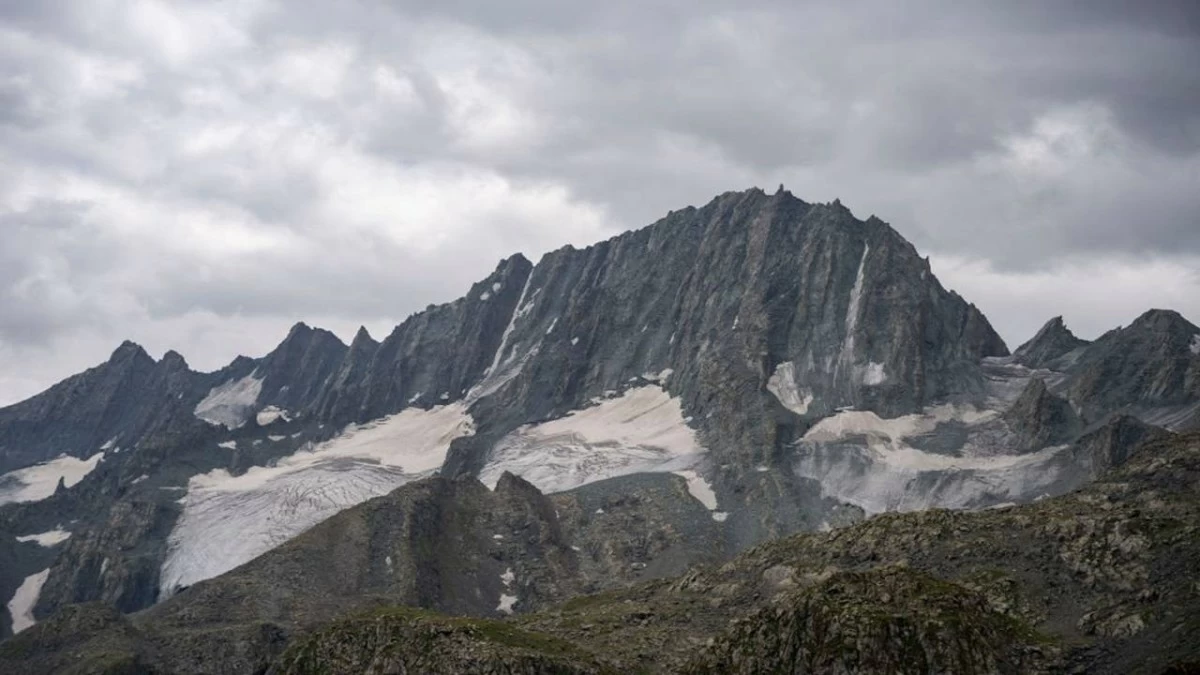


New Delhi: The theme of 2025 World Water Day was 'Glacier Preservation' -- which roughly translates into saving the glaciers. This comes in light of the fact that glaciers around the world are melting at a rate like never before.
India is home to over 9,000 glaciers, which play a crucial role in feeding river systems such as the Ganga, Brahmaputra, and Indus. However, these glaciers are retreating, posing a huge threat to the region's water supply.

In January 2025, as per the country’s latest climate change report submitted to the United Nations, India's glaciers have been retreating at an accelerated pace in recent decades. The Gangotri glacier, a major source of the River Ganga, is receding at a rate of about 25 meters per year. The Satopanth and Bhagirath-Kharak glaciers are retreating significantly, which is affecting the hydrology of the Ganga's headwaters. The Wadia Institute of Himalayan Geology, which has been monitoring several glaciers in Uttarakhand, discovered that the Dokriani Glacier in the Bhagirathi basin has been retreating at a rate of 15-20 meters per year since 1995. Meanwhile, the Chorabari Glacier in the Mandakini basin has been retreating at a rate of 9-11 meters per year between 2003 and 2017.
A study also found that the eastern Himalayas of Arunachal Pradesh lost 110 glaciers between 1988 and 2020. The glaciers in the Dhauladhar mountain ranges have been receding, with a recorded loss of almost 15.71 ± 8.76 percent in glacier area between 2000 and 2020.
Studies carried out by the Geological Survey of India, Wadia Institute of Himalayan Geology, National Centre for Polar and Ocean Research, National Institute of Hydrology, Space Application Centre, and Indian Institute of Science have shown an accelerated and uneven mass loss in Himalayan glaciers. In 2022, the Ministry of Earth Sciences indicated that the mean retreat rate of Hindu Kush Himalayan glaciers was 14.9-15.1 meters per year, which was 12.7-13.2 meters per year in Indus, 15.5-14.4 meters per year in Ganga, and 20.2-19.7 meters per year in Brahmaputra river basins.
According to some studies, the Chhota Shigri Glacier has lost more than double its mass over the past five decades. Studies also warn that if the trend continues, by 2100, Himalayan glaciers could lose more than half of their mass.
The Himalayas are often referred to as the Third Pole. That's because they hold the largest concentration of glaciers outside the polar regions.
Around 89% of glacial lakes in the Indian Himalayas are expanding at an unprecedented rate, ISRO said in a research in April 2024. The expansion is being caused by the fast and alarming meltdown or recession of glaciers. Avalanches, landslides, and flash floods are also increasing due to the meltdown.
As glaciers retreat in the Himalayan region, new lakes are formed and existing ones grow. These glacial lakes are dangerous as they cause Glacial Lake Outburst Floods (GLOFs), which can pose catastrophic damage to downstream communities. Even though melting glaciers may temporarily boost river flow and floods, the long-term fallout of rapid glacier retreat is a declining freshwater availability.
In the coming years, ongoing melting will drastically change glacier basin hydrology, disrupt the downstream water budget, and affect hydropower plants due to changes in discharge, flash floods, and increased sedimentation. It will affect and pose threat to the fishing communities, the wildlife, coral reefs, and other coastal industries.
The 9,000 gigatons of ice lost from glaciers since 1975 are roughly equivalent to "an ice block the size of Germany with the thickness of 25 meters," Michael Zemp, director of the Switzerland-based World Glacier Monitoring Service, said while releasing a UNESCO report in March 2025.
The melting of glaciers is undoubtedly a natural process. However, the unprecedented rate at which it is happening is a cause for concern. The rapid loss of ice is expected to increase as climate change, driven by the burning of fossil fuels, increases global temperatures. This will likely worsen economic, environmental, and social challenges worldwide as sea levels rise and vital water sources diminish.
The World Glacier Monitoring Service warned that between 2000 and 2023, melting mountain glaciers have caused 18 millimeters of global sea level rise, about 1 mm per year. Every millimeter can expose up to 300,000 people to annual flooding, it added.
In addition to climate change, when oil and gas are extracted, methane, the main gas in natural gas, is released. Methane traps heat more effectively than carbon dioxide, making global warming worse and harming the environment even more. This also leads to indirectly affecting the glaciers.
Glaciers play a vital role in preventing global warming by acting like massive mirrors, reflecting sunlight from the Earth’s surface back into the atmosphere and helping regulate the planet’s temperature. Besides, people around the world rely on the rivers formed by runoff from glacial melting. But it is the unprecedented rate of the meltdown that needs to be checked because it is causing far-reaching impact.
To slow down glacier melting, India must reduce greenhouse gas emissions and ensure that water is managed more sustainably. Saving our glaciers needs policy changes and political will – with focus on promoting alternative energy sources. However, it is also the responsibility of each individual to play his/her role in reducing the carbon footprint that will go a long way in preservation of the glaciers.

