Sign In
By signing in or creating an account, you agree with Associated Broadcasting Company's Terms & Conditions and Privacy Policy.
By signing in or creating an account, you agree with Associated Broadcasting Company's Terms & Conditions and Privacy Policy.
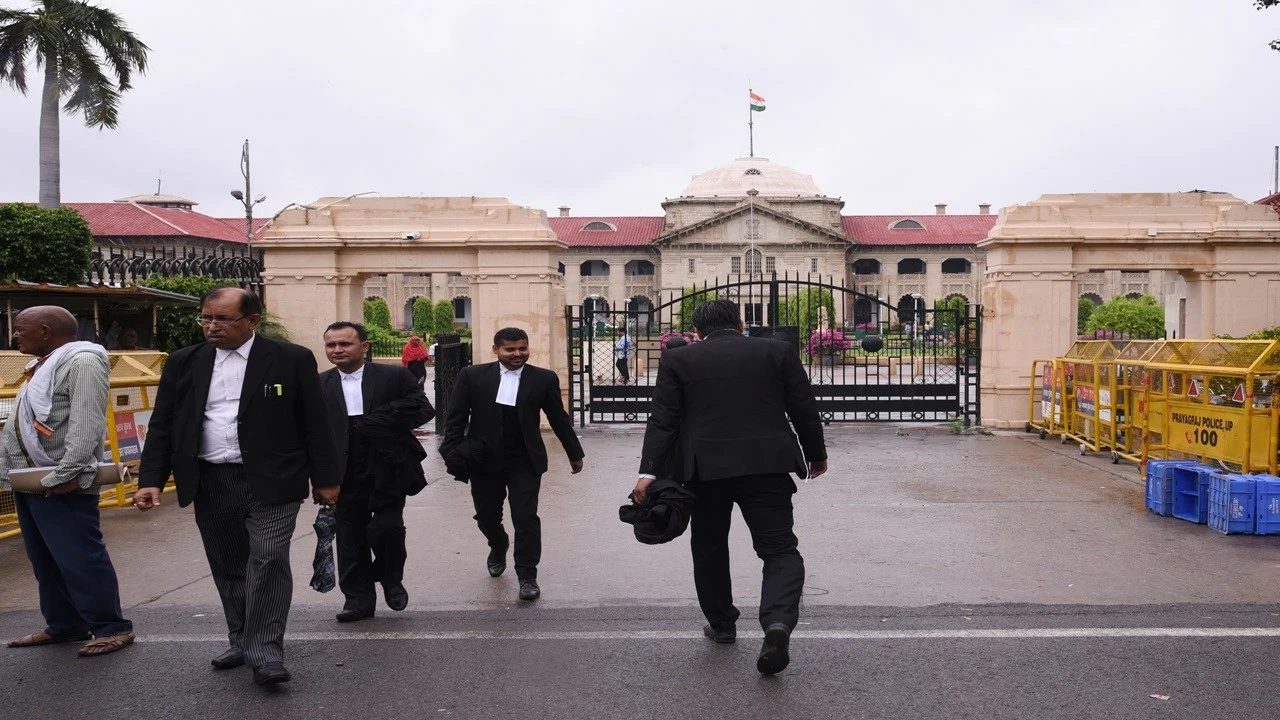

New Delhi: In a significant ruling, the Allahabad High Court has said that live-in relationships cannot be dubbed as "illegal" just because the concept is not acceptable to all. The court gave police shield to 12 couples who have reportedly been issued threats by their families.
A single-bench of Justice Vivek Kumar Singh pointed out that cohabiting without the sanctity of marriage is not an offence. The court was hearing petitions from 12 women in live-in relationships who sought protection as they feared threats to their lives.
The court asked the police chiefs of the relevant districts to ensure immediate protection to the women if their peaceful living is threatened or disrupted by external forces.
Justice Singh said: "Right to human life is to be treated on much higher pedestal, regardless of a citizen being minor or major, married or unmarried. Mere fact that the petitioners have not solemnised marriage, would not deprive them of their fundamental right as envisaged in the Constitution of India being citizens of India."
As per the petitioners, their complaints were reportedly ignored when they went to seek police help in their respective districts.
The court added: "Police must provide immediate protection after confirming that the individuals are adults and living together on their own will."
All the writ petitions were clubbed by the Allahabad High Court. In the pleas, the petitioners called for police directions to protect them from any harm inflicted by family members, relatives, or associates.
The court added: "The petitioners, who are adults, have decided to reside together without the sanctity of marriage and it is not for the courts to judge them on their decision. If the petitioners herein have not committed any offence, this court sees no reason why their prayer for grant of protection cannot be acceded to."

The bench said: "Having regard to the facts and circumstances of the case, this court is of the view that the petitioners are at liberty to live together peacefully and no person shall be permitted to interfere in their peaceful living."
If the petitioners are educated and they present educational certificates and other legally valid certificates which prove that they reached the age of majority, no police officer shall take any coercive action against them unless an FIR is registered against them for any offence, the court said.
As it issued orders to the officers, the court said: "If they do not have any documentary proof regarding age and they come from a rural background and or are illiterate/semi-literate, the police officer can subject such a boy or girl to an ossification test to verify their correct age and ... follow other procedures permissible under the law."
It added that live-in relationships are not socially accepted in the country and are even considered taboo. The court observed: "The door for Western ideas is always welcome in India, and the concept of live-in relationship is one such idea. Live-in relationships are still facing social stigma and moral debate, especially regarding traditional values, children, and differing religious/cultural perspectives. For some, it is immoral, while others see it as a valid choice for compatibility."