Sign In
By signing in or creating an account, you agree with Associated Broadcasting Company's Terms & Conditions and Privacy Policy.
By signing in or creating an account, you agree with Associated Broadcasting Company's Terms & Conditions and Privacy Policy.
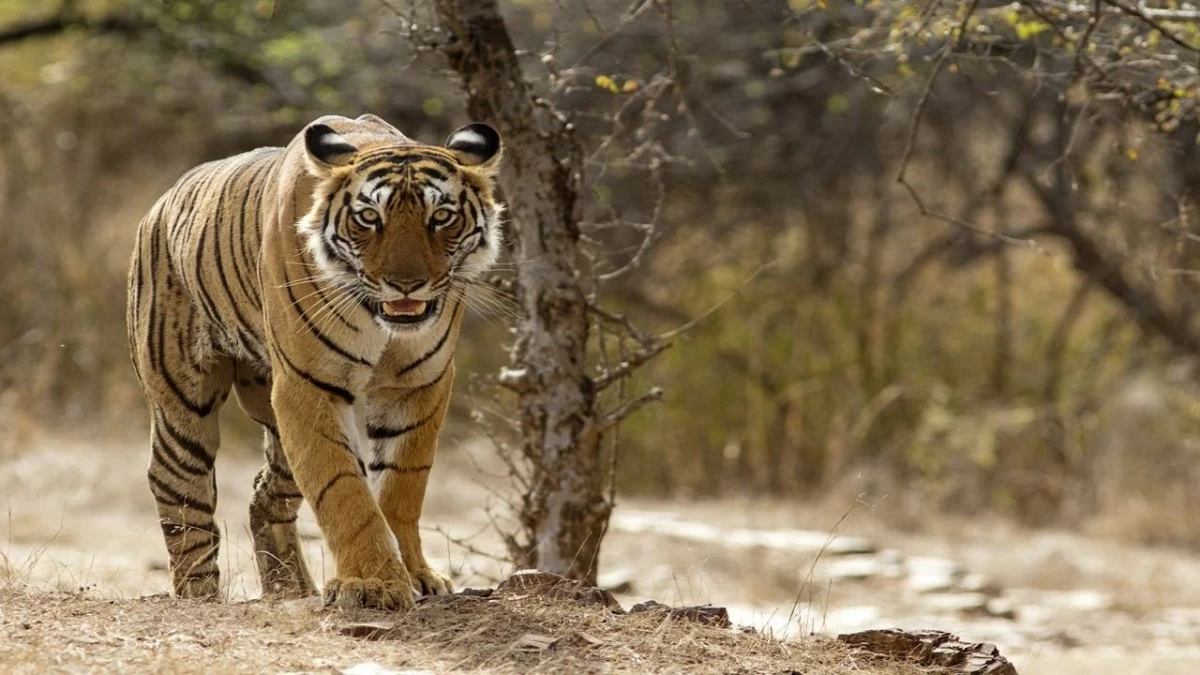


New Delhi: One of the biggest and most popular tiger reserves in India is Ranthambore Tiger Reserve, which is located in Rajasthan.
The reserve includes Ranthambore National Park, Sawai Madhopur Game Sanctuary, Sawai Man Singh Sanctuary, Keladevi Sanctuary, part of the National Gharial Sanctuary, and other forested areas. It has a huge population of Bengal tigers.
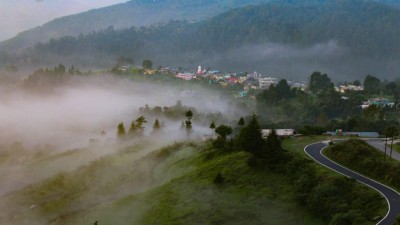


Ranthambore is situated between the Aravali and Vindhya hills. To its north is the Banas River and to the south, it is bordered by Chambal River. The reserve has dry deciduous forests and open grassy meadows.
Location and Area
Ranthambore National Park is situated around 13.5 kilometers from the city of Sawai Madhopur in Rajasthan. The distance from Jaipur is 166 kilometers, while from Delhi, it is 352 kilometers. The nearest railway station is Sawai Madhopur. This railway station has turned into a wildlife art museum, becoming one of the most stunning railway stations in the country. The nearest airport is Jaipur International Airport.
The park spans about 1,334 square kilometres, including the Keladevi Sanctuary and Sawai Man Singh sanctuary. The core area is about 275 square kilometres.
It is dotted with old forts and structures. The reserve is named after the historic Ranthambore Fort, which is located within the park. It dates back to 10th century and has been declared as a UNESCO World Heritage Site.
The park houses a number of water bodies which are scattered throughout its area. Padam Talao, Malik Talao and Rajbagh Talao are most picturesque among them.
Boulder-strewn highland plateaus add beauty to the landscape.
History
In 1955, Ranthambore National Park was established as the Sawai Madhopur Game Sanctuary, initially covering an area of 282 square kilometers. It was declared as one of the Project Tiger reserves in India in 1973. On November 1, 1980, Ranthambore was declared a national park.
In the 1820s, the Ranthambore forests were reserved as exclusive hunting grounds for both the Rajputs and the British. Between 1929 and 1939, it is reported that 1,074 tigers were killed in the jungles of Rajasthan.
The Wildlife (Protection) Act was enacted in 1972, and tiger hunting was completely banned by the Indian government.
Flora and fauna
The park is home to over 300 species of trees, including over 100 with medicinal attributes. The most dominant tree is Dhok (Anogeissus pendula). Besides the Dhok tree, other notable trees in the park are Banyan (Ficus benghalensis), Peepal (Ficus religiosa), and Neem (Azadirachta indica). Mango, Tamarind, Jamun, Ber, Chhila, Kadam, Khair, Khajur, Gum, Mahua, Salar and Tendu are the fruit trees that abound the place.
Ranthambore National Park is also home to a variety of wildlife, including chital, sambar, blackbuck, chinkara, nilgai, langurs, rhesus macaques, jackals, striped hyenas, jungle cats, wolves, caracals, leopards, tigers, and sloth bears. Indian Grey mongoose and Ruddy mongoose can also be found here.
Around 320 different bird species, including the serpent eagle, waterfowl, cormorant, painted spurfowl, sarus crane, bronzed-winged jacana, sandpiper, kingfisher, nightjar, painted sandgrouse, and great-horned owl, can be found in the park. No wonder then it is a bird watchers’ paradise and draws ornithologists from across the world.
Tiger population
The 2022 census recorded a total of 52 tigers in the park, compared to 25 tigers in 2005 and 48 tigers in 2013. The tigers at Ranthambore are generally of diurnal nature. The big cats can be seen roaming around in the reserve, and one can sight them without much difficulty. The National Tiger Conservation Authority (NTCA) keeps a tab on the tiger movement.
Conservation efforts, including anti-poaching measures, habitat improvement, community involvement, and awareness campaigns, are being made in the park.
Safari and major attractions
There are different safaris provided by the forest department, including Canter Safari, Gypsy Safari and Boat Safari. In all, there are 10 Safari zones. Ranthambore Fort, Raj Bagh Ruins, Lakes, Trinetra Ganesh Temple, Lakarda and Anantpura, and Jogi Mahal are the prime attractions for the tourists.