


Sign In
By signing in or creating an account, you agree with Associated Broadcasting Company's Terms & Conditions and Privacy Policy.
By signing in or creating an account, you agree with Associated Broadcasting Company's Terms & Conditions and Privacy Policy.
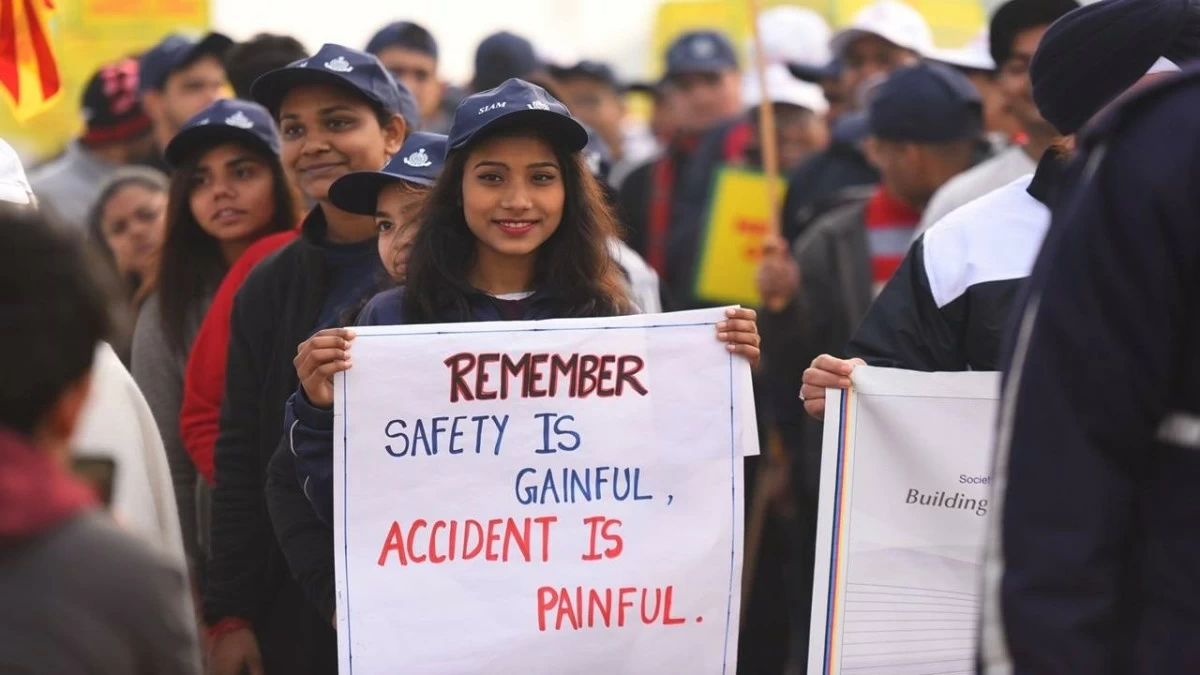


New Delhi: “Sadak Suraksha, Jeevan Suraksha” — the voice of Bollywood legend Amitabh Bachchan echoes through loudspeakers on the roads, urging people to follow traffic rules and prioritise road safety to save lives. It serves as a key message for the people to take responsibility on the road in order to reduce accidents.
Indian roads are unsafe and road safety is a cause for concern as the country tops the list in road fatalities. In 2022, at least 462 people died in road accidents in India every day, a Ministry of Road Transport and Highways report revealed in February 2025. India saw at least 1,264 road accidents on a daily basis, according to the report.



Worse still, a vast majority of the road fatalities were in the age group of 25-35. Data revealed that approximately 1.68 lakh people lost their lives in road accidents in 2022, with at least 42,671 of them being between the ages of 25 and 35.
Tamil Nadu reported the highest number of road accidents, with 64,105 incidents, while Uttar Pradesh recorded the most fatalities, with 22,595 deaths.
The onus of road safety is on State governments, with the Transport Department overseeing the Motor Vehicles Act, 1988. Key challenges include inconsistent or inadequate safety regulations, high fatality rates, and the crying need for stronger enforcement of traffic laws, as well as improvements in road infrastructure.
There are traffic safety rules, such as speed limits, seatbelt and helmet usage, phone usage while driving, and other safety measures. In different states, the speed limits vary, thereby causing confusion and inconsistent enforcement of the rule.
Driving at high speed can be dangerous. Speeding increases the risk of accidents, and is one of the major reasons behind road accidents. Rules on traffic Signals and signs are also meant to keep the roads safe. Ignoring traffic signals and jumping red lights can cause collisions.
Wearing seatbelts is also important for both drivers and passengers. It is mandatory in many places. Drunk driving or driving under the influence of drugs is also an offence. Two-wheeler riders are required to wear helmets for safety. Using mobile phones while driving is prohibited in many places, unless a hands-free device is used. Distracted driving caused by texting or talking on the phone can be fatal and there are rules to prevent it.
A 2023 government data showed that India accounts for just 1% of the global vehicular population, but has the highest number of accident-related deaths in the world. Speeding led to 70% of India road crash deaths, the report added. A World Bank study shows that road crashes are estimated to cost the Indian economy between 5-7% of GDP a year. Speeding is one of the most common traffic violations in India.
In recent times, incidents of drunk driving have also grown manifold. Rules on seat belt and helmet usage are also not effectively enforced. Pillion riders often do not wear helmet, and passengers on rear seats are seen not wearing the seatbelt in many instances.
People also flout the mobile phone usage rule while at wheel. Rules on hands-free devices and texting while driving are not always effectively implemented or complied with. Another issue is of maintenance of vehicle safety standards, which further result in road accidents and deaths.
Other violations include overloading, changing lanes without indication, rash and aggressive driving, driving without license and documents, and not getting pollution under check certificates.
Under The Motor Vehicles (Amendment) Act, 2019, penalties for traffic violations have been increased. For example, the fine for driving without a helmet can go up to Rs 1,000, and the fine for not wearing a seatbelt is Rs 1,000. Repeat offenders can be disqualified ands their license seized. The Act has also introduced criminal liability for traffic breaches that result in serious accidents. The law gives shield to persons who assist accident victims.
A number of Indian cities have installed traffic cameras and launched automated number plate recognition systems to monitor traffic violations to enforce laws effectively and decrease offenses. In certain areas, commercial vehicles, particularly buses and trucks, are fitted with GPS trackers to monitor driving behaviour and ensure speed limits are being followed.
In many states, committees have been formed to ensure there’s no non-compliance of rules. These committee are tasked with monitoring the accident-prone zones and implementation of road safety steps.
India boasts one of the largest road networks globally, stretching over 6.2 million kilometers, encompassing highways, rural roads, and urban streets. The National Highways Development Project (NHDP) has been a key initiative aimed at expanding and enhancing the country’s highways. The government has rolled out initiatives like the Pradhan Mantri Gram Sadak Yojana (PMGSY) to enhance road infrastructure in rural areas, with the goal of making roads safer. In urban areas also, roads are being widened, pedestrian infrastructure is being improved, and foot overbridges and subways are being increased. Proper lighting is also being provided on most roads. All these will go a long way in boosting road safety and reducing mishaps.

