


Sign In
By signing in or creating an account, you agree with Associated Broadcasting Company's Terms & Conditions and Privacy Policy.
By signing in or creating an account, you agree with Associated Broadcasting Company's Terms & Conditions and Privacy Policy.
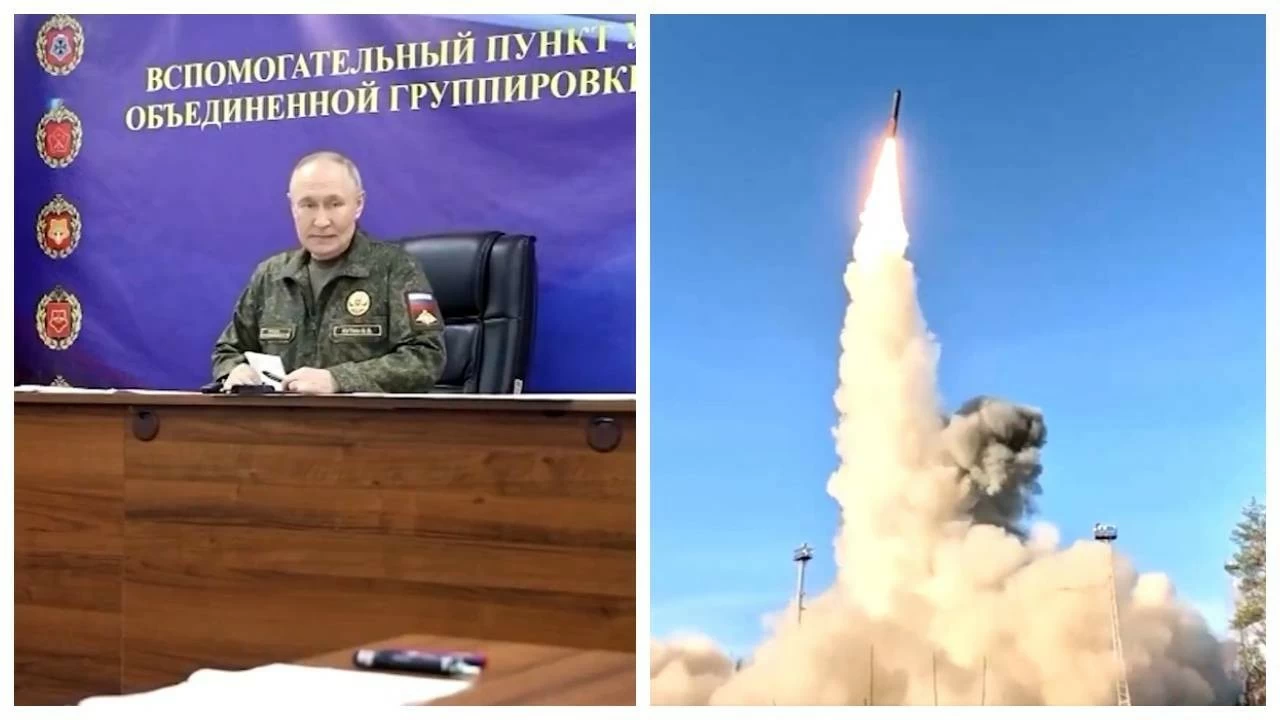


New Delhi: Russia has successfully conducted a pivotal test of its nuclear-powered Burevestnik cruise missile, a weapon system President Vladimir Putin claims possesses the capability to bypass any existing defence network.
Following the successful trial, Putin announced that Russia would proceed with the deployment of this advanced missile.


The test, which took place on October 21st, was reportedly synchronised with a nuclear drill. Analysts interpret this timing as a clear demonstration of Moscow's resolve, signalling that Russia "will never bow to pressure from the West" regarding the ongoing conflict in Ukraine. The announcement also comes amid a hardening stance from US President Donald Trump, who is advocating for a ceasefire.
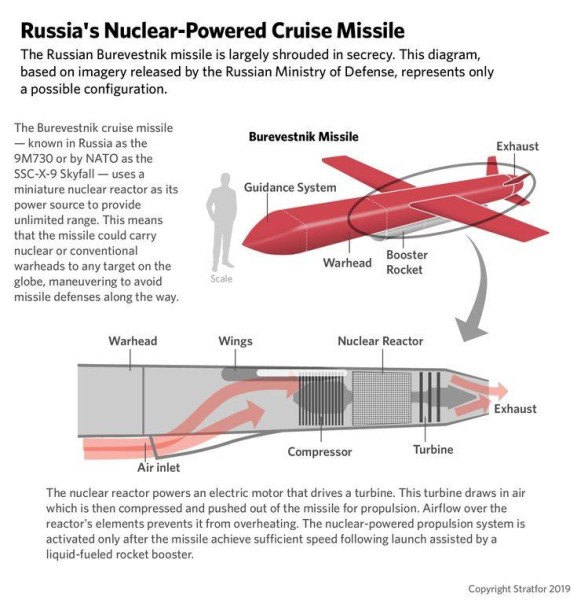
Valery Gerasimov, Russia's Chief of the General Staff of the Armed Forces, briefed President Putin on the test's success. He reported that the Burevestnik missile, also known by its designation 9M730 and NATO codename SSC-X-9 Skyfall, travelled approximately 14,000 kilometres (8,700 miles) and remained airborne for around 15 hours.
Russia asserts that the Burevestnik, or Storm Petrel, is an "invincible" weapon, designed to circumvent current and future missile defence systems due to its virtually unlimited range and unpredictable flight trajectory.
Putin, speaking in camouflage fatigues during a meeting with generals overseeing operations in Ukraine, described it as "a unique weapon which nobody else in the world has," according to remarks released by the Kremlin on Sunday.
Since its initial unveiling in 2018, Putin has positioned the 9M730 Burevestnik as Russia's strategic response to the United States' missile defence program, which expanded after the US withdrawal from the 1972 Anti-Ballistic Missile Treaty. The missile's development is also seen as a counter to NATO's continuous expansion.
Putin revealed that Russian specialists had previously expressed doubts about the feasibility of developing such a weapon. "I was told by Russian specialists that the weapon was unlikely to ever be possible, but now, its crucial testing has been concluded," he stated. He further instructed Gerasimov to determine the official classification of the weapon and to prepare the necessary infrastructure for its deployment.
The timing of this missile test, coupled with Putin's announcement delivered in a military setting while discussing the war in Ukraine, is widely perceived as a deliberate message to the West and, specifically, to President Trump.
About the Burevestnik cruise missile
The 9M730 Burevestnik, also known as the Storm Petrel, is a nuclear-powered and nuclear-capable cruise missile. First revealed by Russia in 2018, it is claimed to possess an unlimited range and the ability to execute unpredictable flight paths, rendering it exceptionally difficult to intercept. NATO has assigned it the designation SSC-X-9 Skyfall. Russia states that the missile was developed to overcome US and NATO missile defence systems and serves as a critical deterrent within its strategic arsenal.

