


Sign In
By signing in or creating an account, you agree with Associated Broadcasting Company's Terms & Conditions and Privacy Policy.
By signing in or creating an account, you agree with Associated Broadcasting Company's Terms & Conditions and Privacy Policy.
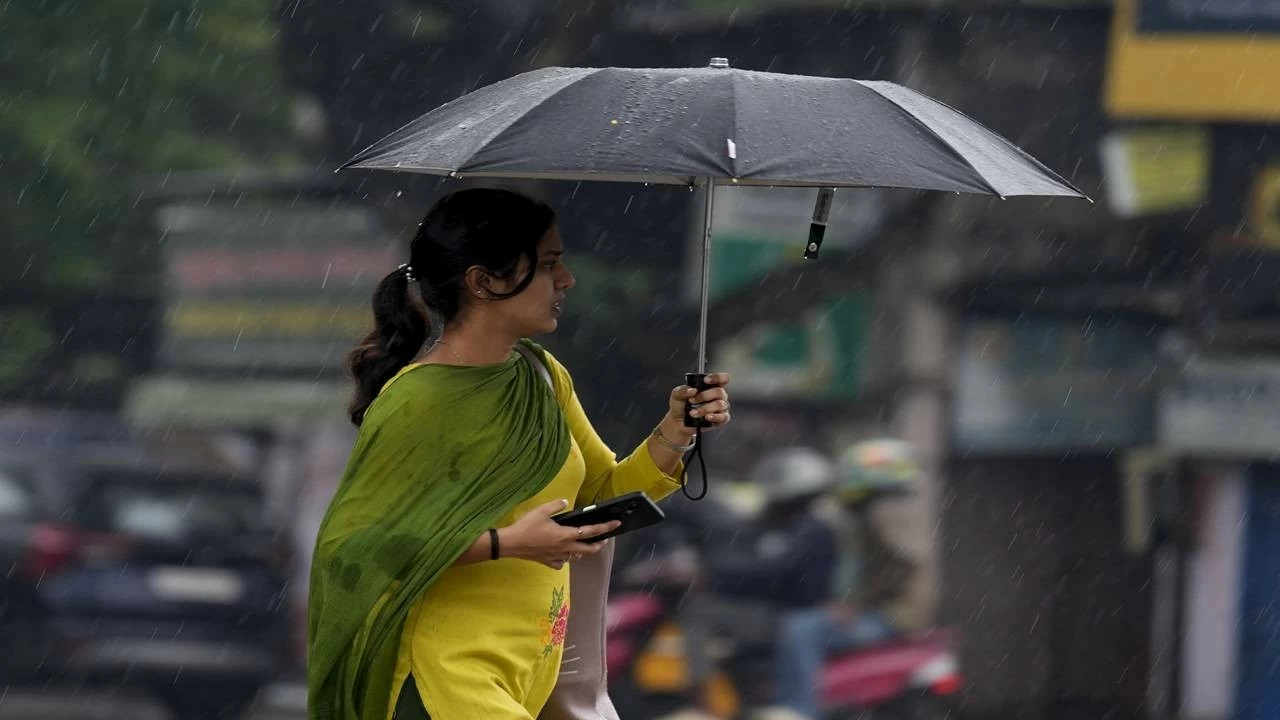


New Delhi: Andhra Pradesh and Odisha are bracing for the impact of Cyclone Montha after it intensified over the Bay of Bengal on Sunday. The cyclone is expected to batter the coastal states late on Tuesday with gale-force winds that could reach 90–110 kmph.
By late Sunday, Montha was located about 830 km from Andhra’s Kakinada and roughly 930 km from Odisha’s Gopalpur. Its landfall is expected along the Andhra coast between Machilipatnam and Kalingapatnam.



Five districts in Andhra — Kakinada, East Godavari, Konaseema, Eluru, and West Godavari — stayed on high alert, and rolled out a slew of precautionary measures. Residents from vulnerable areas were evacuated. Schools were closed and advisories issued. Fishermen were asked to stay off the seas. In Kakinada, residents were taken to safer zones from Hope Island. Schools will remain shut from October 27 to 31 as heavy rainfall has been predicted.
In Konaseema, schools have been closed and shelters prepared for more than 6,000 people living in 34 villages near the coast. Schools and colleges have also been shut in West Godavari and Eluru. Evacuations are being carried out on war-footing in both these places.
In Odisha, eight districts have been listed as "red zones", including Malkangiri, Koraput, Nabarangpur, Rayagada, Gajapati, Ganjam, Kandhamal and Kalahandi. These regions are likely to be hit the hardest by the cyclone, with extremely heavy rainfall expected on Tuesday and Wednesday.
A deep depression over southeast Bay of Bengal and southwest Bay of Bengal intensified into Cyclone Montha. As per the India Meteorological Department (IMD), the storm is likely to reach “severe cyclonic storm” strength by around October 28. Wind speeds are likely to range between 90 and 100 km/h, with gusts likely to reach up to 110 km/h. The storm is likely to cause heavy rainfall, strong winds, rough seas, and flooding, especially in low-lying coastal districts.
The system for naming tropical cyclones in the North Indian Ocean — covering the Bay of Bengal and the Arabian Sea — was set up by the World Meteorological Organisation (WMO) and the ESCAP/WMO Panel on Tropical Cyclones. The name Montha has been recommended by Thailand. In Thai, 'Montha' means 'fragrant flower' or 'beautiful flower'.
According to the naming system, when a cyclone reaches a certain intensity — typically with sustained winds of 34 knots or higher — it is given the next name on a pre-approved list provided by member nations.
Ahead of its landfall, a heavy rainfall warning for several states has been sounded by IMD. Andhra Pradesh is likely to witness heavy to extremely heavy rainfall from October 27–28. Some districts in the Rayalaseema region may witness rainfall exceeding 210 mm in 24 hours.
Odisha is also likely to face heavy to very heavy rain in districts such as Ganjam, Gajapati, Rayagada, Koraput, and Malkangiri between October 28 and 29. Wind speeds could reach 60–70 km/h, with gusts up to 80 km/h in some areas. The states that could be hardest hit apart from Odisha and Andhra Pradesh are Tamil Nadu and Telangana.
The cyclone will cause flooding in low-lying areas, waterlogging on the roads and paddy fields, and could take a huge toll on agriculture. It is likely to cause damage to coastal infrastructure, and disruptions in power and communication lines.
Ports, harbours, and coastal tourism activities could also bear the brunt. The cyclone may cause huge disruption to lives and livelihoods across the region, with recovery likely to take time.

