Sign In
By signing in or creating an account, you agree with Associated Broadcasting Company's Terms & Conditions and Privacy Policy.
By signing in or creating an account, you agree with Associated Broadcasting Company's Terms & Conditions and Privacy Policy.
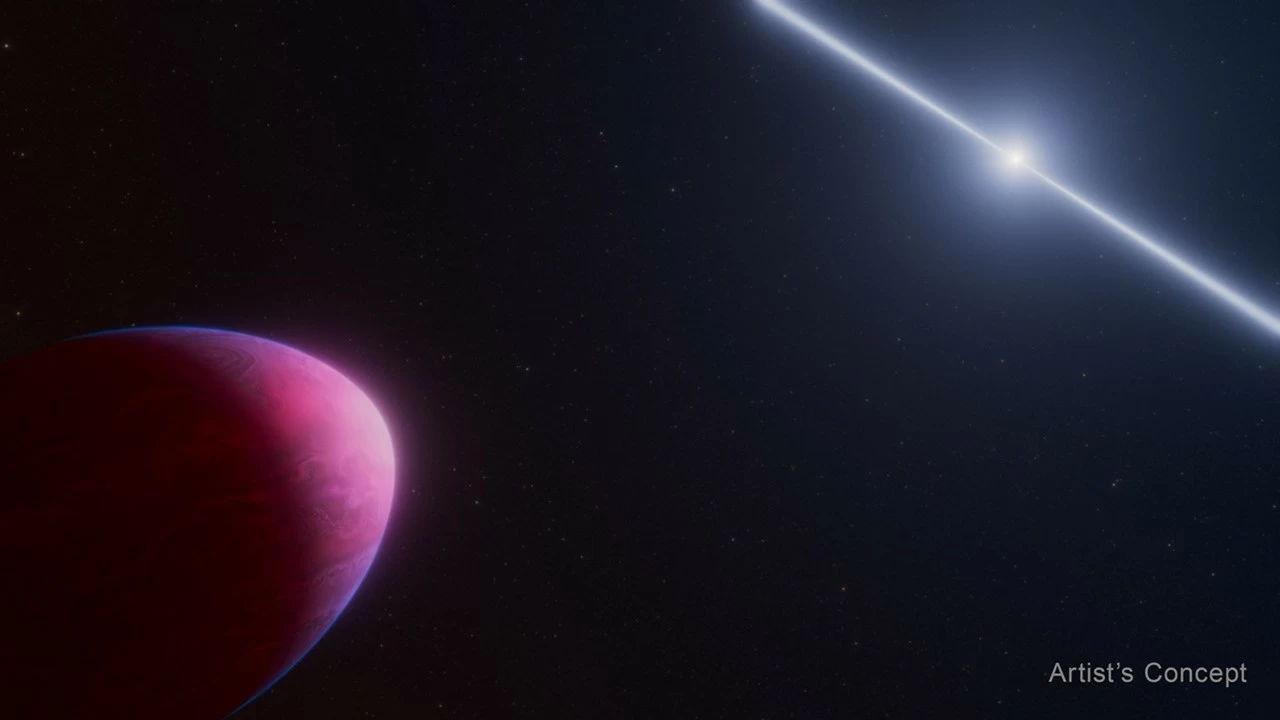

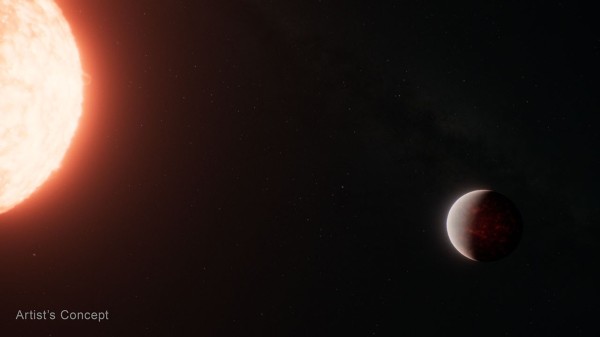
The James Webb Space Telescope has spotted an exotic gas giant designated as PSR J2322-2650 b in orbit around a pulsar 750 lightyears away in the constellation of Virgo. The exoplanet orbits the pulsar at a distance of 1.6 million km, and has been distorted into the shape of a lemon because of the extreme tidal forces. The exoplanet is about the mass of Jupiter and appears to have an exotic atmosphere dominated by helium and carbon. Such an atmosphere has never been spotted on any other world.
The gas giant is likely to have soot clouds high in the air, with diamonds clouds condensing and forming diamonds in the interior. The assembly of such a world challenges conventional theories on the formation of planets. Scientists are flummoxed by the discovery. The planet-mass object is orbiting a pulsar, which is a rapidly spinning neutron star, the remnant core of a massive star that died a violent death. This is a millisecond pulsar that is spinning rapidly, acting as a cosmic lighthouse. This pulsar contains the mass of the Sun, and is about the size of a city. The researchers were able to observe the planet illuminated by the pulsar, without the pulsar itself being visible.
The discovery of carbon in the atmosphere is surprising as the element readily bonds with any other atoms that could exist in the atmosphere. Molecular carbon is only dominant in conditions where there are almost no carbon and nitrogen. None of the 150 planetary atmospheres studied outside the Solar System contain any traces of molecular carbon. The planet orbits the host pulsar once every 7.8 hours, that is the duration of a year on the world. Scientists plan to further investigate the bizarre atmosphere of this oddball exoplanet.