Sign In
By signing in or creating an account, you agree with Associated Broadcasting Company's Terms & Conditions and Privacy Policy.
By signing in or creating an account, you agree with Associated Broadcasting Company's Terms & Conditions and Privacy Policy.
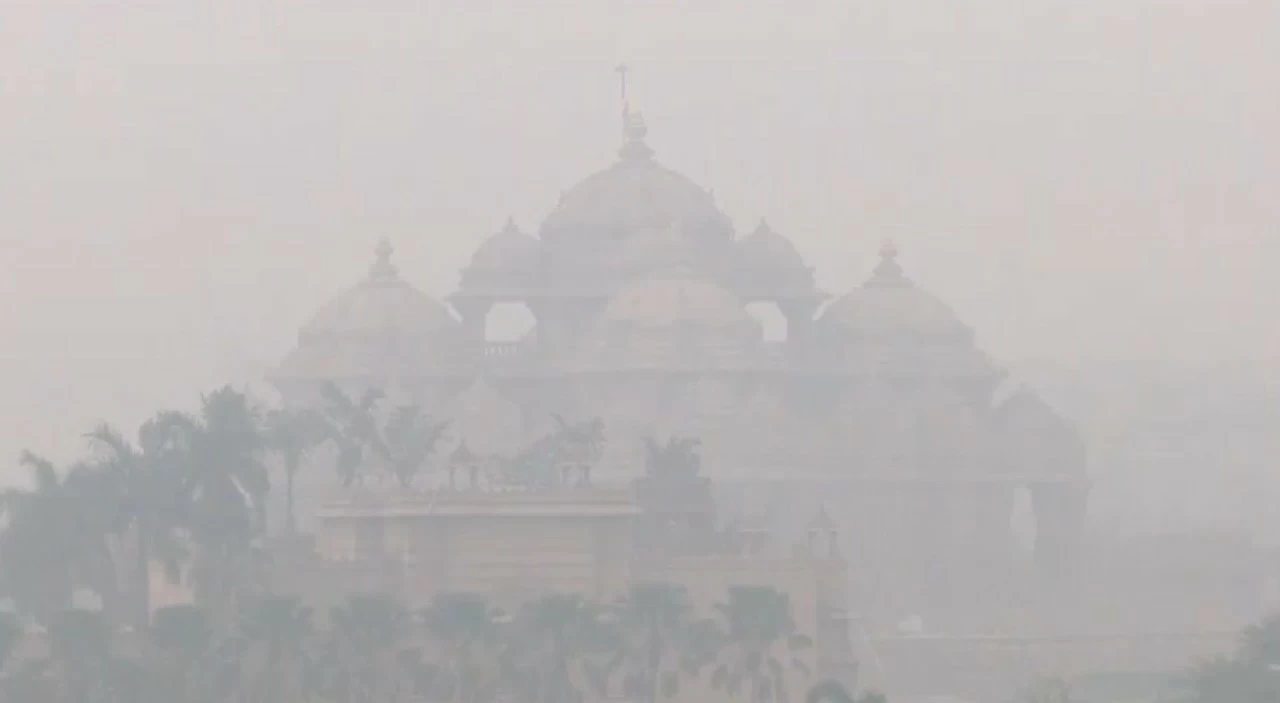


New Delhi: The residents of India’s capital woke up to a toxic blanket of smog and dense fog on Friday morning. By 6:00 am, Delhi’s overall Air Quality Index (AQI) hit 387, on the edge of the ‘severe’ category and offering no sign of relief for the millions of people gasping for clean air.
This marks a decline from Thursday’s reading of 356, signaling a dangerous downward trend in air quality in the national capital.
Flight operations derailed
The crisis isn’t just on the ground. At Indira Gandhi International (IGI) Airport, a thick blanket of fog forced authorities to trigger CAT III operations—a high-tech navigation protocol used when visibility is critically low. Delhi International Airport Limited (DIAL) issued an urgent advisory, warning travellers that flight delays and disruptions are likely. Passengers are being urged to stay in constant contact with airlines as ground teams scramble to manage the chaos across terminals.
The epicentres of pollution
While the entire city is suffering, several "pollution hotspots" have crossed into the terrifying 'severe' zone.
R K Puram: The worst-hit area with an AQI of 447.
Anand Vihar, Vivek Vihar, & Sirifort: All tied at a choking 442.
Dwarka Sector-8: Recorded at 429.
Nehru Nagar & Okhla Phase-2: Hovering between 422 and 425.
Even the areas considered "cleaner" by comparison, such as Alipur and Shadipur, recorded scores of 306, which remain firmly in the 'very poor' category. For context, an AQI above 400 is considered ‘severe,’ posing a risk even to healthy individuals and causing serious impacts on those with existing respiratory issues.
GRAP Stage-IV and 'no PUCC- no fuel' rules
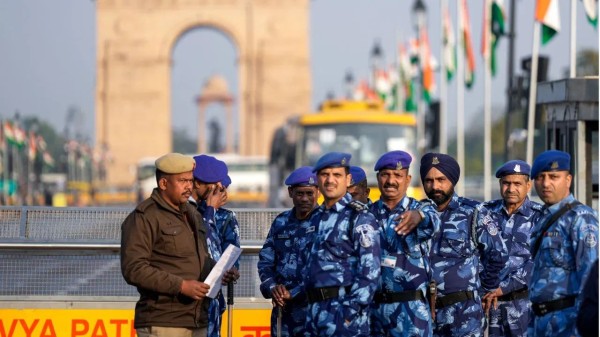
In response to the escalating emergency, the Commission for Air Quality Management (CAQM) has activated the most stringent measures under the GRAP Stage IV. The city has essentially turned into a fortress against high-emission vehicles.
Border controls: Non-Delhi private vehicles that do not meet BS-VI standards are now strictly barred from entering the city.
No PUC, no fuel: In a desperate bid to ensure compliance, gas stations have been ordered to deny fuel to any vehicle lacking a valid Pollution Under Control (PUC) certificate.
Surveillance: High-tech cameras, police checkpoints, and rapid-response transport teams are monitoring the streets 24/7.
Infrastructure blitz: Authorities are fast-tracking pothole repairs and waste processing to minimize dust and secondary pollutants.
As visuals from the ITO area show a city completely engulfed in a gray, toxic haze, health experts are advising residents to avoid outdoor exertion and wear N95 masks if they must step outside.