Sign In
By signing in or creating an account, you agree with Associated Broadcasting Company's Terms & Conditions and Privacy Policy.
By signing in or creating an account, you agree with Associated Broadcasting Company's Terms & Conditions and Privacy Policy.


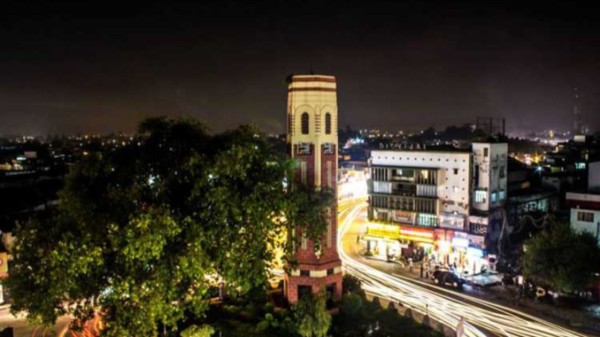
Dehradun: Persistent smog and toxic air in North Indian cities are driving thousands of residents to the hills in search of cleaner skies. But the rush is putting immense pressure on fragile mountain ecosystems. Last Wednesday evening, Dehradun’s Air Quality Index (AQI) crossed 300, slipping into the “poor” category, showing that even the hills are no longer safe escapes.

According to pollution monitoring data, Dehradun’s 24‑hour average AQI hovered near 294, with real‑time levels between 260 and 300. Experts from Doon University explained that while daytime air movement brings slight improvement, nighttime pollution spikes sharply, pushing AQI past 300. The worsening air quality has been linked to vehicle emissions, waste burning, construction dust, increasing tourist pressure, and seasonal forest fires in Uttarakhand.
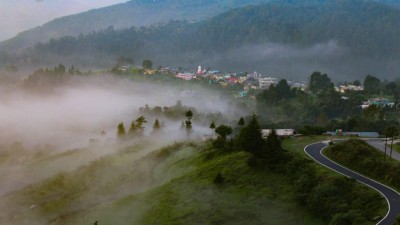


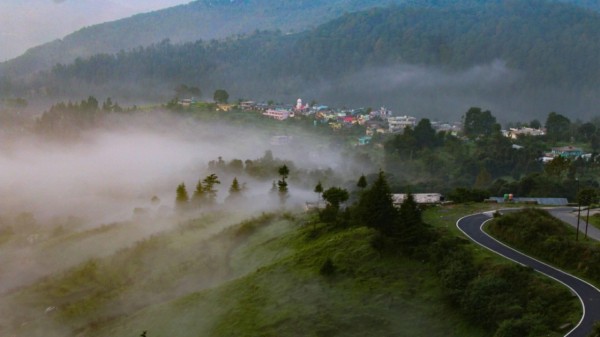
Hills under pressure
Hill towns such as Nainital, Mussoorie, Landour, and Rishikesh are now bearing the burden of this climate exodus. Once known for tranquillity, they are struggling with traffic jams, overflowing parking lots, and construction activity aimed at accommodating the growing crowds.

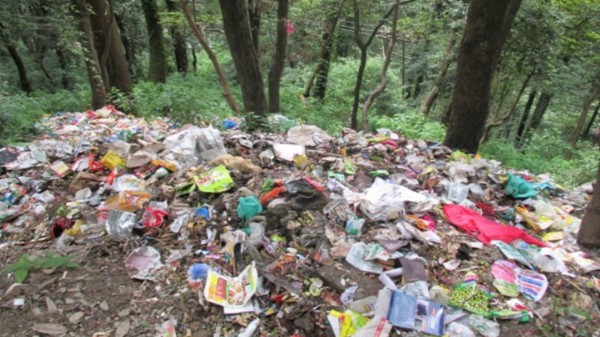
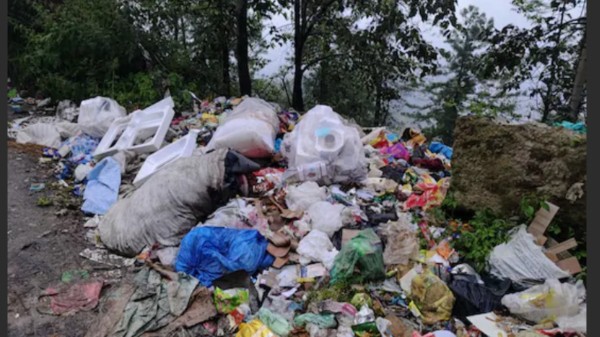
Kapil Joshi, professor of Sustainable Rural Development at IIT Roorkee, warned: “Heaps of disposables, plastics, and bottles can be seen along the roadside. Much of it either remains on the road or ends up in rivers and springs.”
The surge in visitors has more than doubled in recent years, transforming narrow mountain roads into congested arteries. Locals and tourists alike report long delays, noise pollution, and a noticeable loss of peace and quiet.

Civic challenges
The sudden swell in numbers has strained water supplies, waste management, and civic services in towns designed for smaller populations. To cope, municipalities are building large‑scale infrastructure projects. But these often cause deforestation and increased local emissions, eroding the clean‑air advantage that once drew people uphill.
“We are still creating infrastructure. Parking is a major issue. Municipal solid waste management is a big challenge,” Joshi added.
Climate change adds to woes
Environmentalists warn that climate change is compounding the problem. Hill stations are experiencing higher summer temperatures than in past decades, reducing the cooling contrast that once made them ideal escapes.
“There has been a sharp rise in AQI in these regions,” said Dr Anil Joshi, Padma Bhushan awardee for conservation. “The annual AQI in places like Dehradun is not less than 150 or 100. Sometimes it can go as far as 300.”
A turning point
The movement away from polluted cities toward hill towns underscores a broader climate and public‑health challenge for India. Without rapid improvements in urban air quality, pollution control, and sustainable tourism strategies, more people will seek refuge in fragile ecosystems that are ill‑equipped to handle such demand.
Experts say India must prepare for the consequences of rapid development intersecting with worsening climate change. Otherwise, the hills may pay the price of the plains’ pollution, losing the very serenity that once defined them.