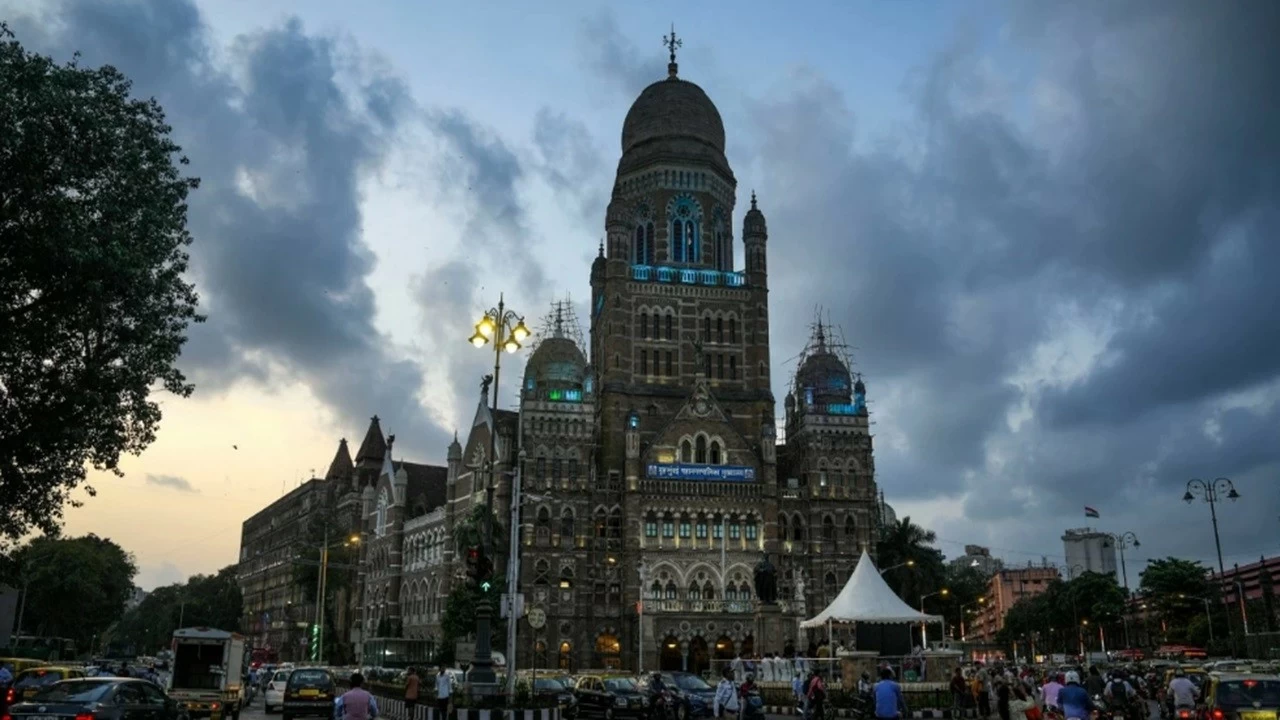
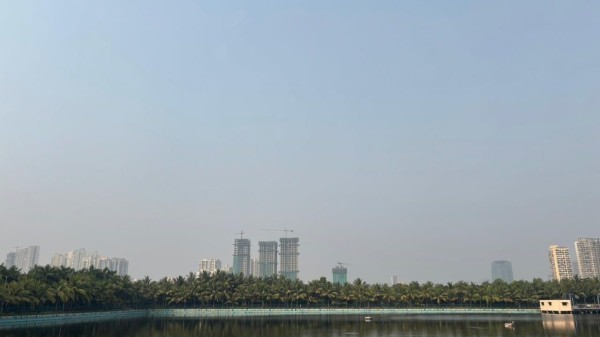
The Bombay High Court has sent a clear message to Mumbai’s civic authorities, saying that the "moderate" is simply not good enough when it comes to the air citizens breathe. During a suo motu (self-initiated) hearing on Tuesday regarding the city’s choking pollution, the court dismissed claims that current levels are acceptable.
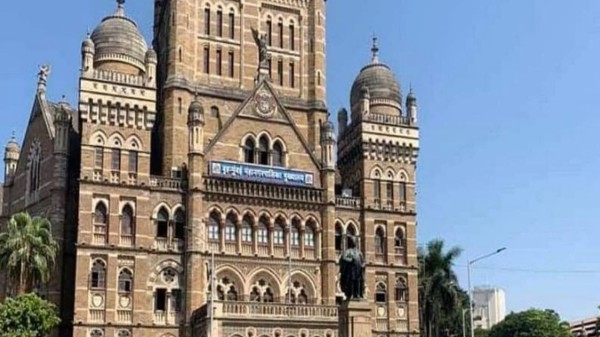
The court rapped the Brihanmumbai Municipal Corporation (BMC) even after the corporation unveiled an aggressive 315-page roadmap involving body cams, SMS alerts, and hundreds of "stop-work" orders.
"We are not on moderate": The court’s ultimatum to BMC
The tension in the courtroom peaked when a bench led by Chief Justice Shree Chandrashekhar and Justice Shyam Suman pushed for progress. The BMC counsel, SU Kamdar, described the city’s current Air Quality Index (AQI), which has hovered between 101 and 116 recently, as "moderate". The bench was quick to quip, "We are not on moderate."
The judges indicated that settling for mid-tier air quality is not an option, demanding tangible results rather than just statistical compliance.
The crackdown: 600+ sites halted
In a massive status report, the BMC detailed its "Operational Action Plan," revealing a heavy-handed approach to errant construction sites. The numbers paint a picture of a city under intense scrutiny:
According to the BMC report, 94 ward-level squads are inspecting at least two sites daily, with senior officials monitoring hotspots. Between late December and mid-January, the BMC issued 284 stop-work notices for general non-compliance. Out of 1,954 active construction sites, a staggering 662 were ordered to shut down immediately for failing to install mandatory sensor-based air quality monitors. Another 408 notices were slapped on developers for failing to meet mitigation standards.
The "airshed" approach
The BMC’s affidavit, filed by Chief Engineer Avinash Kate, argued that Mumbai’s pollution isn't just a local problem but a geographical one. Citing "temperature inversion" and "seasonal wind reversal," the report noted that Mumbai requires an "airshed-based" strategy.
This means air quality management cannot be city-centric; it must be a multi-jurisdictional effort that accounts for coastal breezes and regional emissions. Despite the challenges, the BMC claimed victory in the numbers, stating that AQI levels have improved by 22 per cent in 2024 and 26 per cent in 2025 compared to previous years.
High-tech enforcement: Body cams and alerts
To ensure transparency and real-time monitoring, the BMC is turning to technology. The corporation has procured 27 cameras for enforcement squads to record inspections and prevent corruption or disputes at construction sites.
Also, a new system is being developed to automatically text authorities the moment PM10 or PM2.5 levels cross a dangerous threshold.
While the BMC maintains that Mumbai is on a "consistent seasonal pattern" toward improvement, the High Court remains unimpressed by the "moderate" status quo, keeping the pressure on the civic body to clear the skies for good. The next case hearing of the case has been set for January 23.