


Sign In
By signing in or creating an account, you agree with Associated Broadcasting Company's Terms & Conditions and Privacy Policy.
By signing in or creating an account, you agree with Associated Broadcasting Company's Terms & Conditions and Privacy Policy.
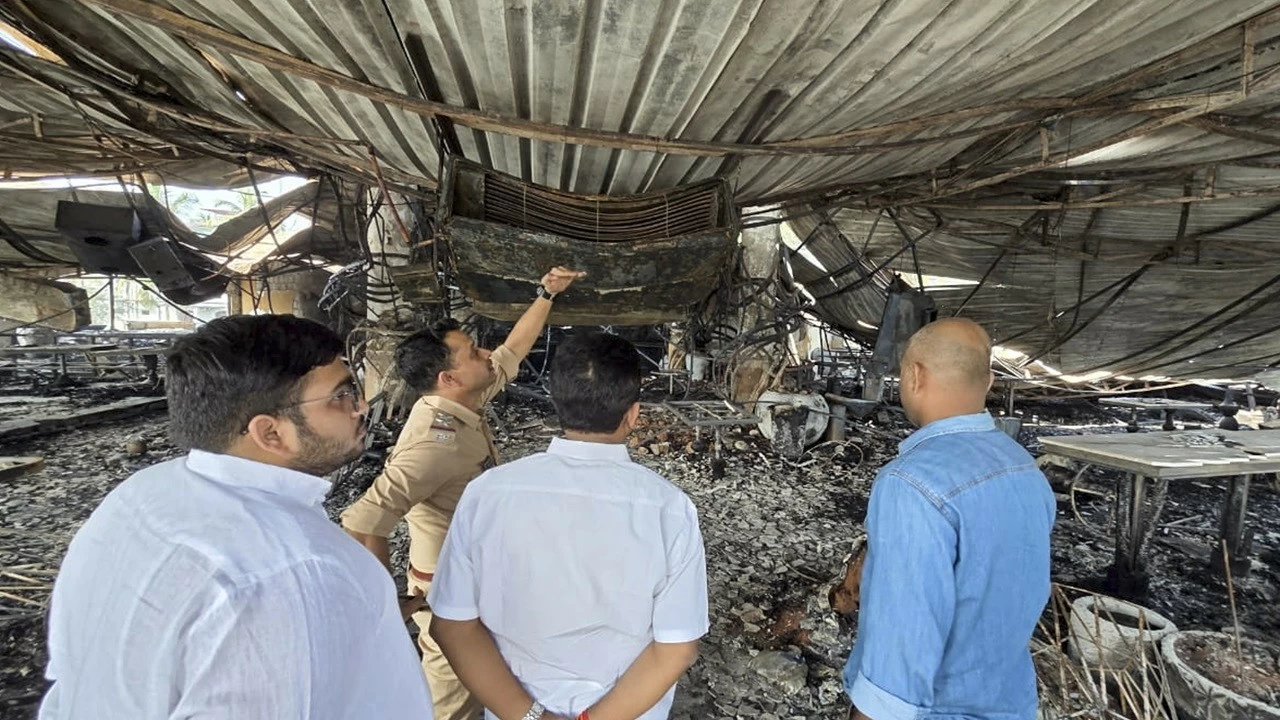


New Delhi: At least 25 people, four tourists and 21 club staff members, were killed at a nightclub in Goa due to a blaze. The fire incident highlights administrative lapses and has raised questions about how the establishment had been functioning without the necessary permissions and licences.
Police have booked Romeo Lane chairman Saurabh Luthra, club partners, managers and event organisers, with the FIR stating that the “restaurant was found operating without obtaining permissions/licences from the competent authorities”.



The fire was apparently sparked by bursting of electric firecrackers inside the club. The venue reportedly did not have proper fire-safety norms, and had narrow exits.
In the recent past, a number of fire incidents have taken place across the country, snuffing out precious lives.
1. Gaming-zone fire in Rajkot: On 25 May 2024, a blaze ripped through a gaming zone in Gujarat's Rajkot, killing 28 people which included nine children. The gaming zone was constructed in 2024 using temporary two-storey structures with tin roofs. The zone lacked proper fire extinguishers and emergency exits. It also did not have the mandatory fire department permission to operate. A Special Investigation Team (SIT) was assigned the task to investigate the fire incident.
2. Kamla Raja Hospital fire in Gwalior: It happened in March this year. The fire erupted at a government hospital in Gwalior, Madhya Pradesh, prompting the rescue of more than 190 patients, including women and children. The blaze broke out in the Gynaecology & Obstetrics department, specifically the ICU/labour room area. The immediate trigger was reportedly an AC unit explosion, indicating possible equipment failure or an electrical fault.
3. Konaseema cracker unit fire in Andhra Pradesh: Six people were killed and two others injured in a fire at a fireworks manufacturing unit in Andhra Pradesh’s Dr BR Ambedkar Konaseema district in October this year. It was suspected that the accident might have occurred due to mishandling at the unit.
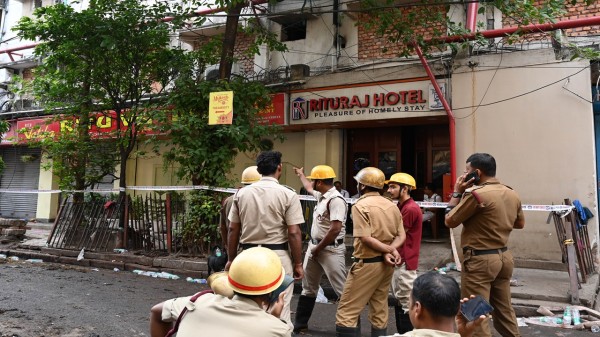
4. Rituraj Hotel fire in Kolkata: In late April 2025, a devastating fire swept through Kolkata’s Rituraj Hotel in the Burrabazar area. The blaze claimed the lives of 14 people — mostly due to suffocation. It left several others injured. The incident exposed grave safety lapses as guests, trapped by thick smoke, were forced to jump or succumb to the flames, triggering public anger and official investigations into the hotel’s operations. Investigations into fire safety compliance showed there were lapses.
5. Shelter home fire in Delhi: On December 2, 025, a fire erupted at a night shelter in Vasant Vihar, Delhi, resulting in the deaths of two men. It was an electrical short circuit or potential negligence which apparently caused the fire. The blaze raised questions over safety standards in Delhi's night shelters, which are often built with temporary, highly flammable materials and plagued by overcrowding and poor fire-safety provisions.
All these fires, including the one in Goa, were preventable and the deaths entirely avoidable had proper safety protocols been adhered to. They were caused either due to flammable infrastructure, crowding, lack of fire safety measures, regulatory non-compliance, and negligence in handling devices.
It seems we haven't learnt lessons from these fire tragedies. Despite the mishaps, there's often poor enforcement of safety regulations. Inspections are also not carried out on a regular basis and even if they are, they leave gaps. Moreover, those responsible for them are lax and often corrupt too. Many units continue to function without proper licenses or fire clearances. Getting a license is a tedious process and involves both time and money. The owners often try to skirt the rules. The staff also remain untrained in emergency response.
All actions are reactive rather than preventive. Only when a disaster occurs does the machinery wake up. There is also limited public awareness about fire safety, which allows negligence to continue without any control.

