


Sign In
By signing in or creating an account, you agree with Associated Broadcasting Company's Terms & Conditions and Privacy Policy.
By signing in or creating an account, you agree with Associated Broadcasting Company's Terms & Conditions and Privacy Policy.
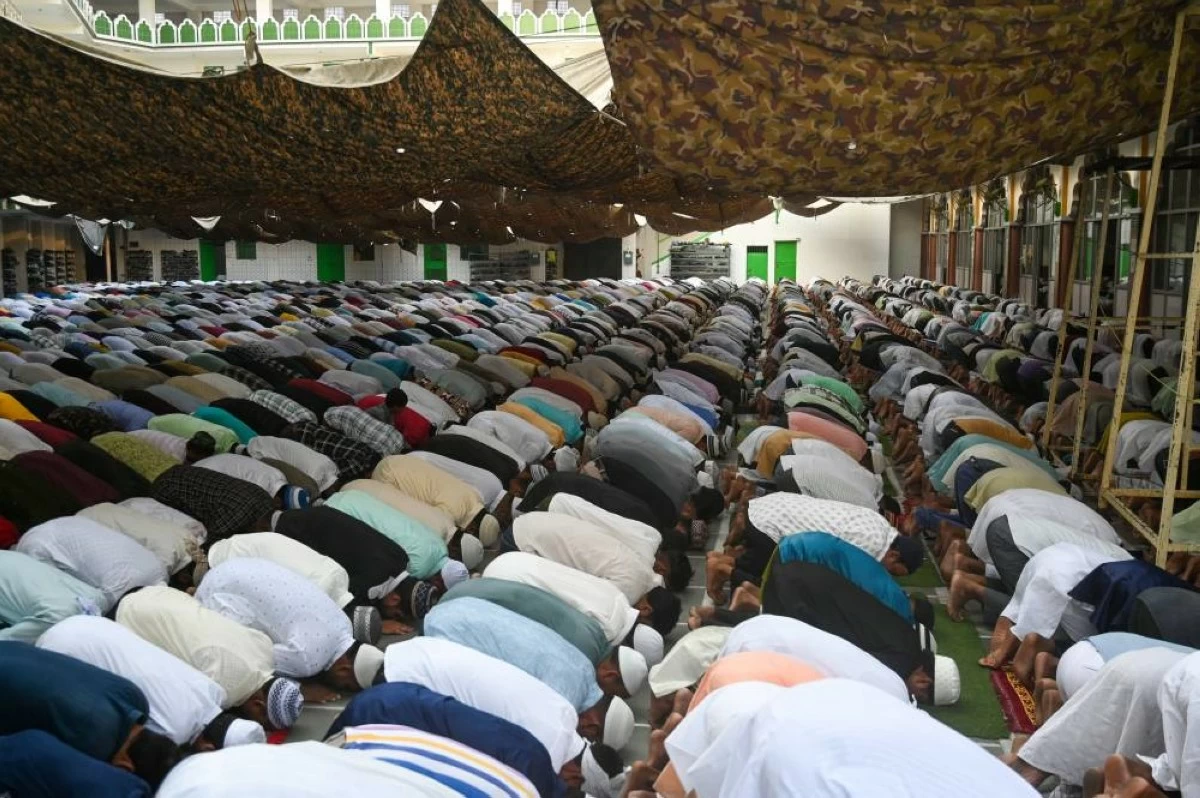


New Delhi: Muslim society, often seen as a monolith, is far from uniform. Like other communities in South Asia, it has internal divisions that mirror a caste-like structure, shaped by history, culture, and social dynamics. The three main categories—Ashraf, Ajlaf and Arzal—reflect a hierarchy that influences identity, opportunity and social interactions. While Islam emphasises equality, these divisions persist, rooted in historical conquests, conversions, and socio-economic factors. Understanding these categories reveals the complexities of Muslim social life in India today, especially as debates around inclusion and reform gain momentum in 2025.
The Ashraf, meaning "noble" in Arabic, sit at the top of this hierarchy. They claim descent from foreign Muslim settlers—Arabs, Persians, Turks, or Afghans—who arrived in India as conquerors, traders, or scholars starting in the 8th century. This group includes Sayyids (descendants of Prophet Muhammad’s daughter Fatima), Shaikhs (linked to the Prophet’s companions), Mughals, and Pathans. Some Ashraf are also upper-caste Hindu converts, like Muslim Rajputs, who retained their elite status post-conversion. Historically, Ashraf dominated politics, landownership, and religious scholarship, serving as advisors or rulers during the Delhi Sultanate and Mughal eras. Today, they make up about 15-20% of India’s 200 million Muslims but hold disproportionate influence in community leadership, media, and politics.
Ajlaf, meaning "commoners," form the middle tier and constitute the majority of Indian Muslims. They are largely descendants of lower or middle-caste Hindus who converted to Islam, often to escape the rigid Hindu caste system or due to economic incentives. Ajlaf include occupational groups like Ansaris (weavers), Qureshis (butchers), Telis (oil pressers), and Julahas (cotton carders). Their status is tied to their profession (pesha) and conversion history, which marks them as "local" rather than "foreign." While some Ajlaf have climbed the social ladder through education or trade, many face discrimination from Ashraf, who historically viewed them as inferior. In rural areas, Ajlaf often work as artisans, farmers, or laborers, and their access to resources like education remains limited compared to Ashraf.
At the bottom are the Arzal, meaning "degraded," a term that echoes the marginalisation they face. Arzal are converts from Hindu Dalit or "untouchable" communities, such as Halalkhors (sweepers), Dhobis (washermen) or Bhangis (scavengers). In the 1901 Census, they were noted as Muslims “with whom no other Muhammadan would associate,” barred from mosques or shared burial grounds. This exclusion mirrors Hindu untouchability, despite Islam’s egalitarian ideals. Arzal continues to face social stigma, often relegated to menial jobs. Their population is smaller—estimated at 5-8% of Muslims—but their plight is severe, with little representation in community leadership or politics. The term “Pasmanda,” meaning “those left behind,” collectively refers to Ajlaf and Arzal, highlighting their shared backwardness.
The origins of this caste-like system are complex. When Islam arrived in India, early converts retained Hindu social structures, including caste, as they integrated into Muslim society. Foreign Muslim elites, seeking to maintain power, reinforced divisions by favoring those with “noble” lineage. Texts from the 13th century, like Ziauddin Barani’s writings, show disdain for “low-born” Muslims, advocating their exclusion from high offices. The concept of kafa’ah (hereditary suitability) in Islamic law was used to justify endogamy, ensuring Ashraf married within their group. Over time, these practices solidified a hierarchy, despite Islam’s emphasis on equality. In regions like Uttar Pradesh and Bihar, these divisions are stark, though less pronounced in places like Tamil Nadu, where socio-economic status matters more.
Discrimination within these categories persists in subtle and overt ways. In mosques, Ashraf often pray in front rows, while Ajlaf and Arzal are pushed back. Marriage remains largely endogamous—Sayyids rarely wed Ajlaf, and Arzal face near-total exclusion. In 2019, reports highlighted separate water containers for Arzal in Muslim-dominated areas, echoing caste-based segregation. Burial grounds can also be divisive, with Arzal sometimes denied space in “elite” cemeteries. Politically, Ashraf dominate Muslim representation—between 1952 and 2014, only 60 of 400 Muslim MPs were Pasmanda, despite their 85% population share. This skew fuels resentment, as Ajlaf and Arzal feel their issues are sidelined.
The Pasmanda movement, launched in the 1990s by leaders like Ali Anwar, seeks to address these disparities. It demands better representation, education, and economic upliftment for Ajlaf and Arzal. The movement gained traction in 2022 when Prime Minister Narendra Modi acknowledged Pasmanda Muslims, urging their inclusion in development schemes. By 2024, political parties began engaging with Pasmanda groups, especially in Bihar and Uttar Pradesh, recognizing their electoral weight. However, Ashraf leaders often dismiss the movement, arguing it fragments Muslim unity. Critics also note that some Pasmanda activists align with Hindu nationalist narratives, complicating their advocacy.
Legal and policy frameworks shape this issue. The Sachar Committee Report (2006) and Ranganath Mishra Committee Report (2007) confirmed caste-like disparities among Muslims, recommending reservations for backward Muslim groups. Currently, some Ajlaf and Arzal fall under Other Backward Classes (OBC) quotas, but Ashraf are excluded unless economically weaker. In 2023, debates around a caste census intensified, with Ajlaf and Arzal supporting it to quantify their disadvantage, while some Ashraf opposed it, fearing loss of privilege. The Supreme Court’s 2008 “creamy layer” ruling, meant to exclude elite OBCs from quotas, remains poorly enforced, allowing influential Ashraf to benefit indirectly.

