Sign In
By signing in or creating an account, you agree with Associated Broadcasting Company's Terms & Conditions and Privacy Policy.
By signing in or creating an account, you agree with Associated Broadcasting Company's Terms & Conditions and Privacy Policy.
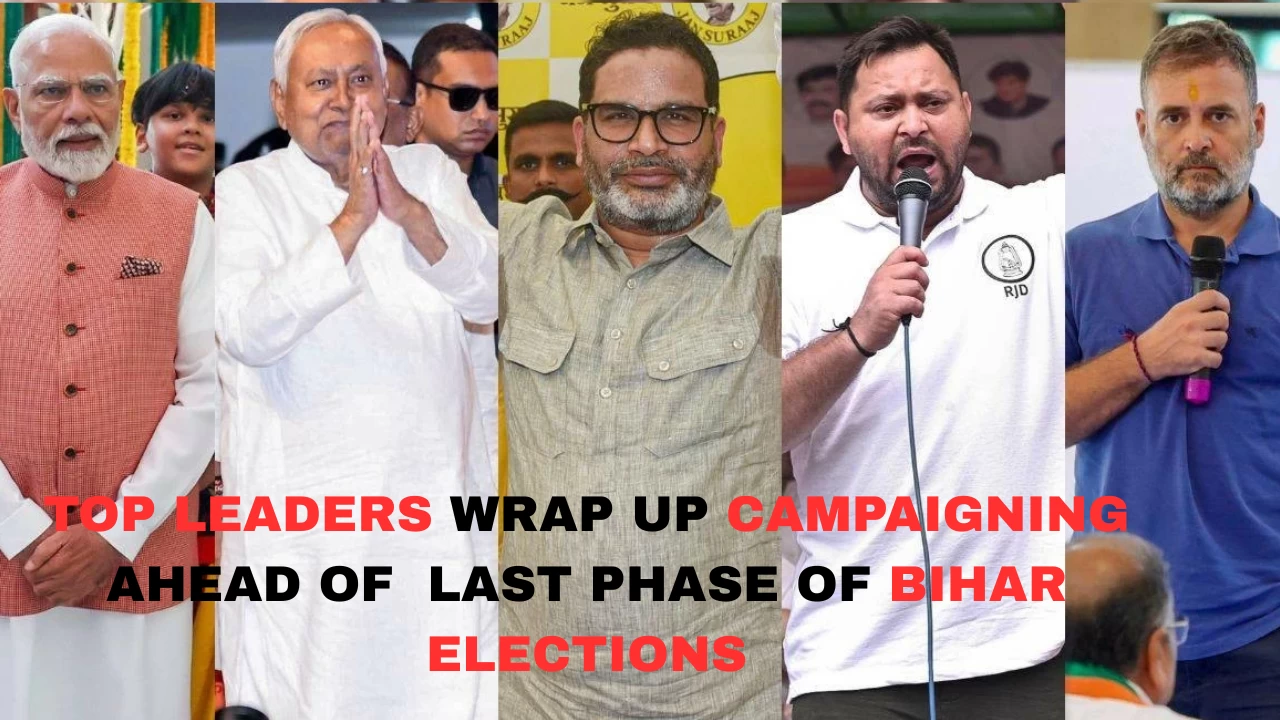


New Delhi: With the completion of the election campaign for the second phase of elections in Bihar, the state is all set to witness the Assembly polls on November 11. With this, there are just two days left to decide who will rule the state.
The first phase of polling, which recorded a 65 per cent voter turnout, was held on November 6. While, the results will be announced on November 14.
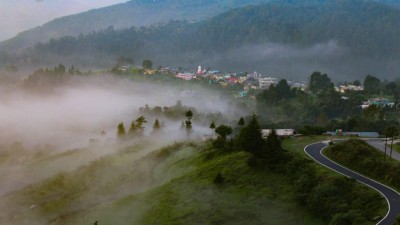
Some key constituencies are expected to draw major attention in the second phase — including JD(U) minister Sumit Kumar Singh’s Chakai, BJP MLA Shreyasi Singh’s Jamui, JD(U) minister Leshi Singh’s Dhamdaha, and BJP minister Neeraj Kumar Singh’s Chhatapur.
Altogether, 122 seats will go to the polls in the second phase, while 121 constituencies voted in the first phase last week. The high-voltage campaign concluded with powerful speeches by Home Minister Amit Shah and Defence Minister Rajnath Singh.
Congress MP Rahul Gandhi addressed rallies in Kishanganj and Purnea districts in the Seemanchal region, which has a significant Muslim population — a crucial vote bank for the opposition INDIA bloc. Gandhi led an energetic campaign, addressing 15 election meetings in total. Amit Shah, who camped in the poll-bound state for several days, held rallies in Sasaram and Arwal — areas where the BJP’s influence is relatively weaker. Therefore, special focus was placed on these regions. Defence Minister Rajnath Singh addressed rallies in Aurangabad and Kaimu districts, both bordering his home state of Uttar Pradesh, where he took jibes at RJD supremo Lalu Yadav and his son Tejashwi Yadav.
The campaign period will be remembered for the intensive canvassing by Prime Minister Narendra Modi, who held 14 rallies in addition to a roadshow. Meanwhile, Congress General Secretary Priyanka Gandhi Vadra campaigned in Bihar for the first time. She led a fairly vigorous campaign with 10 rallies and a roadshow, although one of her meetings had to be cancelled due to bad weather that prevented her from reaching the venue by helicopter.
The BJP’s star-studded campaign featured party president JP Nadda, Union Ministers Nitin Gadkari and Shivraj Singh Chouhan, and regional leaders such as Yogi Adityanath, Himanta Biswa Sarma, andMohan Yadav—the Chief Ministers of Uttar Pradesh, Assam, and Madhya Pradesh, respectively. Actor-turned-politicians Ravi Kishan and Manoj Tiwari also joined the campaign, along with NDA allies like Maharashtra Deputy CM Eknath Shinde of Shiv Sena and Andhra Pradesh Minister Nara Lokesh of the TDP.
JD(U) Chief Minister Nitish Kumar, seeking a fifth term in office, ran a relatively quiet but focused campaign, mostly away from the spotlight. Despite adverse weather conditions, he remained undeterred, continuing with his rallies and impromptu roadshows.
On the other hand, Tejashwi Yadav, the RJD leader and the INDIA alliance’s chief ministerial face, spearheaded a spirited campaign. Encouraged by the opposition bloc’s confidence in him, Tejashwi gave it his all.
The Jan Suraaj Party, considered the “X factor” of this election, centered its campaign around founder Prashant Kishor, who is known for designing high-profile political campaigns across India. This time, however, he chose to rely on a traditional door-to-door outreach in his home state. Criticizing Rahul Gandhi’s appeal to younger voters, Kishor remarked, “Why would Gen Z listen to him?”
On Sunday, the Congress accused the BJP-JD(U) alliance of “looting” Bihar for the past 20 years through corruption and expressed hope that the people would free themselves from this “double-engine government” by voting for change.