
Sign In
By signing in or creating an account, you agree with Associated Broadcasting Company's Terms & Conditions and Privacy Policy.
By signing in or creating an account, you agree with Associated Broadcasting Company's Terms & Conditions and Privacy Policy.
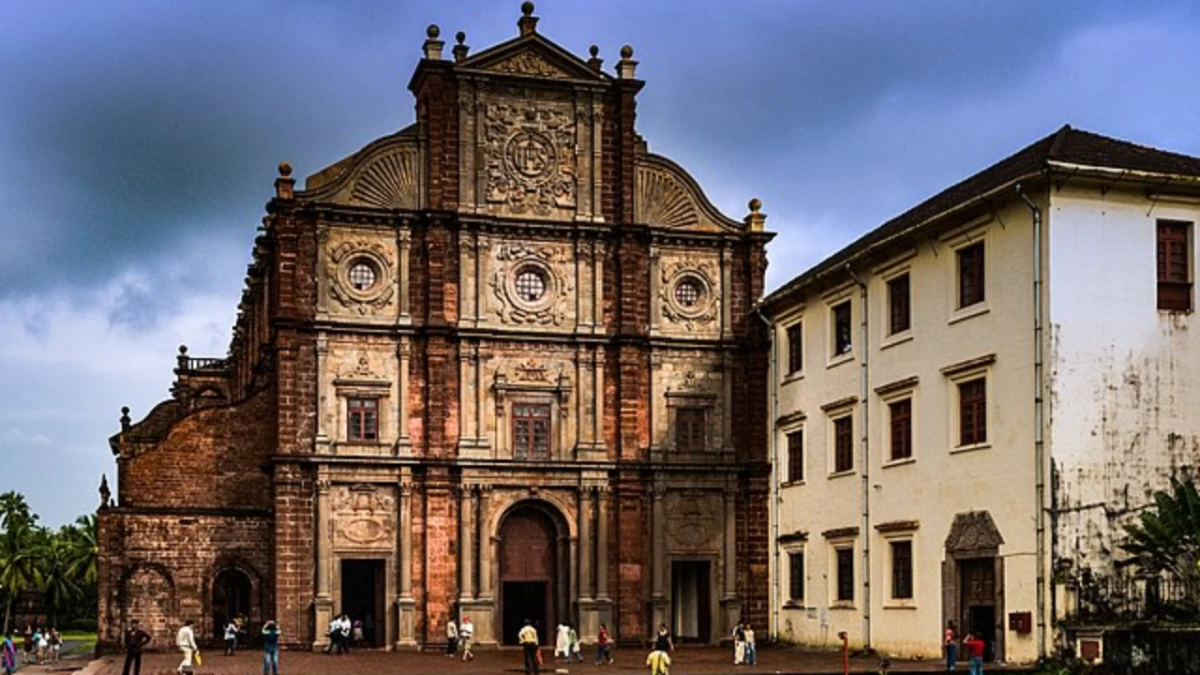


Kolkata: Goa is arguably the most popular tourist place in India, one that is known for its beaches, party life and old monuments showcasing the Portuguese heritage of the state. Amid all these, the Churches and Convents of Goa remain largely unnoticed, even though they are a UNESCO World Heritage Site. The name has been given by UNESCO to a set of religious monuments located in Goa Velha or Old Goa. It became a heritage site of the UNESCO in 1986.
Goa has a unique place in the history of India, in the sense that it was never really controlled by the British Empire in our country. Rather, since the 16th century, Goa remained under the control of the Portuguese Empire and hence, the Portuguese heritage and culture are interwoven in the very fabric of the Goanese society. The Churches and Convents of Goa, especially the Church of Bom Jesus, which contains the tomb of St Francis-Xavier, shows the evangelization of Asia. These monuments played a crucial role in Asian history as the forms of Manueline, Mannerist and Baroque art spread in almost all the countries of the continent.



In the 15th century, the Sultanate of Bijapur founded the city of Goa as a port on the Mandovi river's banks. In 1510, Afonso de Albuquerque, the Portuguese general captured the city with the help of a local privateer and it marked the beginning of the Portuguese colonization of Goa. It would remain so till the 20th century, even after India got its Independence from the British Raj in 1947. Goa was once known as the 'Rome of the East', especially for its splendid and numerous Catholic religious buildings.
During the Portuguese rule in Goa, several public, royal, and secular edifices were built, along with many churches, chapels, cathedrals, and convents, after the European religious orders like the Carmelites, Franciscans, Dominicans, Augustinians, Theatines, and Jesuits arrived there. The most comprehensive group of churches and cathedrals at Old Goa comprise of the following: Church and Convent of St. Francis of Assisi, Se’ Cathedral, Basilica of Bom Jesus, Chapel of St. Catherine, Church of Lady of Rosary, and Church of St. Augustine.
While the facade of the Church of Bom Jesus is decorated with pilasters, the Se’ Cathedral begin its journey as a small chapel built of mud and straw after Alfonso Albuquerque conquered Goa. The churches have paintings on wooden borders and panels have floral designs. A few of the statues of the churches were made from wood, while most were made from wood delicately carved and painted. The statues mostly depict the saints, Jesus and Mother Mary on the cross.
The Bom Jesus Church is one of the grandest churches in Asia. It has ornate ornaments which magnify its grandeur. The church was made with black granite and elaborate Doric and Corinthian facades were crafted in meticulous detail. Also, its ceiling is highly decorated, sarcophagi from notable Portuguese and also an altar dedicated to Infant Jesus, making the church an unparalleled architectural masterpiece. On the other hand, the Church of Saint Francis of Assisi shows an impressive Baroque architecture and it was constructed in 1661, making it one of the oldest and most aesthetically stunning churches in Goa.
In the 16th century, the Augustinians arrived in Goa and established a convent and a church building. Known as the Church of St. Augustine, the structure today is in a ruinous states with the vault having collapsed in 1842 and in 1936, the facades fell. Out of whatever remains of the church, the thing that stands out is the part of a tower which is still standing. The original facade had two huge towers of five floors on either side and the domestic side was a single nave. In 1639, religious of the Theatines reached Goa and they constructed the St. Cajetan Church. Italian architects Francesco Maria Milazzo and Carlo Ferrarini designed the church with the plan in the form of a Greek cross. The facade of this church looks like the facade designed by Carlo Maderno for St. Peter's Basilica in Rome. All these structure truly make Goa a heritage site that offers more than the beaches.