


Sign In
By signing in or creating an account, you agree with Associated Broadcasting Company's Terms & Conditions and Privacy Policy.
By signing in or creating an account, you agree with Associated Broadcasting Company's Terms & Conditions and Privacy Policy.
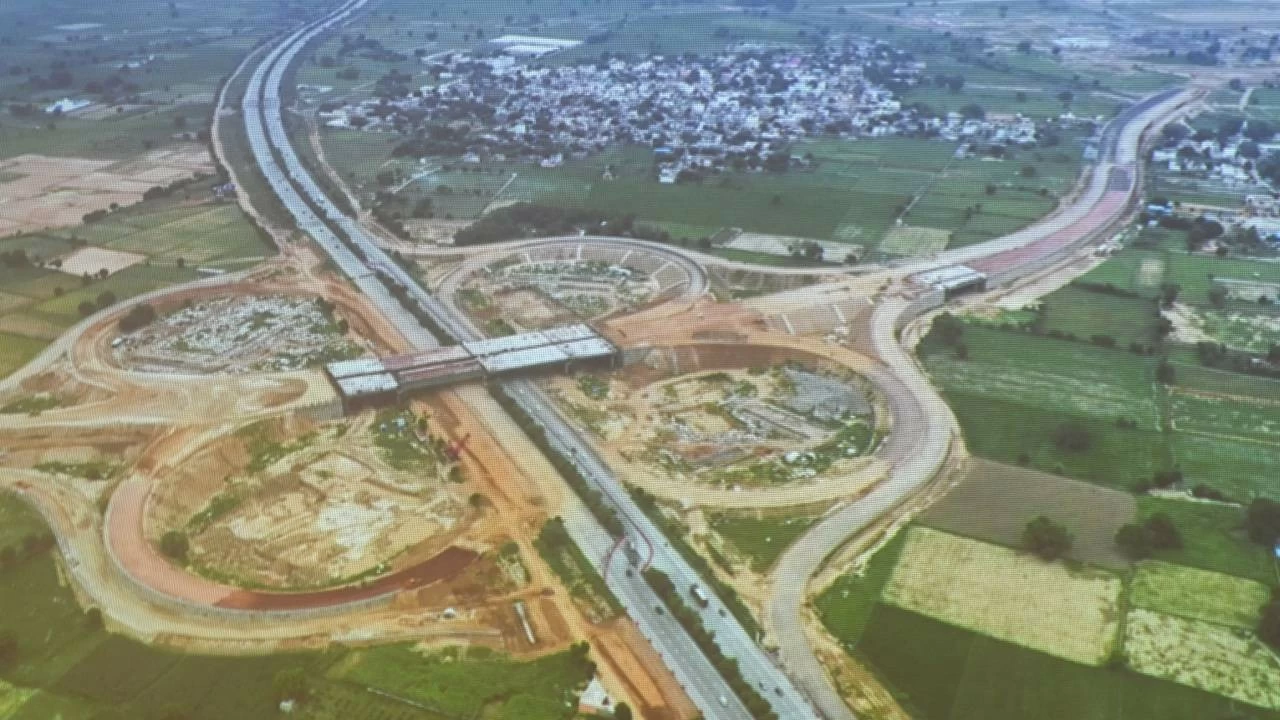


Delhi-Mumbai Expressway: With many expressways being developed in India, most of which are part of the Bharatmala Project, one expressway that has garnered significant attention since its announcement is the Delhi-Mumbai Expressway. This expressway, which is expected to be fully operational by 2026, has been in the news for all the right reasons. One of the longest expressways in India, it stands out for its exceptional features and serves as a wildlife corridor.
The government of India has invested crores in building high-class roads, enabling people to enjoy long, hassle-free journeys. The Delhi-Mumbai Expressway is planned under the Bharatmala Pariyojana. This expressway is also called the Delhi-Mumbai Industrial Corridor. This partially open expressway will connect the national capital, Delhi, to the financial capital of India, Mumbai.
Union Minister Nitin Gadkari laid the foundation stone for the Delhi-Mumbai Expressway project on March 8, 2019. This expressway is one of India’s biggest infrastructure projects. It will improve the connection between Delhi, the national capital, and Mumbai, the financial hub. The expressway will be about 1,386 km long and aims to cut travel time between the two cities from nearly 24 hours to just 12 hours.
This expressway has been constructed with advanced engineering and sustainable features, including special lanes for electric vehicles, wildlife crossings, and smart traffic management systems. It will help boost economic growth, improve logistics, and give commuters and freight transport a faster travel experience.
The new route will replace the longer and more crowded NH-48 with a proposed 1,352 km access-controlled 8-lane expressway.
The Delhi-Mumbai National Corridor is a crucial part of India’s National Highways network, connecting the national and financial capitals. Approximately 80,000 vehicles travel this route daily, which is expected to increase to 100,000. The six-lane corridor cannot handle this increased traffic, so building a new road to accommodate the growth between these two major cities was necessary.
The Delhi-Mumbai Expressway is part of the Bharatamala Project. It is a new road connecting major states and a union territory.
The expressway will initially have eight lanes and run through less developed areas. It will follow the Western Dedicated Freight Corridor and support the Delhi-Mumbai Industrial Corridor.
The expressway will pass through the Union Territory of Delhi and five states: Haryana, Rajasthan, Madhya Pradesh, Gujarat, and Maharashtra. It will connect the Sohna Elevated Corridor in Delhi to the Jawaharlal Nehru Port in Maharashtra, passing through Dausa, Kota, Ratlam, Vadodara, and Surat. A section of the expressway has already been opened.
Major cities connected by this expressway include New Delhi, Faridabad, Ballabgarh, Sohna, Alwar, Bandikui, Dausa, Sawai Madhopur, Kota, Garoth, Jaora, Ratlam, Thandla, Dahod, Godhra, Vadodara, Bharuch, Surat, Navsari, Valsad, Vapi, Virar, and Mumbai.
The route alignment section is organised into four parts.
Part 1 (DND–Faridabad–KMP)
The expressway starts at the Delhi Noida Driveway (DND) flyway, passing through Okhla and Kalindi Kunj. There is an entry and exit point at Sohna, Haryana. Traffic from these points will join the KMP expressway in Nuh, Haryana, heading towards Vadodara (Gujarat) or Mumbai (Maharashtra). The expressway is also expected to connect to the new Noida International Airport.
Part 2 (Sohna–KMP–Vadodara)
This section includes parts of Haryana, such as Alipur village, Sohna, Sancholi village, Bhirawati, and Khalilpur in the Nuh district. It continues through Naurangabad, Ujina East, Bhadas East, Pinangwan West, east of Ferozepur Jhirka, and Kolgaon village. Next, it travels through Rajasthan, covering areas such as Naugaon village (Alwar district), the Rajgarh-Mandawar road, locations east of Dausa, and several villages like Lalsot, Sawai Madhopur, Indragarh (Bundi), Kota, and Rawatbhata. In Madhya Pradesh, the expressway passes east of Bhanupura, Garoth, Sitamau, and Jaora and is located west of Ratlam and Thandla. Finally, Gujarat covers Chhayan Village, areas north of Dahod, parts of Godhra, Dodka Village, and Vadodara.
Part 3 (Vadodara–Virar)
This section includes Dodka Village, Fajapur Village, Samiyala, Laxmipura Village, Dehgam Village, Moti Naroli Village, and areas east of Navsari and Valsad in Gujarat. It then crosses into Maharashtra, covering the border area and parts of Virar and Palghar.
Part 4 (Virar–JNPT)
The final part of the Delhi-Mumbai Expressway includes Virar, Amane, and Badlapur and ends at JNPT in Mumbai.
People can travel between Delhi and Mumbai via various routes, but the journey typically takes a considerable amount of time. The new Delhi-Mumbai Expressway is expected to reduce travel time by almost half. According to the National Highways Authority of India (NHAI), the journey is expected to take approximately 12 hours.
The NHAI states that light vehicles, such as cars, can travel at speeds of up to 120 km/h on the expressway. Speed cameras are placed every 10 kilometres to catch speeding cars. Additionally, CCTV cameras are set up every kilometre to monitor traffic flow.
| Foundation stone laid | 2019 |
|---|---|
| Lane | 8-lane (Expandable to 12-lane) |
| Length | 1,350 km |
| Cost | Around Rs 1,00,000 crore |
| Travel time | Approx 12 hours |
| Fully Operational | By 2025-2026 |
| Union Territory/States | Delhi, Haryana, Rajasthan, Madhya Pradesh, Gujarat and Maharashtra |
| Maintained by | National Highways Authority of India (NHAI) |
| S No. | Urban Centre | Current distance from Delhi (km) | Distance from Delhi along the Delhi-Mumbai expressway (km) | Expected Reduction in Travel Time (Hours) | Spur from Expressway |
|---|---|---|---|---|---|
| 1 | Jaipur | 277 | 285 | 1.6 | Via NH-11: Jaipur-Agra highway |
| 2 | Kishangarh | 366 | 390 | 1.8 | Via NH-11: Jaipur-Agra highway and NH-48 |
| 3 | Ajmer | 405 | 420 | 2 | Via NH-11: Jaipur-Agra highway and NH-48 |
| 4 | Kota | 506 | 455 | 3.5 | Via NH-27 (East-west corridor) |
| 5 | Chittorgarh | 574 | 580 | 3.7 | Via NH-27 (East-west corridor) |
| 6 | Udaipur | 660 | 693 | 3.3 | Via NH-48 and NH-27 (East-west corridor) |
| 7 | Bhopal | 760 | 700 | 6 | Via Kota-Jhalawar-Biaora-Bhopal highway |
| 8 | Ujjain | 770 | 700 | 6.4 | Via Kota-Ujjain-Indore highway |
| 9 | Indore | 825 | 780 | 6.7 | Via Kota-Ujjain-Indore highway |
| 10 | Ahmedabad | 946 | 950 | 5.1 | Via NH-59: Godhra-Ahmedabad highway |
| 11 | Vadodara | 1020 | 900 | 8.9 | - |
| 12 | Mumbai | 1425 | 1300 | 12 | - |
The Delhi-Mumbai Expressway will have eight lanes, with the option to expand to 12 lanes in the future. It is designed for a speed of 120 km/hr. The entire corridor will have controlled access and closed tolling.
This expressway aims to improve ride quality, user comfort, and pavement durability while lowering operating costs. The Vadodara-Mumbai section will utilise a rigid pavement design suitable for rainy areas, while the Delhi-Vadodara section will feature a perpetual pavement design ideal for dry regions.
Along the expressway, there will be 92 service areas every 50 km on both sides, offering:
The expressway will feature an electric highway (e-Highway) stretch, allowing trucks and buses to travel at 120 km/hr. This aims to reduce logistics costs by 70 per cent, as these vehicles will run on electricity instead of diesel. Four out of the eight lanes will be dedicated to electric vehicles.
The expressway will be environmentally friendly. It aims to plant 2 million trees along its route. These trees will be irrigated with drip systems, and rainwater harvesting will occur every 500 metres. The expressway will be lit using both solar energy and traditional power sources.
To protect wildlife, the expressway will feature 2.5 km of wildlife crossings along the route, situated between two tiger reserves. One of these crossings will be a tunnel in the Mukundara Hills National Park, the first eight-lane tunnel of its kind in India. The expressway also includes sound barriers and walls to protect animals and pedestrians from high-speed traffic.
The expressway will pass through the Aravalli Wildlife Corridors. Shortening travel distance and reducing fuel use will lower costs and provide ecological benefits.
The construction of the Delhi-Mumbai Expressway is expected to cost around Rs 1,00,000 crore, including land acquisition costs. The National Highways Authority of India (NHAI) has established a Special Purpose Vehicle (SPV) to oversee financing and construction.
The 160 km section of the expressway in Haryana is expected to cost approximately Rs 10,000 crore or more.
In Rajasthan, the expressway will cover 375 km and cost over Rs 16,600 crore.
The Delhi-Vadodara Expressway is expected to be built for a cost of Rs 8,500 crore or more.
The Sohna-Dausa stretch has been completed at a cost exceeding Rs 12,000 crore.
The highest toll fee is Rs 3,215 for cars with seven axles from the entry point to Barkapara.
| Types of Vehicles | Maximum Toll Amount |
|---|---|
| Light Vehicles (Cars) | Rs 500 |
| Commercial Vehicles | Rs 805 |
| Heavy Vehicles (Buses and Trucks) | Rs 1,680 |
This expressway is India’s longest and was scheduled to be fully operational by 2024; however, according to the latest media reports, the full stretch will likely open by 2026.

