Sign In
By signing in or creating an account, you agree with Associated Broadcasting Company's Terms & Conditions and Privacy Policy.
By signing in or creating an account, you agree with Associated Broadcasting Company's Terms & Conditions and Privacy Policy.
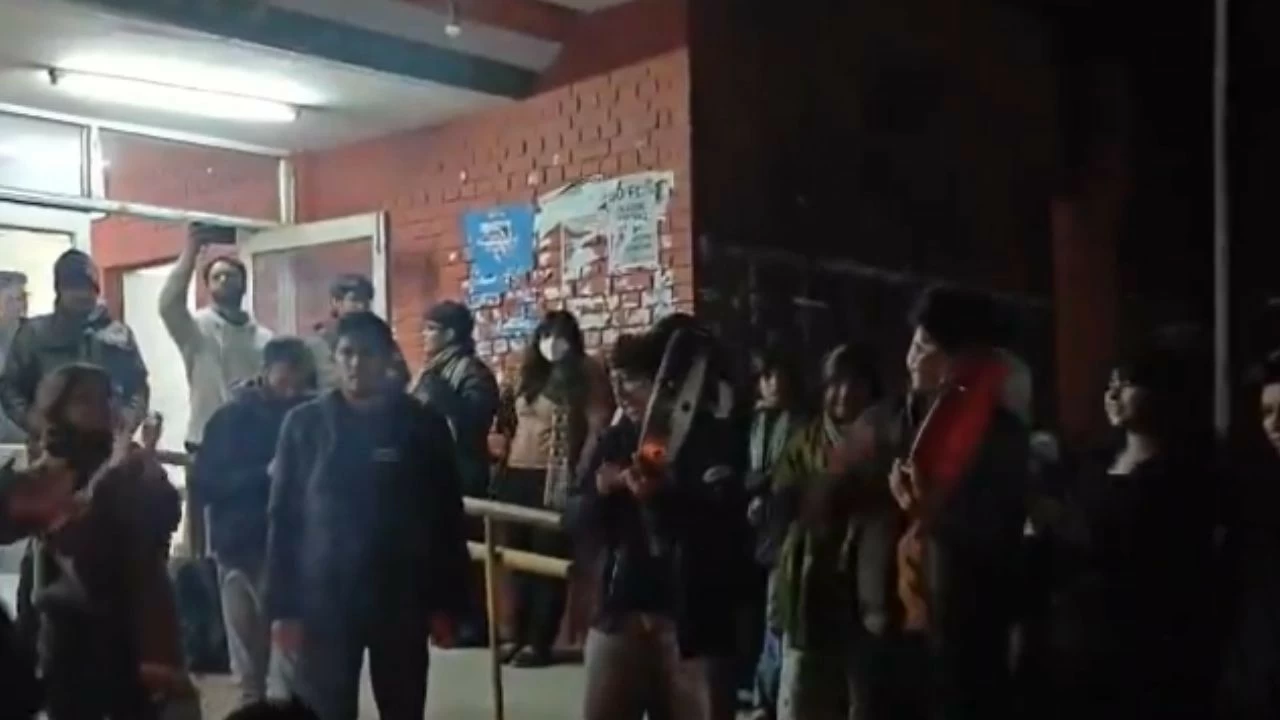


New Delhi: The Jawaharlal Nehru University (JNU) administration has initiated a stern disciplinary and legal offensive following a Monday evening protest on campus. The protest saw students allegedly raising "highly provocative" slogans.
The university maintains that the demonstration crossed the line from democratic dissent into "intentional misconduct" and contempt of the country's highest legal institutions.


Judicial blowback at 'Guerilla Dhaba'
The protest, situated at the campus’s well-known "Guerilla Dhaba" area, was sparked by the Supreme Court’s decision to deny bail to former JNU students Umar Khalid and Sharjeel Imam in connection with the 2020 Delhi riots case.
According to a detailed report submitted by the Chief Security Officer to the JNU Proctor, the gathering initially involved roughly 30–35 students and began peacefully. However, the tone shifted dramatically following the court's verdict, evolving into what the administration describes as an "inflammatory" display.
Administrative backlash and security findings
On Tuesday, JNU officials confirmed they had taken “very serious cognisance” of viral social media footage documenting the event. The university’s security branch has been directed to cooperate fully with law enforcement.
Key findings from the internal security assessment
Intentionality: The report concluded the slogans were "clearly audible, repeated, and deliberate," dismissing any suggestion that the outburst was spontaneous or inadvertent.
Contempt of court: The administration characterized the sloganeering as a direct act of contempt against the Supreme Court of India and a "wilful disrespect for constitutional institutions."
Threat to order: Officials warned that such rhetoric violates the JNU Code of Conduct and risks disturbing the "safety and security environment" of both the campus and the nation.
Legal action and identified students
The incident has escalated beyond campus disciplinary measures, with an FIR (First Information Report) now registered under relevant sections of the Bharatiya Nyaya Sanhita (BNS).
The security report identified several students allegedly involved in the sloganeering and has named them in the FIR-request letter.
Aditi Mishra, president of the JNU Students' Union, Gopika Babu, Sunil Yadav, Danish Ali, Saad Azmi, Mehboob Ilahi, Kanishk, Pakeeza Khan, and Shubham.
Meanwhile, Aditi has said these slogans were “ideological in nature” and not intended as personal attacks.
"On 5 January 2020, armed masked goons invaded the JNU campus and attacked students and teachers in the Sabarmati Hostel and other areas. This was no "clash" but an open assault on a community that was peacefully resisting a massive fee hike, while the police stood as spectators. Six years have passed since that night of terror," the JNUSU statement read.
"Where is Komal Sharma and the ABVP goons who accepted planning and executing the attack on national television? The Delhi Police—which displays an extraordinary efficiency in filing FIRs against JNUSU office bearers for even the smallest acts of democratic resistance—has failed to make a single arrest in the 5 January case," it added.
Dissent vs hate speech
In a strongly worded statement, the JNU administration urged all stakeholders to distinguish between legitimate democratic dissent and "abuse or hate speech" that triggers public disorder. The university warned that any further violations of established norms would be met with "strict action," emphasising a zero-tolerance policy for activities that threaten campus harmony.