Sign In
By signing in or creating an account, you agree with Associated Broadcasting Company's Terms & Conditions and Privacy Policy.
By signing in or creating an account, you agree with Associated Broadcasting Company's Terms & Conditions and Privacy Policy.
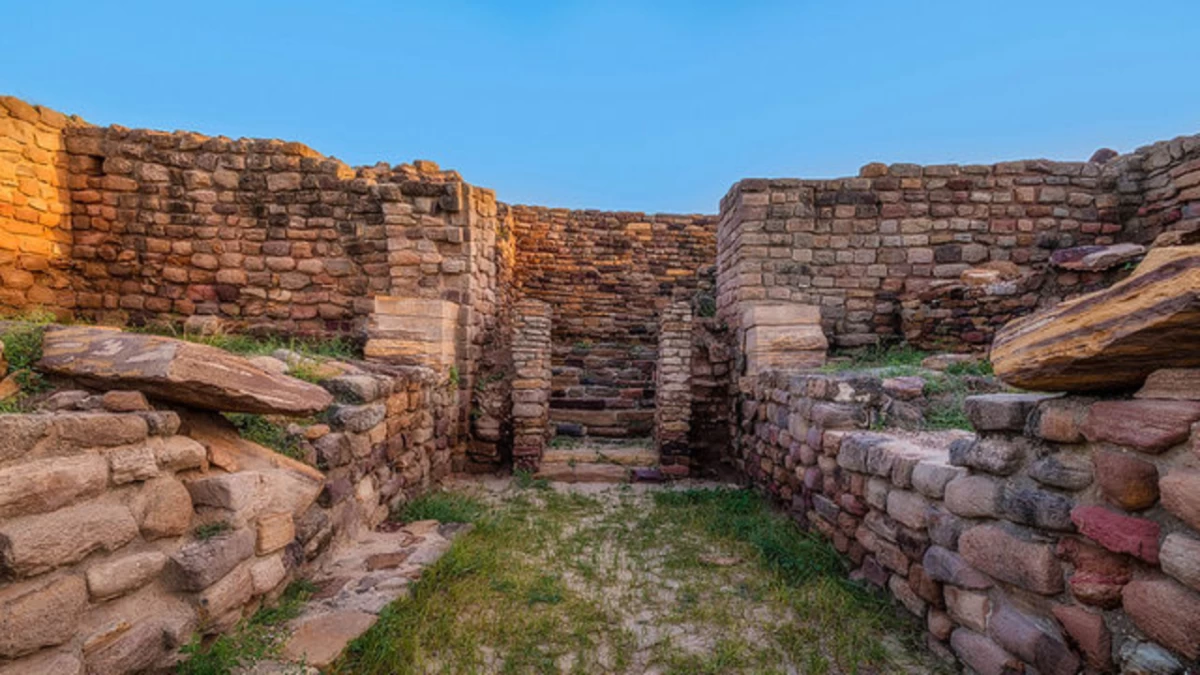


Kolkata: Dholavira, a UNESCO World Heritage Site, is one of the most important historical places in India. Why? Because this archaeological site at Khadirbet in Kutch's Bhachau Taluka in Gujarat contains ruins of a city of the ancient Indus Valley civilization. It has been repeatedly affected by earthquakes including a particularly severe one around 2600 BCE. The ruins of Dholavira take us back to a time when human civilization was taking its first steps on this planet.
Dholavira is larger than Lothal, another site from the same civilisation, and both offer a glimpse into the pioneering Harappan mind. Also, the place is interestingly located on the Tropic of Cancer. Surrounded by the Great Rann of Kutch, the place had one of the earliest and best-planned water conservation systems in the world and an ancient signboard written in Indus script. It shows the Harappan civilisation's brilliance and how it focused on water management and urban planning.


In 1967, the Archeological Survey of India unearthed the site and since 1990, it has been systematically excavated. Artifacts which have been found in Dholavira include beads, terracotta pottery, seals, gold and copper ornaments, animal figurines, animal figurines, and some imported vessels which show that Dholavira had trade relations with lands as far away as Mesopotamia. Also, 10 large stone inscriptions carved in Indus script were found, and they are considered as the earliest signboard in the world.
At the centre of Dholavira, there is the ruins of an imposing citadel with a middle and lower town with each of them separately fortified. They have been constructed with sun-dried brick and stone masonry, the town planning of Dholavira is remarkable. The lanes are well laid out and they lead outward systematically from the citadel, and the underground drainage system was well constructed, enhancing the sanitation of the place. Also, there is a large stadium there with seating arrangement.
However, Dholavira is mostly famous for having one of the earliest water conservation systems in the world. The place had an underground reservoir with the rainwater harvesting system expertly constructed, enabling the settlement to thrive amid sparse rainfall of the desert. Due to its strategic position, Dholavira became an important centre of trade and commerce. The site also has a large cemetery with cenotaphs of six types which show the Harappan’s unique view of death.
The archaeological excavations of the site have also unearthed bead processing workshops and also artifacts of several kinds like shell, copper, stone, terracotta, ivory, gold, jewellery of semi-precious stones, and other materials which show the artistic and technological achievements of the culture of Dholavira and of the Indus Valley Civilization as a whole. Also, it has been discovered that the place had trade relations with other cities of Harappa and also the cities in the Mesopotamia region and the Oman peninsula.
Dholavira is the sixth largest among all the Harappan sites which have been discovered so far. People lived there for more than 1,500 years and the place entirely witnessed the rise and fall of the Indus Valley Civilization. Also, Dholavira shows the remarkable achievement of the people of that age in terms of urban planning, water management, construction, social governance, trading, manufacturing, art, and belief system. The extremely rich artefacts of Dholavira along with the well-preserved urban settlement depicts a vivid picture of a regional centre with its distinct characteristics. It also enriches our knowledge of Harappan Civilization as a whole, shedding light on an age covered by the dust of history.
The excavations at Dholavira also show its steady decline towards the end of the Indus Valley Civilisation. Dholavira, like Lothal, went through all stages of the Harappan culture. The site was probably deserted after the fifth stage and in the late Harappan stage, the settlers possibly returned. But their pottery changed, and was influenced by cultures found at other places like Sindh and southern Rajasthan. However, they did not bring back the civilization with them and led a much more deurbanized and simpler life than those who used to live in that place earlier. Perhaps, the one powerful civilization's last stage was aware of its future, and was staring knowingly at its end.